Shaheen Afridi’s Nightmare BBL Debut and Ruthless Law of ‘Dangerous Bowling’
Cricket has few rules as unforgiving as this one: commit the offence twice, and you’re done. Not dismissed as a batter, but banished as a bowler, which means removed from the attack for the rest of the innings.
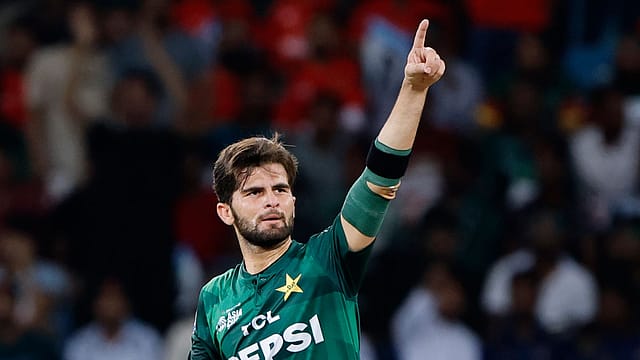
This is the law on dangerous bowling, and on December 15, it claimed one of the game’s biggest fast-bowling stars. Pakistan pacer Shaheen Afridi was expelled from Brisbane Heat’s Big Bash League clash against Melbourne Renegades after delivering two consecutive waist-high beamers, triggering an automatic suspension under the laws of the game.
What Is Dangerous Bowling?
Dangerous bowling is governed by Law 41.7 of the MCC’s Laws of Cricket, which deals with dangerous and unfair non-pitching deliveries. At its core, the rule targets beamers: full-toss deliveries that pass above the batter’s waist while standing upright at the crease.
Under the 2017 law revision, any such delivery was deemed automatically dangerous and called a no-ball. Bowl two of them in an innings, and the punishment was immediate: the bowler was barred from bowling again in that innings. The reasoning is simple. At speeds exceeding 140 kmph, a cricket ball aimed at the body or head leaves virtually no reaction time, posing a serious injury risk.
How the Rule Changed in 2019?
The rigidity of the 2017 interpretation sparked widespread criticism. In response, the MCC amended the law in April 2019, granting umpires discretion to judge whether a delivery is genuinely dangerous.

India's Action Hero
27 Mar 2026 - Vol 04 | Issue 64
Riding the Dhurandhar Wave
Context now matters. Speed, direction, intent, repetition and surprise are all weighed. A 150 kmph beamer at chest height is treated very differently from a misfired slower ball drifting above the waist. The revision aimed to prevent accidental errors—especially from young bowlers—from being punished disproportionately. But it also introduced inconsistency, with interpretations varying across leagues.
What Went Wrong for Shaheen Afridi?
Afridi’s much-anticipated BBL debut unravelled dramatically in the 18th over at Geelong. Bowling to Tim Seifert and Ollie Peake, the left-armer delivered back-to-back waist-high full tosses. The umpires judged both deliveries dangerous, forcing Brisbane Heat captain Nathan McSweeney to complete the over.
Afridi’s night ended abruptly: 0 for 43 from 2.4 overs, including three no-balls and two wides. That single over leaked 15 runs, while his economy rate ballooned to 16.10, a stunning collapse for a bowler of his calibre.
Why Even Elite Bowlers Fall into This Trap
T20 cricket pushes bowlers to the edge. Yorkers must be perfect. Slower balls must deceive. One miscalculation—mere millimetres—and a yorker turns into a beamer. Afridi had begun well, even bowling three consecutive dot balls earlier. But reintroduced during the Renegades’ Power Surge, his lengths deserted him. Similar fates have befallen other elite pacers: Anrich Nortje in IPL 2022 and Harshal Patel in IPL 2023 both ran afoul of the same law, highlighting how unforgiving the margins are.
How Dangerous Bowling Can Change a Match
Melbourne Renegades exploited Afridi’s removal mercilessly, piling up 212 for 5, with Tim Seifert smashing 102 off 56 balls. Losing a frontline bowler during the death overs forces captains into emergency options, often with damaging consequences. The rule doesn’t just penalise the bowler; it can decisively tilt the match.
What This Means for Cricket’s Future?
Cricket’s administrators walk a tightrope between spectacle and safety. The dangerous bowling law reflects that balance: firm in principle, flexible in interpretation. The message remains non-negotiable: player safety comes first. Reputation, experience and match situation offer no immunity. Two dangerous beamers, and the bowler is out. Shaheen Afridi’s BBL debut is a stark reminder that in modern cricket, the line between brilliance and banishment is measured in inches, not reputation.
(yMedia is the content partner for this story)