Seven Wins, More Ways to Win: How India Keep Getting Past Pakistan
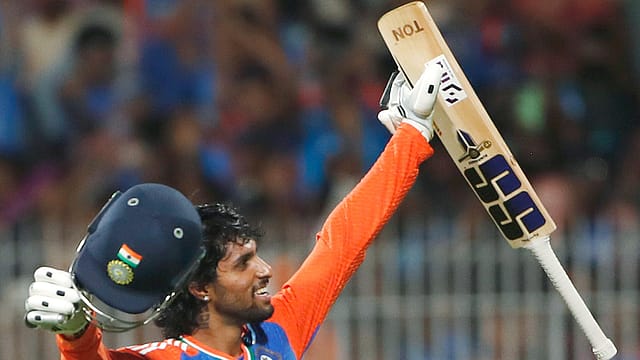
Pakistan got past Abhishek Sharma. Tilak Varma was still to come.
Across India’s batting innings in the Asian Games final in Japan, that was the problem in miniature. Abhishek supplied 61 from 28 balls. Tilak finished unbeaten on 51 from 22. Between those bursts, Pakistan found opportunities to slow the innings. By the end, India had reached 211 for six.
A 19-run victory delivered gold and extended India’s winning sequence against Pakistan in men’s T20 internationals to seven matches. The latest instalment offered another way of understanding a rivalry whose results have become increasingly predictable, even when its passages of play remain fiercely contested.
Pakistan can dismiss a dangerous batter. They can interrupt a partnership. They can produce overs that suggest the contest is turning. India’s advantage has increasingly rested on the next player being capable of changing its direction again.

Losing Memory
16 Oct 2026 - Vol 05 | Issue 42
The making of a medical and social emergency
Across these seven victories, the answers have come from an extraordinary recovery innings, a remarkable defence of a small total, aggressive opening batting and a middle order capable of both rebuilding and accelerating. The personnel have changed. So have the assignments.
The result has survived those changes.
INDIA’S ASIAN GAMES GOLD: TWO BURSTS, ONE BIG TOTAL
Abhishek’s innings in Nisshin imposed an immediate cost on Pakistan’s bowling. His seven sixes accounted for 42 of his 61 runs. Such scoring compresses the time available to a captain: a couple of expensive overs can force changes before an opening plan has had much opportunity to work.
Pakistan did manage to pull India back. That recovery makes the finish significant. Tilak and Shivam Dube added 62 from 31 balls for the sixth wicket, with Dube contributing 27 from 15 deliveries. India retained substantial attacking capacity deep into their batting order.
The sequence illustrates a practical benefit of batting depth. It allows a side to absorb a slowdown without treating it as the defining phase of its innings. An early burst creates room; a later partnership can exploit what remains.
This does not make every aggressive shot wise or every collapse recoverable. It does make the opposition’s task longer. Containing India requires successive spells of effective bowling against batters arriving with different demands on them.
In Japan, Pakistan’s work continued after Abhishek departed. Tilak ensured that the closing stages carried their own punishment.
TILAK VARMA’S TWO FINALS TELL THE STORY
The most revealing comparison stretches back just over a year.
In the September 2025 Asia Cup final in Dubai, India were chasing 147 when they slipped to 20 for three. Tilak’s unbeaten 69 from 53 deliveries carried the chase through its recovery and towards a five-wicket victory with two balls remaining.
In Japan, his unbeaten 51 occupied only 22 balls.
The two innings produced strike rates of approximately 130 and 232. Their value lay in how differently they answered the match situation.
Dubai demanded that somebody remain available to finish the chase. Early wickets had made survival consequential; acceleration had to be balanced against the danger of exposing the remaining batting too soon.
Japan demanded rapid additions to a first-innings total. Tilak could spend his resources differently because the task was different.
This is where adaptability becomes more useful than the loose description of a “big-match player”. The same batter met two distinct requirements in finals against Pakistan. One innings restored a damaged chase. The other enlarged the target.
For the opposition, that complicates preparation. A player capable of changing tempo according to the situation cannot be understood through one preferred scoring speed.
FROM 2–1 TO SEVEN STRAIGHT DEFEATS
The five-year record also guards against treating Indian dominance as inevitable.
On October 24, 2021, Pakistan beat India by ten wickets in Dubai. Shaheen Afridi damaged the top order; Babar Azam and Mohammad Rizwan completed the pursuit of 152 without losing a wicket. It was an emphatic demonstration of Pakistan’s capacity to control both innings.
India won their next meeting, in the group stage of the 2022 Asia Cup. Pakistan then won the Super Four encounter a week later, successfully chasing 182. Mohammad Nawaz’s promotion and 42 from 20 balls disrupted India’s bowling plans. Pakistan found an effective tactical answer and executed it.
At that point, Pakistan led 2–1 across the first three meetings in this five-year window.
India have won all seven since: Melbourne in 2022, New York in 2024, three encounters in the 2025 Asia Cup, Colombo at the 2026 T20 World Cup, and now Japan. The five-year tally stands at 8–2. Pakistan’s most recent victory remains September 4, 2022.
Eight wins include five successful chases and three successful defences. The advantage has operated across both sides of the toss.
WHEN PAKISTAN HAD THE OPENING
Several of those defeats will trouble Pakistan precisely because the opportunities were substantial.
At Melbourne in October 2022, India were 31 for four chasing 160. Virat Kohli’s unbeaten 82 from 53 balls helped turn that position into a last-ball victory. Hardik Pandya’s presence alongside him was central to keeping the chase alive. Pakistan had broken through the top order; they could not complete the task.
New York in June 2024 presented a different opportunity. India were dismissed for 119. Pakistan reached 80 for three after 14 overs, leaving 40 required from 36 deliveries with seven wickets available. Jasprit Bumrah’s dismissal of Rizwan helped transform the equation. His four overs cost 14 runs and brought three wickets; Pakistan finished six runs short.
The 2025 Asia Cup final provided opportunities in both innings. Pakistan went from 113 for one to 146 all out, then reduced India to 20 for three. Tilak and his partners still completed the chase.
Calling every such defeat a failure of nerve explains too little. These were different cricketing problems: breaking an established partnership, managing a modest chase on a difficult surface, sustaining an innings after a strong platform, and defending a target after early breakthroughs.
The recurring concern is Pakistan’s inability to convert several promising positions into victories. India’s recurring strength is the availability of somebody capable of making that conversion harder.
THE RESPONSIBILITY HAS SPREAD
Kohli’s Melbourne innings remains exceptional. The subsequent sequence shows why India have been able to sustain their results beyond that individual performance.
Bumrah supplied the decisive intervention in New York. Abhishek made 74 from 39 balls in the 2025 Asia Cup Super Four victory. Tilak anchored the final. At the February 2026 World Cup meeting in Colombo, Ishan Kishan struck 77 from 40 balls before India won by 61 runs.
Those contributions represent different routes through a match. India can gain an advantage through early scoring, recover through a partnership, or defend through wicket-taking and economical bowling.
The sequence supports an argument about that range. It cannot, by itself, establish a sweeping explanation about domestic systems or prove that every selection has worked. Nor does seven successive victories mean seven effortless performances. Melbourne reached the final delivery; the Dubai final reached the last over.
India’s superiority has included the ability to emerge from close contests.
A NEW STAGE, A FAMILIAR CHALLENGE
Japan supplied a new setting: the first men’s Asian Games cricket meeting between the neighbours. India had missed the 2010 and 2014 editions, then won gold at Hangzhou in 2023 after the final against Afghanistan was abandoned and higher seeding decided the medals.
This time, gold came through a completed final against Pakistan.
The medal adds to the achievement. The batting offers the explanation worth carrying beyond the ceremony. Abhishek’s departure removed one source of damage. Tilak and Dube created another.
Seven successive defeats leave Pakistan with a demanding question: how do they sustain control when India can keep finding a different player to take it away?
In Nisshin, getting past Abhishek was only part of the job. Tilak still had 22 balls to shape the final.