MS Dhoni Retires: How a Boy From Ranchi Became Chennai’s Thala and Built the IPL’s First Dynasty
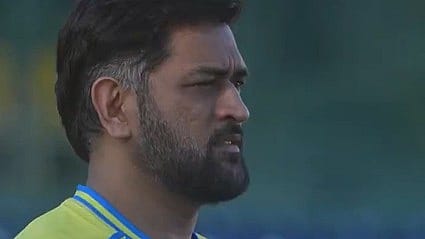
MS Dhoni spent an IPL career deciding precisely when to attack. His retirement arrived after the one contest he could not take into the final over: the argument with his own body.
There was no farewell match. No final walk through a guard of honour. No last six disappearing into the Chennai night. Dhoni’s final IPL appearance came in 2025, during a season in which Chennai Super Kings finished at the bottom of the table. A calf injury then kept him out of every match in 2026. On November 17, 2026, CSK announced that the playing career was over and that its most important cricketer would become team mentor.
The designation changed. The relationship did not.
Dhoni had been preparing for this transition for years, surrendering the captaincy, returning when circumstances demanded it, batting for fewer deliveries and allowing younger players to occupy the foreground. Yet his retirement closes the IPL’s longest and most consequential association between one player and one franchise.
The Wealth Issue 2026
06 Nov 2026 - Vol 05 | Issue 45
Portraits of Dreamers and Doers under 35
The numbers establish the scale. Dhoni played 278 IPL matches and scored 5,439 runs. He led Chennai to five championships, ten finals and 12 playoff appearances. No IPL captain handled more matches. No wicketkeeper completed more dismissals. His teams won through several generations, multiple auctions, different tactical eras and a two-year suspension.
Those achievements explain his greatness. They do not fully explain why a boy from Ranchi became the emotional sovereign of Chennai.

The franchise that refused an icon found a Thala
The first IPL auction in 2008 was designed around regional ownership. Mumbai had Sachin Tendulkar. Kolkata had Sourav Ganguly. Delhi had Virender Sehwag. Bengaluru had Rahul Dravid. Punjab had Yuvraj Singh. These designated icon players were kept outside the auction and paid 15 per cent more than their franchise’s highest-priced purchase.
Chennai declined the arrangement.
The decision was partly arithmetic. An official icon would consume money that CSK wanted to spend elsewhere. It was also a declaration that the franchise would manufacture its own identity. When Dhoni entered the auction, months after leading India to the inaugural T20 World Cup, Chennai paid $1.5 million and made him the event’s most expensive player.
The purchase carried no obvious regional romance. Dhoni was born in Ranchi, then part of Bihar and now the capital of Jharkhand. He had grown up playing football and badminton before wicketkeeping redirected his sporting life. Between 2001 and 2003, he worked as a travelling ticket examiner at Kharagpur railway station while pursuing cricket through the railways and the region’s tennis-ball circuit.
He did not speak Tamil. He had no history with the state’s cricket. Chennai possessed a sophisticated cricket culture and generations of its own heroes. Dhoni arrived as the country’s most exciting young captain, but he remained an outsider wearing a newly created yellow shirt.
Within a few seasons, the outsider had become “Thala”, the leader.
That adoption remains one of the IPL’s most extraordinary cultural achievements. Chennai did not merely support a successful captain supplied by an auction. The city absorbed him into its vocabulary, rituals and idea of itself. The whistles, yellow shirts, cut-outs and chants created a relationship that survived defeats, ageing, injuries and even seasons in which he barely batted.
The IPL was built to connect franchises with places. Dhoni demonstrated that belonging could be constructed through consistency, trust and shared memory. Geography began the league. Repetition deepened its loyalties.
He built the IPL’s first dynasty
Chennai reached the final in the inaugural season and lost to Rajasthan Royals off the last ball. The defeat established a pattern that would define Dhoni’s leadership. CSK did not treat proximity to the title as proof that the squad had failed. The franchise preserved its core, clarified roles and returned.
Chennai won consecutive championships in 2010 and 2011, becoming the first team to retain the IPL title. It reached five finals in the tournament’s first six editions. Before Mumbai Indians assembled their own championship machine, Dhoni had already created the league’s first dynasty.
His method often appeared conservative in a competition addicted to novelty. CSK backed experienced players, retained familiar combinations and preferred clearly defined jobs to continuous experimentation. Dhoni seemed less interested in collecting the most fashionable names than in understanding exactly what each player could contribute.
That approach produced one of the league’s most persistent jokes. Chennai were called “Dad’s Army” when they assembled an ageing squad before the 2018 season. The criticism appeared reasonable. The team had returned after a two-year suspension, several players were past their athletic prime and T20 cricket was supposedly becoming younger and faster.
CSK won the championship.
Shane Watson, Faf du Plessis, Ambati Rayudu, Dwayne Bravo and other experienced players were given roles that used their strengths and protected their limitations. Dhoni himself scored 455 runs before the final, then his most productive IPL season. Watson’s unbeaten century completed the comeback against Sunrisers Hyderabad at the Wankhede Stadium.
The triumph strengthened an idea that had become central to CSK: players did not arrive in Chennai to prove they were still valuable. Dhoni began from the assumption that they were valuable and constructed a role around the evidence.
The finisher who controlled everybody’s panic
Dhoni’s batting gave the IPL one of its most recognisable dramatic structures.
He would allow the required rate to rise, defend deliveries that made spectators restless and keep the chase within a calculation visible mainly to him. The apparent delay was part of his method. Dhoni wanted the contest compressed into a smaller number of decisions, preferably against a bowler and field he had already studied.
The helicopter shot supplied the image, but his greater skill lay in regulating anxiety. Bowlers felt compelled to protect the boundary before he attacked it. Captains changed fields in anticipation. Crowds began treating a rising required rate as the prelude to entertainment.
The method sometimes failed. As Dhoni aged, the same calculations became a source of criticism when he left too much for the final overs or arrived too late in the innings. His refusal to publicly explain decisions intensified both the fascination and the frustration.
Yet the essential theatre endured. A CSK wicket would fall, the stadium would roar before the incoming batter appeared, and television cameras would locate the helmet, gloves and measured walk from the dugout. Some players entered to applause. Dhoni entered with the crowd already rehearsing the ending.
Captaincy without visible panic
Dhoni’s calmness became such a familiar description that it sometimes obscured the aggression inside his captaincy.
He placed fielders where batters did not expect them, trusted spinners during dangerous phases and kept bowlers operating after conventional logic suggested a change. His decisions looked instinctive because he rarely advertised the calculation. Years of wicketkeeping had given him a close view of bat movement, footwork and hesitation.
His leadership also depended on emotional economy. A missed catch did not require a public performance. A bowler being attacked did not automatically lose the captain’s confidence. Dhoni understood that T20 cricket generated enough panic on its own. The captain’s job was to stop adding to it.
That approach influenced the IPL well beyond Chennai. Captains began being evaluated on match-ups, bowling changes and composure under rapidly changing pressure. The league made leadership visible in a way that international cricket often could not. Dhoni became its most studied face.
Chennai’s resurrection became Dhoni’s
The two-year suspension of Chennai Super Kings in 2016 and 2017 remains the darkest part of the franchise’s history. Dhoni played for Rising Pune Supergiant, and his reticence around the controversy left unresolved discomfort. The scandal cannot be removed from a serious account of the CSK years.
The 2018 return therefore carried stakes beyond cricket. Chennai needed to prove that its sporting identity could survive institutional disgrace and two seasons of absence. Dhoni needed to restore the relationship without pretending the interruption had not occurred.
Winning the title immediately converted the comeback into mythology. It also demonstrated how thoroughly the franchise’s idea of itself had become tied to Dhoni. Chennai returned to the IPL as a team. It was received as the return of Thala.
Three years later, CSK won again in 2021. In 2023, Ravindra Jadeja struck a six and four from the final two deliveries against Gujarat Titans to secure the fifth championship. Dhoni had been dismissed first ball, but the ending carried his imprint. He had built a team capable of completing the final over without requiring him to strike the final blow.
The body finally overruled the mind
Dhoni’s later IPL years produced a strange separation between physical output and emotional influence.
His batting position moved lower. His innings became shorter. Knee and calf problems affected his mobility. CSK still retained him, crowds still followed the team across India in yellow and broadcasters continued to organise entire evenings around the possibility of his arrival.
The arrangement became harder to defend purely through cricket. Dhoni scored 196 runs in IPL 2025 as Chennai finished last. He returned to the captaincy after Ruturaj Gaikwad’s injury, but the old ability to reorganise a season could not rescue a declining side. He then missed the entire 2026 tournament with a persistent calf problem.
This is where adoration can become an editorial trap. Dhoni’s longevity was remarkable, but it also complicated succession. Every captain after him operated inside his shadow. Every squad decision invited the question of what Dhoni wanted. Every poor season renewed the debate over whether CSK had postponed its future to preserve its most valuable relationship.
The retirement resolves the team-sheet question. It does not remove the shadow.
Can CSK survive the man who made it?
Dhoni retires from a franchise valued at approximately $244 million. Its commercial strength rests on championships, continuity and an unusually loyal audience, but valuation studies and brand experts have repeatedly identified his presence as central to the premium. Sponsors were buying access to CSK and to Dhoni’s following.
That makes the mentor appointment strategically obvious. CSK keeps his judgement, aura and connection with supporters while creating space for a younger playing identity. Dhoni can advise the new leadership, help construct the squad and transmit the cultural habits that made Chennai unusually stable.
The role also creates a danger. A mentor can strengthen a successor or quietly prevent one from becoming fully authoritative. If every decision is interpreted as Dhoni’s, CSK will remain dependent on the man it must eventually learn to outgrow.
His most difficult IPL assignment therefore begins after retirement. Dhoni built a franchise around his judgement, presence and emotional authority. He must now help it become less dependent on the mythology he created.
The outsider who became the institution
The IPL began as an experiment in attaching international cricketers to Indian cities. Dhoni became its most persuasive proof that a franchise could create a loyalty as intense as inherited sporting allegiance.
He arrived from Ranchi with no local claim on Chennai. He leaves the playing field as the figure most closely associated with its cricketing identity. Five titles and ten finals record the competitive achievement. “Thala” records something statistics cannot.
Dhoni gave Chennai a leader it had not produced and could still call its own. Chennai gave Dhoni a sporting home that remained after his India career ended. Together, they turned an auction purchase into a culture.
The boy from Ranchi taught Chennai how to believe in yellow. The mentor’s job will be to ensure it keeps believing when he is no longer wearing it.