Joe Root is ‘Really Hacked Off’: Why Brydon Carse Has Reopened England Cricket’s Old Drinking Problem
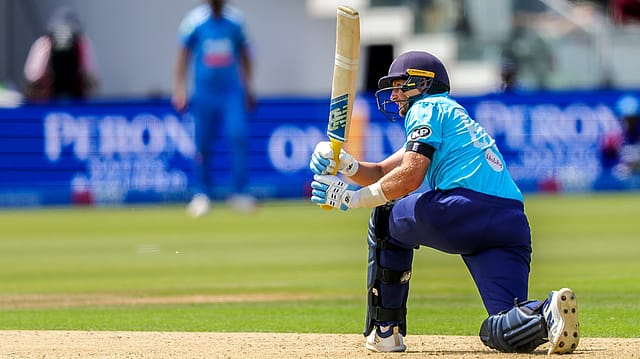
Joe Root had spent barely a week asking England’s cricketers to behave like grown adults. Then one of them appeared in handcuffs outside a bar.
Brydon Carse was briefly arrested on suspicion of being drunk and disorderly while celebrating Durham’s County Championship victory over Derbyshire. He was subsequently de-arrested, released without charge and has not been found guilty of any offence. The Cricket Regulator is investigating the incident.
England have removed Carse from the squad for the second Test against Pakistan at Lord’s and replaced him with Sonny Baker. Root, back as Test captain following Ben Stokes’ retirement, did not attempt to hide his anger. “If I’m being brutally honest, I’m really hacked off,” he said. “It’s not the isolated incident itself. It’s the fact that we continually keep making stupid mistakes away from the game, and it’s detracting from what we’re doing on the field.”

Zeroing In on ECI
09 Oct 2026 - Vol 05 | Issue 41
Constitutional legitimacy versus political opportunism
That is the heart of Root’s frustration.
Carse has not merely cost himself a possible Test appearance. He has dragged England cricket back into a conversation it has been holding, abandoning and restarting for years: does the men’s team have an alcohol problem, a discipline problem or simply a stubborn inability to learn?
What happened to Brydon Carse?
Carse had been celebrating Durham’s win over Derbyshire when he was filmed in handcuffs outside Molly Malone’s Irish Tavern in Derby. Derbyshire Police briefly arrested him on suspicion of being drunk and disorderly before releasing him without charge. Reports suggest the trouble began after Carse attempted to re-enter the venue, although the Cricket Regulator must establish the full sequence of events. Ben Stokes and Matthew Potts were reportedly among the Durham players out that night, but neither has been accused of wrongdoing in connection with the incident.
Carse was not on England duty at the time. He is, however, centrally contracted by the England and Wales Cricket Board and had been selected for the second Test against Pakistan. That made his conduct relevant to the ECB and prompted a referral to the independent Cricket Regulator. “Following a referral from the ECB, the Cricket Regulator has confirmed that they will investigate events on Saturday night in Derby,” the board said. Carse will remain unavailable while the investigation continues. The distinction matters: being placed in handcuffs is not proof of guilt, and Carse was neither charged nor prosecuted. England’s decision is an interim selection measure while the facts are examined.
Why is Joe Root so angry?
Timing. England had just demolished Pakistan by an innings and 103 runs in the first Test at Headingley. Root had returned to the captaincy with an emphatic victory. The conversation before Lord’s should have revolved around his leadership, England’s attack and whether Pakistan could recover.
Instead, Root found himself explaining why another England player had become the subject of an off-field investigation. “I’m really disappointed that after last week’s performance, we’re sat here and we’re talking about something that is not related to it at all,” he said. Root has spoken to Carse, whom he described as upset, apologetic and aware of the seriousness of his actions. His first concern, Root said, was for the fast bowler as a person.
But sympathy for Carse did not soften his assessment of the larger pattern. Root held what he called a “very robust discussion” with the England squad after the players assembled in London. He is angry because one cricketer’s night out has again forced an entire team to answer for its culture. He is angrier because he had just offered that team his trust.
Didn’t Root remove England’s curfew only days ago?
He did. England introduced stricter behavioural rules after Ben Stokes and Gus Atkinson breached a midnight curfew following a Test victory over New Zealand in June. The subsequent guidelines stated that players should not appear publicly under the influence of alcohol and must inform management if they remained outside the team hotel after 10 pm, Sky Sports reported.
When Root resumed the captaincy, he scrapped the blanket curfew. His reasoning was simple. International cricketers should not require the captain to tuck them into bed. “Be adults, look after yourselves, look after each other,” Root told his players before the Pakistan series. He wanted them to enjoy victories and have a beer when appropriate, while remembering the responsibilities attached to representing England. Root was trying to replace surveillance with judgment.
Carse’s incident arrived almost immediately afterwards and made that philosophy look vulnerable. Yet Root has not retreated from it. His position remains that a curfew cannot manufacture maturity. Players must understand where celebration ends and irresponsibility begins. That is why his response matters. “Really hacked off” was more than irritation. It was the sound of trust being tested almost as soon as it had been offered.
Is this really part of a pattern?
Yes, although the incidents differ in seriousness and should not be lazily treated as identical. Harry Brook was hit by a nightclub bouncer in Wellington before an ODI against New Zealand in November 2025. Brook later acknowledged that he had put himself in the wrong situation. He was fined about £30,000, received a final warning and admitted that other England players had been present after initially saying he was alone.
The Cricket Regulator subsequently issued caution notices to Brook and Jacob Bethell for breaching player-conduct rules. No action was taken against Josh Tongue. Brook admitted he had “more to learn regarding the off-field responsibilities that come with leadership and captaincy”, according to Sky Sports. Then came England’s disastrous 4-1 Ashes defeat in Australia. A mid-series break in Noosa attracted allegations of excessive drinking and was described by some observers as resembling a “stag do”. Managing director Rob Key ordered a review of the team’s conduct.
In June, Stokes and Atkinson breached a curfew after England beat New Zealand at Lord’s. A confrontation involving other people later occurred at a Chelsea nightclub. The Cricket Regulator ultimately found insufficient evidence of wrongdoing by either England player.
The ECB established that Stokes had not been involved in the violence and that Atkinson had been the victim of unprovoked attacks and had not retaliated. Both were reportedly written warnings for breaching contractual obligations and missed the second Test. That episode is important because it shows why the issue cannot be reduced to “England players behaving violently”. Stokes and Atkinson were cleared of that.
The recurring concern is the chain of avoidable circumstances: late nights, alcohol, broken protocols, public confrontations and cricket becoming secondary to disciplinary inquiries. Carse has now added another link.
Why might this feel painfully familiar to Root?
Because he has captained through this movie before. During the 2017-18 Ashes tour, Root had to manage an England team already missing Ben Stokes following the Bristol incident. Jonny Bairstow then became embroiled in the bizarre “headbutt greeting” controversy involving Cameron Bancroft. Ben Duckett was dropped from a tour match after pouring a drink over James Anderson in a Perth bar.
England imposed a curfew. The team’s cricket continued to suffer. The off-field stories kept travelling faster than the scorecards. Former Australia captain Ricky Ponting argued at the time that those incidents showed a lack of respect for Root’s captaincy and increased the pressure on him. England lost that Ashes series 4-0.
Nearly nine years later, Root is captain again. The names have changed. The bars have changed. The plot remains maddeningly familiar. That history gives “really hacked off” its weight. Root is not reacting only to Carse. He is reacting to a cycle he has already lived through.
Does England cricket have a drinking problem?
That question cannot be settled merely by counting nightclub incidents. Players are entitled to social lives. Alcohol consumption is not automatically misconduct. Celebrating a victory is neither unusual nor forbidden. Carse was also off international duty when the Derby incident occurred.
But England’s problem is no longer any single beer, bar or player. It is recurrence. When different players repeatedly enter avoidable situations involving alcohol, curfew breaches, altercations or police attention, the issue becomes cultural even if each case has different facts. A healthy culture does not require abstinence. It requires judgment. Can players recognise when a celebration has run its course? Can teammates intervene before trouble begins? Can senior cricketers protect younger players? Can England enjoy freedom without repeatedly forcing administrators to rebuild the rules? Root believes they can. England’s recent history keeps challenging him.
What happens next?
The Cricket Regulator will determine whether Carse breached the ECB’s professional-conduct regulations. Until then, he remains outside the Test squad and should not be presumed guilty of conduct that has yet to be established.
Sonny Baker takes his place for the Lord’s Test beginning on August 27. For Root, however, the disciplinary process is only part of the problem. A regulator can investigate an incident and impose a sanction. It cannot create the team culture he wants. That culture must be built by players who understand that freedom is accompanied by responsibility and that every “stupid mistake” makes the next curfew more likely. Root offered England adulthood. Carse has handed him another investigation.
(With inputs from ANI)