‘I’ve had my own failures and successes’: Gautam Gambhir takes stock of two turbulent years as India coach
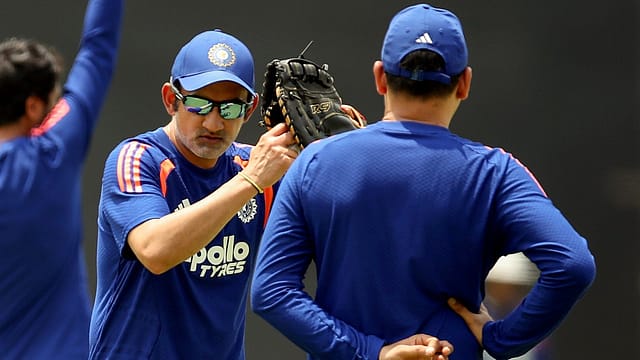
What does success look like when you are the head coach of India: Is it trophies? Series wins? Developing future captains? Or simply surviving the relentless scrutiny that comes with one of the most demanding jobs in world cricket?
As India prepares to begin a packed home season against the West Indies on September 27, head coach Gautam Gambhir offered a rare reflection on the two years that have defined his tenure so far. And unlike the usual coach-speak that often accompanies such reviews, Gambhir's assessment was strikingly candid.
"The two years didn't pass in the blink of an eye. I think I've had my own share of ups and downs. I've had my own failures and successes. But again, I've always believed that when you take up that kind of responsibility, there will always be ups and downs. So, whether it was Test cricket, whether it is one-day cricket or T20 cricket, yes, I've had success, which obviously I will always cherish, but I've had my share of failures as well. Which, again, I accept with both hands," Gambhir said on JioStar.

Losing Memory
16 Oct 2026 - Vol 05 | Issue 42
The making of a medical and social emergency
Gautam Gambhir's India coaching tenure has been anything but straightforward
The timing of Gambhir's remarks is significant.
India is entering a new phase. The upcoming West Indies series will feature two different captains: Shubman Gill will lead the ODI side, while Shreyas Iyer will captain the T20I team. Shai Hope will captain the West Indies. The series marks another chapter in a period of transition that has seen India experiment with leadership across formats.
Over the past two years, Gambhir has found himself managing not just teams, but eras.
The former opener has worked alongside Rohit Sharma, Suryakumar Yadav, Shubman Gill and Shreyas Iyer as captains across formats. Few Indian coaches have had to navigate so many leadership dynamics in such a short span.
Gambhir reveals what really shaped his relationship with Rohit Sharma
Among those captains, Rohit occupies a unique place. Their relationship, Gambhir suggested, was built long before one became coach and the other captain.
"Rohit and my relationship wasn't just of captain and coach. When Rohit came into the team, I was a senior player at that time, so Rohit and my relationship is from back then. Rohit has known me since then. So, often when you have played together, things become very easy. And in fact, he knows my thinking; I know his thinking."
For Gambhir, that shared history helped simplify decision-making, even when opinions differed.
"Because tomorrow I might have some other thinking, the captain might have some other thinking, but ultimately, whatever is in the best interest of the team, if that's the final decision, then nothing can be better than that. And that's why I said that with all four captains I have worked with, this has been my experience with them, that everyone's focus has been Indian cricket," he added.
Why Gambhir believes India's leadership transition is in safe hands
One of the biggest stories of Gambhir's tenure has been India's gradual shift towards a younger leadership group. The coach praised all four captains he has worked with and said a common trait connected them despite their different personalities and cricketing philosophies.
"I have worked with four captains, Rohit, Surya, now with Shubman and Shreyas. All the captains I've worked with, everyone's first intention has always been team first. And I am very fortunate that I have worked with four such people who have always put the team ahead of themselves."
According to Gambhir, differing ideologies are not a problem as long as the objective remains the same. "Ideology can change, your thinking can change, your perspective on reading the game can change, but as long as your intention is right, it makes life a lot easier for any support staff."
Shubman Gill earns special praise after England Test challenge
If one player received special attention from Gambhir, it was Shubman Gill. India's young batter recently faced one of the toughest assignments in world cricket: leading the Test side in a five-match series in England. Gambhir believes the experience could prove transformational.
"With Shubman, he is young. If you get captaincy on a tour of England, that too in five Test matches, and if you push someone into the deep sea, either you will swim out really well or you will drown. But the way Shubman has handled Test cricket, it has been brilliant, and I think we will see the best of Shubman in the coming years."
The remark offers a glimpse into how India's management views Gill — not merely as a talented batter, but as a long-term leadership prospect.
The bigger message behind Gambhir's reflection
Indian cricket rarely pauses long enough for self-assessment. There is always another tour, another selection debate, another captaincy discussion waiting around the corner. That is what makes Gambhir's reflection notable.
Rather than presenting a polished scorecard of achievements, he chose to acknowledge the full picture. The victories are there. So are the disappointments.
And perhaps that is the reality of coaching modern India: success is celebrated, failure is dissected, and both arrive far more often than anyone expects.
As the West Indies series approaches and a new home season begins, Gambhir's message was less about looking back and more about accepting the journey.
After two years in one of cricket's toughest jobs, he appears comfortable doing exactly that.
(With inputs from ANI)