India vs New Zealand | India’s Most Destructive T20I Chase? Abhishek & Vaibhav Make Their Case
New Zealand made 198. India finished with 40 balls to spare. There should probably be a complaints department for this.
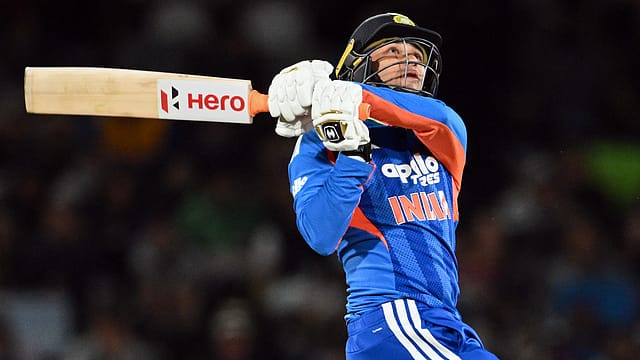
Abhishek Sharma smashed 113 off 38 balls. Vaibhav Sooryavanshi supplied 45 off 19. Together, the two left-handers turned a chase demanding almost ten an over into an evening in which the required rate became increasingly ridiculous.
India won the third T20I in Wellington by six wickets, reaching 199/4 in 13.2 overs. The five-match series was sealed at 3-0. New Zealand still have two matches to play against an opposition that has just treated 198 as an invitation.
Was this India’s most destructive T20I chase? For the combination of a substantial target, sustained hitting and deliveries left unused, it deserves a place in that conversation.

Look Who's Talking Regime Change
23 Oct 2026 - Vol 05 | Issue 43
Two lefties and a bowling emergency
Sooryavanshi hit the first ball of the chase over mid-on for four. Jacob Duffy’s opening over eventually cost 24, including a no-ball and five wides. Both openers had hit a six before the over was finished.
Adam Milne conceded 17 in the next. Michael Bracewell’s introduction brought another 21. Three overs had produced 62 runs without a wicket, and New Zealand had already tried pace, a change of pace bowler and offspin.
Kyle Jamieson became the fourth bowler to have a go. Abhishek took 20 off his opening over, reaching his fifty from 15 balls with the second of successive sixes.
India were 84/0 after four overs. They reached 104/0 after five.
This was an assault with a recognisable method. Both batters created room to free their arms. New Zealand repeatedly offered width, and the ball kept travelling over point and cover. When the bowlers went short on the stumps, the leg-side boundary came into play.
The field restrictions made the punishment harder to contain. The lengths made it easier to administer.
Duffy returned for the sixth over and conceded four, four, dot, dot, four, six. His two consecutive dots bought a brief pause before Sooryavanshi took ten from the final two deliveries.
India finished the powerplay at 118/0, the highest recorded powerplay total in men’s T20Is.
The previous benchmark was Romania’s 116/0 against Serbia in 2021, a chase completed in 5.4 overs. Australia had made 113/1 against Scotland in 2024.
Abhishek keeps swinging
At the end of the powerplay, India needed 81 from 84 balls. Abhishek had 67 from 20.
He continued as though somebody might take the remaining deliveries away.
His innings contained nine fours and eleven sixes. That is 102 runs in boundaries, leaving eleven to be accounted for by running. New Zealand’s fielders spent much of his innings dealing with shots they could neither intercept nor catch.
Sooryavanshi’s dismissal finally broke the opening partnership at 133. Fisher induced a miscue, and Daryl Mitchell ran in from long-on to complete a tumbling catch.
The teenager had contributed four fours and four sixes. His departure left India needing 66 from 77 balls.
Abhishek eventually fell to Jamieson for 113, caught by Glenn Phillips. Sanju Samson made 18 before Jamieson bowled him. Shreyas Iyer contributed five before Phillips caught him off Mitchell Santner.
New Zealand were collecting wickets when they needed to collect dots.
At halfway, India had been 178/2. They could have completed the chase with 21 singles and 39 scoreless deliveries. Even the late wickets left them with an enormous allowance for error.
Forty balls tell the story
India’s hundred had arrived in 30 legal deliveries, the second-fastest recorded team hundred in men’s T20Is where ball-by-ball data is available. Eswatini’s 29-ball effort against Mozambique earlier this year remains ahead.
The finishing figure was equally arresting: 199/4 in 80 legal deliveries.
For comparison, India chased 209 against New Zealand in 15.2 overs at Raipur in January. Wellington’s target was ten runs smaller; India used twelve fewer deliveries.
“Best” will always invite arguments about conditions, tournament stakes and pressure. Wellington supplied an extraordinary demonstration of how comprehensively a substantial target can be dismantled.
The openers struck 28 boundaries between them. Abhishek made a century at a strike rate of 297.36. India secured the series with two matches remaining.
New Zealand had asked them to score 199. They left seven overs’ worth of deliveries almost entirely unnecessary.