India, Asia Cup & the Ghost of Pakistan
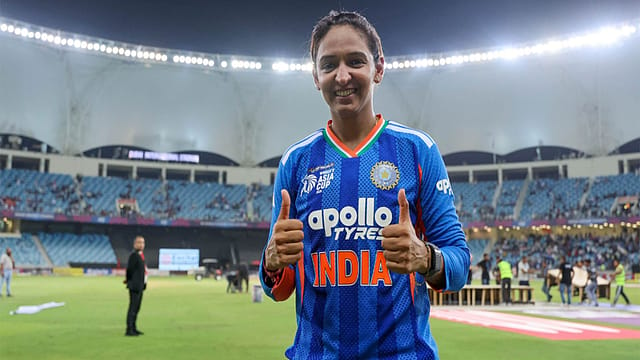
Pakistan did not need a place in the final to become part of its ending.
India’s women had beaten Sri Lanka by 72 runs in Dubai on September 13. Shafali Verma and Smriti Mandhana’s opening partnership alone had produced more runs than the entire opposition. Sree Charani had taken four wickets. An eighth women’s Asia Cup title belonged to India.
Then came the presentation. And with it, the ghost of another final.
India did not collect the trophy from Asian Cricket Council president Mohsin Naqvi, who also serves as Pakistan Cricket Board chairman and Pakistan’s interior minister. Sri Lanka received their runners-up honours. Their captain, Chamari Athapaththu, spoke. The broadcast returned to the studio.

Zeroing In on ECI
09 Oct 2026 - Vol 05 | Issue 41
Constitutional legitimacy versus political opportunism
The familiar photograph of the champions lifting their trophy never arrived.
Almost a year after India’s men refused to receive the Asia Cup trophy from the same official, the women’s triumph had reached a similar impasse. The opponents had changed. The political obstacle remained.
Before that obstacle takes over the story, consider what India had accomplished.
Shafali made 68 from 39 balls, with nine fours and two sixes. Mandhana scored 59 from the same number of deliveries, hitting five fours and three sixes. Their 129-run opening stand gave India the foundation for 183/5.
Sri Lanka’s entire innings produced 111.
Charani’s 4/20 and Deepti Sharma’s three wickets completed the job. India reclaimed the title from the team that had won the previous edition in 2024, extending their continental tally to eight championships across the ODI and T20 formats.
There was plenty here for a final to be remembered by. Two commanding opening innings. A decisive spell of left-arm spin. A championship recovered.
Yet coach Amol Muzumdar also had to explain the team’s absence from the trophy presentation.
“That stand has been taken by BCCI and we stand by it,” he reportedly said. “For us, this tournament is over, we are the champions. That’s good enough.”
Muzumdar pointed to the stadium’s big board declaring India champions and turned his attention towards the Asian Games. His words offered the players a way to move on. They also identified where responsibility for the decision lay.
This was the board’s position, carried by its team.
The precedent was established on September 28, 2025, when India’s men defeated Pakistan by five wickets in Dubai. The presentation was delayed by more than an hour before India declined to accept the trophy from Naqvi. BCCI secretary Devajit Saikia confirmed the decision and said the board would protest to the ICC. The tournament followed the military confrontation between the two countries in May.
The anger surrounding that tournament had a grave background: the Pahalgam terrorist attack and the hostilities that followed. Any argument about sporting courtesy must take that context seriously. A ceremony cannot require people to forget violence, bereavement or national security concerns.
But a serious political stand also needs a coherent sporting policy.
If cricketing engagement with Pakistan is unacceptable on principle, the consistent course is to stop playing those fixtures and accept the competitive and financial consequences. If participation remains acceptable, the BCCI must explain the purpose served by refusing the award at the end. Why should the ceremony bear the burden of a principle that permits the contest?
India’s women had already played Pakistan earlier in this tournament, winning by seven wickets after bowling them out for 55. The boundary, therefore, was clearly drawn somewhere beyond participation.
There is a distinction worth examining. The BCCI’s objection concerns accepting the trophy from Naqvi, a serving Pakistani minister. Competing against a national team and sharing a ceremonial moment with a political office-holder can carry different meanings.
Yet receiving a sporting award need not amount to endorsing the presenter’s government. If the board considers that particular interaction unacceptable, it should pursue an alternative presenter before the tournament reaches its final evening.
The ACC has an equally clear responsibility to make such an arrangement possible. A continental championship should be able to honour its winners without making one administrator’s presence indispensable.
Otherwise, the match proceeds, the commercial machinery runs, and the protest arrives at the moment the players should receive their reward. The political message becomes difficult to reconcile with the sporting engagement that preceded it.
Sunday’s final sharpened that contradiction further. Sri Lanka were the opponents. A disagreement rooted in India–Pakistan relations had travelled beyond their own fixtures and disrupted another team’s championship ceremony.
How long should that become an accepted ending?
History offers reasons both to defend political action in sport and to scrutinise its costs.
The campaign against apartheid-era South Africa provides a powerful example of the case for sporting isolation. Under the 1977 Gleneagles Agreement, Commonwealth leaders committed to discouraging sporting contact and competition with South African teams and organisations. The policy formed part of the wider pressure against racial discrimination.
That history challenges any absolute demand that politics must always leave sport alone. When discrimination shapes who can participate and on what terms, maintaining ordinary sporting relations can itself become a political choice.
It also supplies a test of consistency. The campaign addressed sporting contact itself and had an articulated demand for change. Its reach extended well beyond the symbolism of a presentation.
Other interventions produced a more troubling balance sheet.
The United States led a boycott of the 1980 Moscow Olympics following the Soviet invasion of Afghanistan. The Soviet Union and several allies subsequently stayed away from the 1984 Los Angeles Games. Athletes lost opportunities that, for many, would never return. The Soviet military presence in Afghanistan continued for years after the Moscow boycott.
An Olympic boycott and a trophy refusal carry vastly different consequences. Their histories nevertheless invite the same scrutiny: who pays for the political message, and what does that message achieve?
Political leaders have also used sport to make contact possible.
In April 1971, American table-tennis players visited China in an exchange that became known as “ping-pong diplomacy”. The visit provided a public opening during a broader diplomatic thaw, ahead of Richard Nixon’s journey to China the following year. Negotiations and strategic calculations were essential to that process; sport gave the developing relationship a human encounter people could see.
India has its own memory of that possibility. Before the 2004 Pakistan tour, Atal Bihari Vajpayee urged Indian cricketers to win Pakistani hearts.
The circumstances of that tour cannot simply be transplanted into the present. Players cannot be expected to repair relations that governments struggle to manage. But those episodes establish that political involvement in sport can serve different purposes. It can express rejection, exert pressure or create an opening.
Each choice requires an objective. Each deserves scrutiny
Demanding consistency does not automatically mean demanding a boycott. It means asking administrators to explain their chosen boundary and take responsibility for its consequences.
If the BCCI’s objection is specifically to Naqvi presenting the award, that should become a clearly defined issue for negotiation with the ACC. An agreed alternative presenter could preserve the board’s objection while allowing the champions their ceremony.
If the objection extends to cricketing relations with Pakistan more broadly, the policy should address those relations directly. Repeatedly playing the matches and then declining the trophy leaves the central contradiction unresolved.
The ACC, meanwhile, must ensure that its presentation arrangements serve the competition. Its president’s overlapping political and sporting roles make accommodation more necessary. They should not leave every Indian title dependent on another confrontation at the podium.
These are responsibilities for administrators to discharge before the players take the field.
The players’ own position also deserves respect. Muzumdar said the team stood by the BCCI; there is no basis to invent private dissent. Supporting that decision, however, does not erase the significance of the celebration they missed.
Before the formal presentation, the Indian players gathered in a huddle. Muzumdar addressed them. Saikia and BCCI vice-president Rajiv Shukla presented Nandani Sharma with the team’s “Fielder of the Match” medal after her two catches.
The team found its own moment of recognition. The larger ceremony remained incomplete.
Political principle can justify protest. Sustaining that protest requires clarity about what it seeks, what it costs and what would bring it to an end. Another tournament should prompt an effort at resolution, rather than turn the dispute into a permanent condition of winning.
Shafali and Mandhana made 129 together. Sri Lanka made 111. India’s women had earned an evening centred on those achievements.
The BCCI and ACC owe them a policy that can explain why they may play, why they may win, and how they will receive what they have won.
Until then, Pakistan’s ghost will keep finding a place in finals its team does not reach.