ICC Rulebook Explained: The Repercussions of Pakistan Boycotting Its T20 World Cup Match Vs India
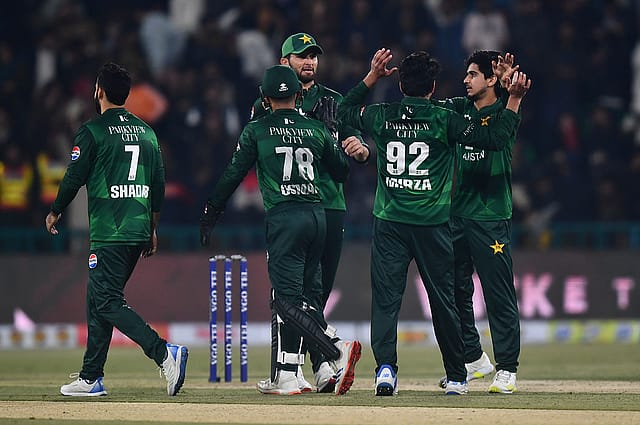
The Pakistan government sent shockwaves across the global cricketing fraternity last Sunday when it barred its national team from taking the field against India in their T20 World Cup 2026 clash scheduled for February 15.
While the Pakistan Cricket Board has cleared the team’s participation in the biennial tournament, it has decided to sit out just that one high profile clash against India, as an act of “solidarity” with Bangladesh, who were recently expelled from the competition by the International Cricket Council (ICC).
The announcement followed days of confusion whereby the Pakistan Cricket Board was reportedly planning to quit the tournament altogether.
Ultimately, the government decided to go for a "selective boycott" as they termed it, skipping only the match against India.
The announcement has caused fierce discussions across the cricketing world at the centre of which stands a definite question: is there any possibility to do something like that according to ICC regulations, and what might happen as a result?
Is a selective boycott allowed?
Technically, Pakistan can choose to skip a single match in the tournament.
The ICC has no regulation that explicitly prohibits a team from refusing to play just a single game while participating in the rest of the event.

Exclusive: To the Heavens and Back
19 Jun 2026 - Vol 04 | Issue 76
Shubhanshu Shukla relives the space odyssey that put India into orbit
However, the ICC Playing Conditions and Constitution have severe sporting, financial and administrative implications against any team failing to play a scheduled match.
If Pakistan proceeds with its decision to boycott the February 15 encounter, this is how the ICC rules are expected to apply.
The walkover and the penalty
Under the ICC Playing Conditions, a team that refuses to take the field forfeits the match, which is awarded as a walkover to the opposition.
For the result to be official, India must be present at the venue. If India’s captain, Suryakumar Yadav, walks out for the toss and Pakistan captain Salman Ali Agha does not appear, the match referee will formally award the game to India, along with two crucial points.
Beyond the immediate loss, the Playing Conditions imposes a significant sporting penalty.
Clause 16.10.7 states that the defaulting team is deemed to have batted for the full 20 overs and scored zero runs.
This would severely damage Pakistan’s Net Run Rate, potentially crippling their chances of qualifying for the Super 8s even if they were to win their remaining group matches.
Financial and commercial fallout
The financial implications could be even more damaging for the PCB. An India-Pakistan clash is widely regarded as the biggest commercial draw in world cricket and the biggest revenue generator of the tournament.
Broadcasters such as JioStar are estimated to stand to lose between $25 million and $30 million in advertising revenue if the match does not take place.
Under ICC agreements, broadcasters are likely to seek a rebate for the loss, and the ICC is entitled to pass on these legal claims and commercial losses directly to the PCB.
The governing body also has the power to withhold Pakistan’s annual revenue share, which reportedly accounts for around 70 to 80 percent of the PCB’s total budget. Such a move would place the board under extreme financial strain.
Government interference and constitutional breach
The issue also raises questions under the ICC Constitution. Article 2.4 D requires member boards to manage their affairs autonomously and to avoid government interference in cricketing matters.
Former PCB chairman Ehsan Mani has previously argued that compliance with government directives should shield Pakistan from sanctions.
However, the ICC is likely to view selective participation in a tournament as a breach of its integrity.
Historical precedents exist where teams boycotted matches due to security concerns, notably Australia skipping games against Sri Lanka in 1996 and 2003.
In this case, however, the match is scheduled to be played in Sri Lanka, a neutral venue. With no cited security risk, the government’s directive is unlikely to be accepted as a valid justification under ICC norms, strengthening the case that the move violates the Constitution.