FIFA World Cup 2026: Morocco's Lions Land in America, But Can They Roar Louder Than Before?
The very moment an underdog team achieves the unthinkable, the world stops marveling and starts demanding more. Morocco know this better than most right now.
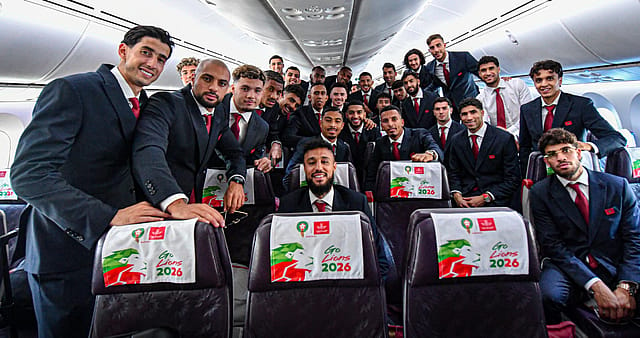
The Atlas Lions have touched down on United States soil ahead of the FIFA World Cup 2026, confirming their arrival with a rallying cry on X, "Our lions just touched down on soil -- and it's time to play. It's time for 40 million Moroccan hearts to roar behind us. One nation, one dream, one team."
The tournament runs from June 12 to July 20 across the United States, Mexico and Canada, and Morocco's Group C schedule wastes no time throwing them into the deep end.

Losing Memory
16 Oct 2026 - Vol 05 | Issue 42
The making of a medical and social emergency
They open against Brazil in New Jersey on June 13, face Scotland in Boston on June 19, and wrap up the group stage against Haiti in Miami on June 24.
On paper, it reads as a navigable path. In reality, navigating expectations is rarely that straightforward.
Four years ago in Qatar, Morocco rewrote the record books. They became the first African and Arab nation to reach a FIFA World Cup semifinal, dismantling Spain and Portugal on the way before a narrow defeat to France ended the dream.
The foundation of that achievement was defensive. Immovable, organised and deeply disciplined, they conceded just once on the road to the semifinals, and even that solitary goal was an own goal scored in Canada's favour.
It was a campaign built on solidarity rather than spectacle, on structure rather than swagger.
That squad, however, is largely gone. More than 60 percent of the players who delivered that historic run have not travelled to North America.
Soufiane Boufal, Hakim Ziyech, Youssef En-Nesyri and Romain Saiss, figures central to Morocco's identity in 2022, have all departed the national team setup.
A new generation must now carry an old story forward.
And history offers little comfort for nations attempting to repeat the extraordinary. Cameroon thrilled the world at the 1990 World Cup, pushing England to extra time in the quarterfinals, only to finish last in 1994.
Sweden and Bulgaria both reached the 1990 semifinals before fading dramatically; Sweden could not even qualify for the 1998 tournament, while Bulgaria crashed out at the group stage.
The lesson across decades of World Cup football is consistent and unforgiving: sustaining a fairytale is almost impossible.
Morocco enter 2026 carrying something entirely new in their footballing history. They are no longer the romantic outsiders with nothing to lose.
For the first time, they arrive at a World Cup being measured against their own legend. That is the burden of expectation, and it is a weight that has broken far more experienced footballing nations than them.
Tactics, talent and strategy shape tournaments, but the World Cup ultimately tends to belong to the side that handles pressure best. Morocco managed that brilliantly in Qatar, playing freely, believing fiercely and stunning the world in the process.
Whether they can do it again, this time knowing the world is watching and waiting for them to either rise or fall, is the defining question hanging over their campaign in North America.
(With inputs from ANI)