A Cab to Keep His Family Going, an Oar to Take India to the Podium: Salman Khan’s Journey
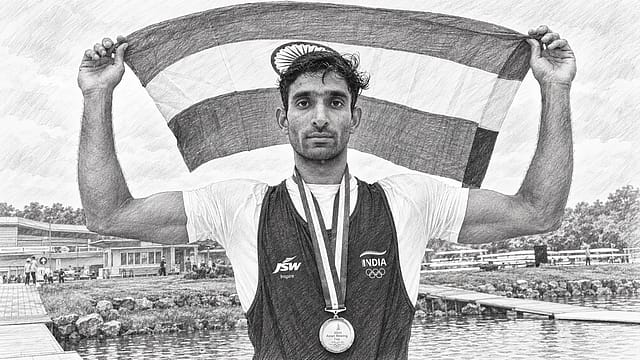
At around 4 am, Salman Khan’s family woke up to pray. By 5 am, his mother said, the news had arrived: her son had won an Asian Games medal.
In their home in Amethi, Uttar Pradesh, the bronze carried the weight of everything that had come before it. A father’s death. Six children. A teenager who began driving a cab to help keep the family going.
Salman and rowing partner Satnam Singh won bronze in the men’s double sculls on Thursday, finishing in 6 minutes and 13.25 seconds. For his mother, Jabrun Nisha, the result brought back the years when her son’s immediate responsibility was earning enough for the household.
“We have been praying for him from the beginning. We knew he went to play, so we have been praying for days,” she told ANI. “Today, everyone in our home woke up around 4:00 AM to pray. At 5:00 AM, we received the news.”

Losing Memory
16 Oct 2026 - Vol 05 | Issue 42
The making of a medical and social emergency
The happiness quickly spread beyond the family.
“We are extremely happy, and so are our neighbors, the entire village, and everyone at home. The joy is beyond words,” she said.
A Teenager Takes Responsibility
The family had been living in Haryana when Salman’s father died. Financial difficulties forced them to return home, his mother recalled.
There were six children: four boys and two girls. The youngest was about a year old. Salman, she said, was around 17 or 18.
“When his father passed away, our family had to leave and come back home. Then he went out again; first, he drove a cab to support the family and took on all responsibilities,” Nisha said.
Driving gave Salman a way to meet the household’s expenses. With younger children to care for and the family struggling financially, he took on responsibilities while still in his teens.
“He took on the full responsibility of the family,” his mother said.
The Rejection That Almost Sent Him Back to Driving
Relatives and neighbours saw another possibility for Salman. His physical build, they suggested, could help him secure a place in the Army.
He tried. He failed.
The rejection discouraged him enough to consider abandoning the idea altogether. His mother remembered him saying he would continue driving for Ola.
“His relatives, brothers, and neighbours advised him to try joining the Army since he had a good physical build. He failed his first attempt, felt discouraged, and said he would not go again and would stick to driving Ola,” she said.
But Salman returned for another attempt.
This time, he passed.
The Army Opened a Route to Sport
Joining the Army brought an opportunity Salman had not initially been eager to pursue. According to his mother, his fitness drew attention, and he was selected for sport.
“In the Army, seeing his build, they selected him for sports. Even though he was not initially keen, they kept him in sports due to his fitness,” she recalled.
Years of work followed. So did medals, which the family kept at home.
“He went on to win many medals, which are collected at home. He worked hard for years to reach this level,” Nisha said.
That progression eventually took him to the Asian Games, where he and Satnam finished 3.48 seconds behind China’s gold-winning pair, Yi Xudi and Nie Yide. Silver medallists Mekhrojbek Mamatkulov and Pavel Sorin finished 2.76 seconds ahead of the Indian duo.
A Mother Remembers the Whole Journey
For Nisha, the medal belongs to a much longer story than the six minutes her son and his partner spent racing in the final.
She remembers the financial struggles, the cab journeys that paid the bills and the disappointment of his first Army rejection. She also remembers the second attempt that changed his direction.
“God finally heard our prayers, he reached there, and by God’s grace, he won,” she said.
The bronze will join the medals already collected at home. For the mother who watched him take responsibility for the family at 17 or 18, this one comes with the memory of a September morning: prayers at four, news at five, and joy she could barely put into words.
With inputs from ANI