273 Was Power. 270 Was Patience: Inside Ishan Kishan’s Reinvention
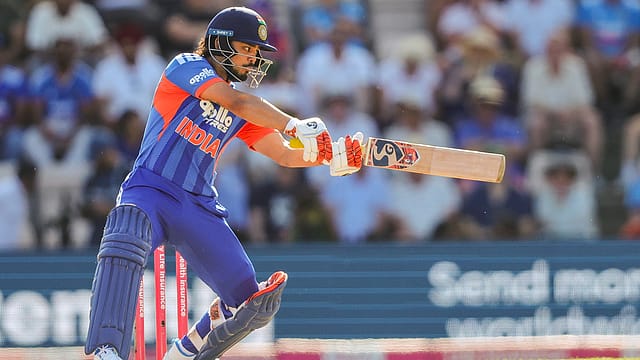
Ishan Kishan had already made 250 when his body asked him to stop. His legs were cramping. The Chennai heat had spent hours tightening itself around him. East Zone had crossed 600. South Zone had been reduced from an opposition to an audience. Nobody could have accused the captain of abandoning his team.
Kishan retired hurt. He could have removed his pads, placed the innings in somebody else’s hands and allowed the scorecard to preserve a monumental unbeaten 250.
Instead, after another wicket fell, he began preparing to return. The gloves went back on. The helmet followed. A batter who had already occupied the crease for more than six hours walked down the steps again.

Zeroing In on ECI
09 Oct 2026 - Vol 05 | Issue 41
Constitutional legitimacy versus political opportunism
That short journey back to the middle contains much of Ishan Kishan’s career.
He has spent the past three years returning. Returning from the bench, from mental exhaustion, from a public disagreement over domestic cricket, from the loss of his central contract, and from the peculiar cruelty of scoring 210 for India and discovering that even a double century could not guarantee the next game.
At the MA Chidambaram Stadium, he returned once more. He reached 270 from 334 balls, with 30 fours and seven sixes, before attempting to clear long-on and finding the fielder. East Zone eventually made 708 in the Duleep Trophy final against South Zone.
The score attracted attention because it was enormous. Its tempo told the deeper story. In December 2022, Kishan reached an ODI double century in 126 balls. In Chennai, his first fifty required 71. His double century arrived from 270. The fastest man had finally learnt to wait.
The Three Missing Runs
The number 270 looks new only until Ishan Kishan’s career is turned back ten years.
In November 2016, an 18-year-old Kishan made 273 for Jharkhand against Delhi in the Ranji Trophy. He hit 21 fours and 14 sixes, setting a record for Jharkhand’s highest individual first-class score.
The innings was youth without a speed limit. He had already captained India to the final of the Under-19 World Cup earlier that year, although his own tournament with the bat had been disappointing. The 273 supplied a roaring correction. Here was a compact left-hander who kept wickets, attacked fast bowling and treated spinners as invitations.
Ten years later, he stopped three runs short of that career best. Between 273 and 270, the boy became famous, expensive, exhausted, expendable and necessary again. He won IPL titles with Mumbai Indians. He became the franchise’s leading run-scorer in its 2020 championship season. He attracted a ₹15.25-crore bid at the 2022 auction. He made half-centuries on his ODI and T20I debuts. He played two Tests and scored an unbeaten fifty.
He also spent months carrying drinks, disappeared from India’s plans, lost his BCCI contract and watched other wicketkeepers move into the space he once expected to occupy. The three missing runs measure ten years.
The Boy Who Had to Leave Bihar to Play for Bihar’s Neighbour
Kishan was born in Patna on July 18, 1998.
His journey into serious cricket immediately required a detour. Bihar’s long administrative problems and absence from the BCCI’s senior domestic structure meant the state could not provide the conventional pathway his talent required. Kishan crossed into neighbouring Jharkhand to pursue his career.
That placed him in the cricketing geography of Mahendra Singh Dhoni. The comparisons were unavoidable. Both were wicketkeeper-batters associated with Jharkhand. Both generated extraordinary power from relatively compact frames. Both possessed the confidence to attack international fast bowlers before reputation suggested they had earned the right.
But Ranchi had already produced the most influential Indian wicketkeeper of all time. Kishan’s early coach Uttam Mazumdar once recalled the resistance he encountered while trying to secure the youngster an opportunity. The response, reportedly, was blunt: “Ranchi se ek Dhoni kaafi hai (One Dhoni from Ranchi is enough).
Kishan was eventually given one match. Batting at No. 7, he remained unbeaten on 28 and earned a contract with SAIL carrying a monthly stipend of ₹3,000.
The Dhoni comparison opened doors in the public imagination and narrowed the space in which Kishan could establish his own identity. Dhoni appeared to slow matches until they obeyed him. Kishan attacked them before they could make up their minds.
The Captain Who Could Not Score
India selected Kishan to captain its team at the 2016 Under-19 World Cup in Bangladesh.
The squad reached the final, where it lost to West Indies. Kishan contributed as a leader but endured a difficult tournament with the bat, scoring 73 runs in six innings.
For a young player, captaincy had delivered national visibility at the precise moment his batting became least cooperative.
That pattern would follow him. Every advancement came carrying a complication. Every success seemed to require another examination before it could be accepted. Months after the Under-19 World Cup, the 273 against Delhi demonstrated the destructive range that the tournament had failed to capture.
He was still 18. His score contained 198 runs in boundaries. The innings did not turn him instantly into an India player. Wicketkeeper-batters were not scarce, and Jharkhand was rarely the quickest route into the national batting order.
Kishan continued manufacturing evidence.
The IPL Discovered His Violence
The Gujarat Lions brought Kishan into the IPL in 2016. Mumbai Indians acquired him two years later and gave his batting a larger stage.
The full breakthrough arrived in 2020. Playing in the United Arab Emirates, Kishan scored 516 runs at an average above 57 and a strike rate of 145.76. He finished as Mumbai’s leading run-scorer and hit more sixes than anyone else in the tournament.
One innings explained the attraction. Mumbai were chasing 202 against Royal Challengers Bangalore when Kishan made 99 from 58 balls. He struck nine sixes and dragged the match towards a Super Over before falling one run short of his century. The innings had the emotional violence that would become his signature. He did not merely accelerate a chase. He attempted to erase the damage that had occurred before he arrived.
India called him up in 2021. On his T20I debut against England, he made 56 from 32 balls and was named player of the match. On his ODI debut against Sri Lanka four months later, he hit the first ball he faced for six and made 59 from 42.
The speed looked like freedom. It may also have been insurance.
Kishan was entering teams crowded with openers, wicketkeepers and white-ball specialists. Every innings felt borrowed. He batted as though he needed to complete his argument before the selectors changed the subject.
210, Followed by a Chair
On December 10, 2022, India played Bangladesh in Chattogram.
Bangladesh had already won the three-match ODI series. Rohit Sharma was injured. Kishan entered the side for a match that appeared largely inconsequential.
He turned it into history. Kishan reached 100 from 85 balls. He required only 18 more deliveries to reach 150. His double century came from 126 balls, beating Chris Gayle’s record for the fastest ODI 200. By the time he was dismissed for 210 from 131 deliveries, he had struck 24 fours and ten sixes. Virat Kohli, who shared a 290-run partnership with him, appeared almost restrained while scoring a century. Kishan later said he could have made 300 had he remained at the crease.
It did not sound absurd. At 24 years and 145 days, he was also the youngest man to score an ODI double century. His maiden ODI hundred had become a double. India’s reserve opener had produced an innings achieved by only a handful of batters in the format’s history.
India played its next ODI against Sri Lanka exactly one month later. Kishan watched from outside the XI. Rohit returned. Shubman Gill retained the other opening position. Gill soon produced a spectacular run of his own, including an ODI double century against New Zealand, and justified India’s faith.
The decision was defensible as selection. Its effect on Kishan must have been harder to explain. He had scored 210 and returned to the chair. Indian cricket had given him the cruelest possible lesson: no innings can make a crowded future permanent.
A Wicketkeeper Without a Wicket to Keep
Kishan’s route became even more complicated by the competition surrounding the gloves.
Rishabh Pant had established himself as a transformative Test batter. KL Rahul became a dependable wicketkeeping option in one-day cricket. Sanju Samson remained in contention. Jitesh Sharma, Dhruv Jurel and others pushed into different formats.
Kishan offered a distinctive combination: a left-handed opener who could keep wicket and immediately increase the scoring rate. Yet his versatility sometimes made his position less defined.
Was he an opener or a middle-order disruptor? India used him in both roles. Was he a first-choice wicketkeeper or batting cover who happened to keep? Was he a three-format player or a white-ball specialist whose attacking instincts would be exposed by the red ball?
During the 2023 Asia Cup, he made 82 against Pakistan after India slipped to 66 for four. Batting away from his preferred opening position, he absorbed pressure and added 138 with Hardik Pandya.
The innings should have broadened perceptions of him. By the World Cup, he was back on the margins. He played India’s opening matches while Gill recovered from illness and then returned to the bench. The journeys continued. The matches did not.
When Travel Without Cricket Became Too Much
In December 2023, during India’s tour of South Africa, Kishan requested a break and withdrew from the Test squad for personal reasons.
He later described experiencing travel fatigue after spending long periods with the Indian team without playing. “I was scoring runs and then I found myself on the bench,” he said in 2024. “I was not feeling well or right, and so I decided to take a break.”
The distinction between being part of a team and playing for it can be brutal. A reserve cricketer trains at international intensity, moves between hotels, maintains match readiness and carries the scrutiny attached to representing India. Then somebody else walks onto the field.
There is no score at the end of the day to justify the fatigue. Kishan said the period was “depressing” and that few people beyond his family and closest circle understood what he was experiencing.
The admission mattered. Elite sport routinely celebrates athletes who play through physical pain while treating mental exhaustion as a failure of gratitude. Kishan had reached a point at which continuing to travel no longer meant he was progressing. He stepped away. Then the break developed into a confrontation.
The Contract That Became a Warning
The BCCI wanted centrally contracted players who were not on national duty to participate in domestic cricket.
Kishan did not play for Jharkhand in the Ranji Trophy during his break. Instead, he trained in Baroda and prepared for his competitive return.
His explanation was that he was not in the mental state to play any serious cricket. “I was not in a frame of mind to play,” he reportedly said.
The board saw the matter differently. In February 2024, Kishan and Shreyas Iyer were omitted from the list of centrally contracted players. The BCCI publicly reiterated that players should prioritise domestic cricket when they were not representing India.
Neither position was entirely frivolous. A player experiencing mental fatigue is entitled to stop. A national board is entitled to insist that available players participate in the domestic system that supports selection.
The rupture grew from two incompatible definitions of availability. Kishan believed that leaving international cricket temporarily meant leaving competitive cricket. The BCCI treated his absence from India as an opportunity to play for Jharkhand. The disagreement cost him his contract and hardened public perceptions. A complicated mental-health episode was converted into a referendum on discipline.
The Return Had to Begin Where the Argument Started
Kishan could not talk his way back. He returned to domestic cricket.
He captained Jharkhand in the Buchi Babu tournament and made a century. He scored another hundred in the Duleep Trophy in 2024. He resumed Ranji Trophy cricket and rebuilt his relationship with the pathway he had been accused of avoiding.
The BCCI restored him to a Grade C central contract in 2025, Reuters reported. The restoration did not immediately return him to the centre of India’s plans. Mumbai Indians had also moved on. After bidding ₹15.25 crore for him in 2022 and retaining him through 2024, the franchise released him. Sunrisers Hyderabad bought him for ₹11.25 crore before the 2025 season.
On his SRH debut, Kishan scored his first IPL century. The old speed remained. He needed to prove it was no longer the only speed he possessed.
In June 2025, Nottinghamshire signed Kishan for two County Championship matches.
Short-term county contracts rarely enter an Indian player’s mythology. This one mattered because Kishan was attempting to reclaim a longer-format identity. He made 87 from 98 balls on debut against Yorkshire at Trent Bridge. In his second game, he scored 77.
The sample was small. The signal was useful. Away from the IPL, away from the noise surrounding his BCCI contract and playing against the moving red ball in England, Kishan demonstrated that his game could travel beyond T20 conditions.
The county stint did not immediately reopen India’s Test door. It added another plank to the bridge.
The 517-Run Answer
The full white-ball return began with an overwhelming domestic season.
Kishan captained Jharkhand to its first Syed Mushtaq Ali Trophy title in 2025. He finished as the tournament’s leading scorer with 517 runs, accumulated at nearly two runs per ball.
In the final against Haryana, he made 101 from 49 deliveries. Kumar Kushagra, the same batter who would later share the 230-run Duleep Trophy partnership with him, joined Kishan in a 177-run stand.
The performance forced him back into India’s T20 World Cup plans. Kishan entered the 2026 tournament as a player who had barely featured in selection discussions weeks earlier. He left as a world champion.
In the final against New Zealand, he made 54 from 25 balls as India amassed 255 for five and won by 96 runs. India became the first team to successfully defend the men’s T20 World Cup, Reuters reported. Three years after scoring 210 and losing his place, Kishan was producing a half-century in a World Cup final. The fastest version of Ishan had completed its comeback. Chennai was about retrieving the rest of him.
What Makes Ishan Kishan Different?
Power is the first answer. It is also the least complete.
Kishan is approximately five feet six inches tall, but his batting creates force through exceptional bat speed, strong wrists and a stable base. He lowers his centre of gravity naturally and can attack lengths that taller batters often need to manufacture room against.
His hands travel quickly through the ball. That allows him to pull pace, lift spin and change a bowler’s margin for error. As a left-hander in Indian line-ups frequently dominated by right-handers, he can disrupt match-ups and force captains to rearrange fields.
His real gift is compression. Kishan can pack several overs of scoring into a short burst. A contest moving normally can suddenly become irretrievable. Bowlers change their lengths, captains protect boundaries and partners are allowed to settle while the field reacts to him.
That gift created the 210. The 270 showed what happens when he refuses to spend it all at once.
What Did the 270 Reveal?
The innings began on the first morning of a five-day final, with East Zone already well placed but still needing its captain to convert control into something permanent. Kishan reached fifty from 71 balls. That alone marked a departure from the caricature of a batter governed entirely by impulse.
He built rather than detonated. His first hundred arrived on the opening day. He resumed on 111 and extended his fifth-wicket partnership with Kushagra to 230. When South Zone attempted to tempt him into errors, he was willing to wait for scoring opportunities.
The boundaries still came. Thirty fours and seven sixes ensure nobody will mistake the innings for passive occupation. But they arrived across 334 deliveries. Kishan reached his maiden Duleep Trophy double century from 270 balls by driving Devdutt Padikkal through the covers. He then accelerated, crossed 250 and left the field with cramps before returning.
The comeback after retiring hurt was not required statistically. It was revealing psychologically. A younger Kishan might have regarded 250 as sufficient proof of dominance. This one wanted the innings completed on his terms. South Zone eventually dismissed him for 270. East Zone reached 708. Kishan also crossed 4,000 first-class runs.
The milestone is less important than the method. India already knew he could destroy an attack. He showed he could exhaust one.
Does the Innings Make Him a Test Contender?
It places him back in the discussion.
Kishan has played two Tests, both in the Caribbean in 2023. He made 78 runs without being dismissed, including an unbeaten 52, before losing his opportunity when other options returned.
His Test case remains complicated. Rishabh Pant has produced match-winning innings across continents. Dhruv Jurel has impressed in limited opportunities. KL Rahul offers experience and flexibility, while selectors must balance wicketkeeping quality with batting roles and conditions.
One first-class innings cannot leapfrog all of them. The 270 answers a narrower question. Can Ishan Kishan construct a long red-ball innings against a strong domestic attack without abandoning his attacking identity? Chennai supplied a compelling yes. Test selection will require repetition, technical confidence against movement and spin, sustained wicketkeeping standards and an available place in the team.
The innings does not settle the contest. It earns him entry into it.
The score can also obscure another evolution.
Kishan made 270 as East Zone captain. Leadership has accompanied him since the Under-19 World Cup, but his public identity has largely remained that of the exuberant hitter: laughing behind the stumps, dancing down the pitch and supplying dressing-room mischief. Captaining Jharkhand to a maiden Syed Mushtaq Ali title and leading East Zone into the Duleep Trophy final demand a different set of qualities.
He must manage bowlers, judge declarations, protect young players and control the emotional rhythm of a team. At Chepauk, his greatest contribution as captain was to make the match extraordinarily simple for everyone around him. Bat once. Bat enormously. Leave South Zone beneath 708. The player once trapped by uncertainty had imposed certainty on the final.
The Price of Playing in a Hurry
Ishan Kishan’s aggression has often been explained as personality. His career suggests another influence.
He learnt early that opportunity could vanish. Bihar could not provide a pathway, so he moved to Jharkhand. The Under-19 captaincy brought attention while his runs disappeared. The 273 did not produce an immediate India career. His position shifted according to who else was available. The fastest ODI double century did not buy the next game.
When selection feels temporary, patience can look dangerous. A batter tries to score before the good ball arrives, before the innings ends, before another wicketkeeper returns, before the selectors decide that balance requires somebody else.
The urgency that thrilled crowds may also have been a response to insecurity. This is what makes the 270 feel larger than its number. Kishan did not bat like a man trying to prevent tomorrow from being taken away. For 334 balls, he owned today.
From 273 to 270
At 18, Ishan Kishan made 273 because he wanted Indian cricket to hurry up and find him. At 24, he made 210 and discovered that history could still leave him waiting outside the team. He then stepped away, lost his contract and was required to return through the domestic door. He captained Jharkhand, played county cricket, scored 517 runs in a T20 competition and made a half-century in a World Cup final. At 28, he arrived within three runs of the innings that had announced him ten years earlier.
The boy who made 273 was trying to overwhelm the future. The man who made 270 had survived it. There will be another India squad. Another debate over wicketkeepers. Another question about whether Kishan belongs in Tests, ODIs, T20Is or all three. Indian cricket’s abundance guarantees that no claim remains uncontested for long.
But Chennai has altered the terms of the conversation. Ishan Kishan is no longer merely the man who can reach 200 faster than anyone else. He is also the man who can take 270 balls to get there, bat until his body removes him and then return for more. He fell three runs short of his younger self. He may never have looked further ahead.