17 Years Later, The World Comes Back: Can India Rule its Own Badminton Court?
Seventeen years ago, at the 2009 Badminton World Championships in Hyderabad, Chinese men's doubles champion Cai Yun flung his racquet into the stands. Kasi Viswanadham caught it, concealed it under his shirt and took it home. His family wasn't wealthy enough to preserve a world champion's racquet as memorabilia, so it was eventually restrung and handed to his young son, who played tournaments with it and kept winning.
His name was Satwiksairaj Rankireddy.
The remarkable story, reported by The Indian Express ahead of the World Championships, captures just how dramatically Indian badminton has changed since the tournament was last held here. Satwik's brother was a volunteer at the 2009 event and his father worked as a line umpire. On Monday, Satwik will walk into New Delhi's Indira Gandhi Indoor Stadium as one half of India's greatest men's doubles partnership and among the country's strongest hopes of winning a world title. A boy who once went to the World Championships to watch the best players on the planet now returns to the tournament trying to become one himself.

Losing Memory
16 Oct 2026 - Vol 05 | Issue 42
The making of a medical and social emergency
In 2009, India was still waiting for its first medal at the World Championships. Saina Nehwal reached the quarterfinals in Hyderabad but could not break through. PV Sindhu was 14, still years away from becoming the player who would transform India's record at the event. Satwik was an aspiring kid. Chirag Shetty was another. India hosted the world but remained largely outside badminton's circle of champions.
Seventeen years later, the equation has changed dramatically. According to Olympics.com, India has now won 14 World Championship medals through 11 players. The 30th edition of the tournament, which runs from August 17 to 23, carries the highest number of BWF ranking points alongside the Olympic Games and remains one of badminton's most coveted prizes. The difference this time is expectation.
Sindhu returns to her favourite stage
Nobody embodies India's transformation at the Worlds more completely than PV Sindhu.
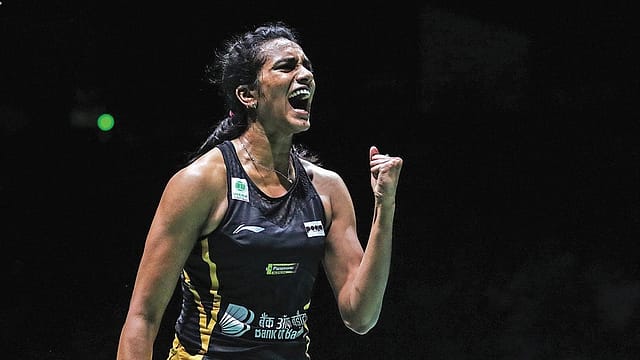
Her record at the tournament is extraordinary: five medals, beginning with bronze in 2013 and 2014, followed by silver in 2017 and 2018 and finally gold in Basel in 2019. The New Indian Express notes that Sindhu shares the women's singles record of five World Championship medals with China's Zhang Ning. A medal in Delhi would therefore take her into territory no other women's singles player has occupied.
At 31, Sindhu is no longer the automatic title favourite she once was. Injuries, inconsistent form and the emergence of a younger generation have changed the competitive landscape around her. But her timing could hardly have been better. She won the Japan Open last month and arrives in Delhi with renewed confidence.
“The Japan Open gave me a lot of confidence, and I hope to carry that confidence forward,” Sindhu said ahead of the tournament. “Everything is going well, so I'm taking it one match at a time.”
The draw, however, offers little room for nostalgia. Sindhu, seeded ninth, begins against Ireland's Sophia Nobel but could run into China's third seed Wang Zhi Yi in the pre-quarterfinals.
That potential contest carries its own history. Since Sindhu began winning medals at the Worlds in 2013, she has knocked out eight Chinese players across nine editions, seven of whom were ranked inside the world's top seven. Wang herself acknowledged ahead of the tournament that she had previously carried “too much” in her head when facing Sindhu.
For a player whose recent seasons have been punctuated by questions about whether her best badminton is behind her, the World Championships remain the one arena where reputation and memory can become weapons. Sindhu knows how to survive these weeks, and her opponents know what she has done here before. This time she also has a home crowd behind her.
Satwik-Chirag and the title that remains
If Sindhu carries India's greatest World Championship history, Satwik and Chirag carry perhaps its strongest immediate title ambition.
The fifth seeds have already done almost everything Indian men's doubles players were once told was improbable. They have been world No. 1, won the Asian Games, collected major tour titles and claimed bronze at the World Championships. Their Singapore Open triumph in May underlined that, when fit and firing, they remain capable of beating anyone.
The World Championship gold remains missing.
Delhi offers an obvious opportunity, although Satwik's recurring shoulder trouble complicates the picture. The injury has disrupted the pair's season and forced withdrawals after their Singapore success. Satwik has acknowledged that managing the problem has been frustrating, but the pair have little intention of abandoning the attacking style that made them dangerous in the first place.
The men's doubles field also offers opportunity precisely because nobody owns it. Six different combinations from five countries have won the last six World Championships. Unlike eras dominated by one seemingly unbeatable pair, the current field can open dramatically over the course of a week.
For Satwik, there is another layer to all of this. In 2009, his family went home from the Hyderabad Worlds with Cai Yun's racquet. In 2026, the son arrives carrying the possibility of an Indian world title. Sport rarely provides circles quite so neat.
Beyond the biggest names
India's challenge is also broader than it was during the years when almost every major tournament preview began and ended with Saina or Sindhu.
Lakshya Sen, seeded 14th, already knows what a World Championship podium feels like after winning bronze in 2021. At his best, his speed, defence and ability to extend rallies can trouble the elite. His problem over the past few seasons has been sustaining that level long enough to turn deep runs into titles.
Ayush Shetty faces the opposite problem: he has barely had time to discover what the World Championships feel like before being asked to confront their most difficult test. The 22nd-ranked Indian makes his debut against China's top seed and defending champion Shi Yu Qi. There may be no harsher introduction available.
Unnati Hooda joins Sindhu in women's singles, while Treesa Jolly and Gayatri Gopichand lead India's women's doubles challenge. Dhruv Kapila and Tanisha Crasto, seeded 15th, head the mixed doubles contingent.
There are less celebrated journeys within the team too. Hariharan Amsakarunan's family borrowed money to fund his badminton, and there were times when the young doubles player avoided tournaments because he felt guilty about asking his father to spend more on travel after early defeats. He now arrives at his first World Championships with Pullela Gopichand describing him as “world class”.
Those stories point to something larger than India's medal count. The depth beneath the marquee names is slowly widening.
From hoping for a medal to expecting one
The transformation began two years after the Hyderabad Worlds, when Jwala Gutta and Ashwini Ponnappa won women's doubles bronze in 2011 and ended India's long wait for a medal at the tournament.
Sindhu then changed the scale of ambition. Her five medals made podium finishes at the Worlds feel repeatable rather than exceptional. Saina Nehwal added silver and bronze. Kidambi Srikanth and Lakshya Sen shared the men's singles podium in 2021. Satwik and Chirag opened another route through men's doubles.
India's relationship with the World Championships consequently changed. A medal stopped feeling like a once-in-a-generation accident and became something Indian players could reasonably be expected to chase.
That expectation creates pressure in Delhi. Playing at home offers familiar conditions, partisan stands and an energy Indian players rarely experience at the Worlds. It also removes the anonymity that can occasionally help athletes at major championships. Every stumble will happen in front of a crowd waiting for an Indian breakthrough.
Sindhu understands both sides of it.
“It's special because the World Championship is happening in India,” she said. “I'm really happy to play the World Championship at home. I hope to make the most of it and win a medal.”
There is another performance being judged this week as well.
Reuters reports that India, which is preparing to host the 2030 Commonwealth Games and has ambitions around the 2036 Olympics, is treating major international competitions as opportunities to demonstrate its ability to stage global sporting events.
Delhi has already provided organisers with some unusually local challenges. After a monkey entered the spectator gallery during the India Open, men capable of mimicking langur calls have reportedly been deployed to deter rhesus monkeys around the venue. Pigeon problems that disrupted the India Open have also prompted anti-roosting measures. Badminton Association of India secretary general Sanjay Mishra said the earlier issues had been addressed and the BWF was satisfied with preparations.
The episode is colourful, but the stakes behind it are serious. For seven days, the Indira Gandhi Indoor Stadium will carry two Indian ambitions simultaneously: proving that the country can stage one of badminton's biggest tournaments and proving that its players can win one. Which brings the story back to 2009. India hosted the Worlds then and went home without a medal. A young generation watched the champions from the stands, gathered autographs, carried home memories and, in one extraordinary case, took home a champion's racquet.
Seventeen years later, some of those children have become the players everybody else has come to watch.
Sindhu will chase a record sixth World Championship medal. Lakshya will try to rediscover the form that once carried him onto the podium. Ayush will learn immediately what facing a world champion feels like. Satwik and Chirag will chase the title that has so far escaped them.
The venue has changed from Hyderabad to Delhi. Indian badminton has changed far more.
In 2009, India hosted the world while still trying to find its place in it. In 2026, it begins the tournament with champions, former world No. 1s, Olympic medallists and genuine title contenders.
That makes the question facing Indian badminton tomorrow morning considerably more demanding than it was 17 years ago. India has learnt how to win on the world stage. Can it now do it when the world comes home?
(With inputs from ANI)