Women's reservation Bill: PM Modi vows to push 33% quota as Parliament prepares for big test
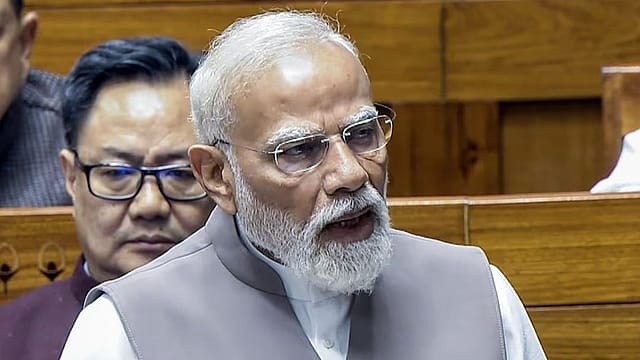
India's women's reservation debate is entering another crucial phase. With Parliament preparing to reconvene, Prime Minister Narendra Modi has sent a clear message to political opponents: his government will not give up on the promise of reserving one-third of seats for women.
The renewed push comes after the Union Cabinet approved the Constitution (One Hundred and Thirty-Second Amendment) Bill, 2026, and a revised delimitation proposal on Friday. The government hopes to bring the long-delayed quota closer to implementation, potentially ahead of the 2029 Lok Sabha elections.
But this is no longer just a debate about reserving seats. It is also about how many seats Parliament and state Assemblies will have, how constituencies will be redrawn and whether political parties can agree on the new formula.
Hot Pursuit
27 Nov 2026 - Vol 01 | Issue 02
The Shah Doctrine of Internal Security
PM Modi says opponents cannot stop women's reservation
In a post on X on Saturday, PM Modi reiterated his government's commitment to fulfilling its promise to women. In a video accompanying the post, he spoke about the long campaign for greater representation and the women who had raised the demand over the years.
"We had made a promise to our Nari Shakti, and we remain committed to fulfilling it..." He added: "Women's reservation is a fight I am fighting for a long time. Many women have raised this issue. I have the blessings of all women in the country. We will defeat every barrier in the way of this. All those parties who are opposing will never be able to stop the women's reservation Bill."
Union Home Minister Amit Shah also described the Cabinet's approval as a significant step towards ending the decades-long wait for greater representation. "Giving women a stronger role in elected representation has been a commitment of the Modi government.”
"With the Union Cabinet’s approval of the 132nd Constitution Amendment Bill under Modi’s leadership yesterday, the decades-long wait of the country’s women is about to end. The 33% reservation for women in the Lok Sabha and state legislative assemblies, provided through the Nari Shakti Vandan Act, will now become a reality," Shah said.
Why the new women's quota Bill is linked to delimitation
The Nari Shakti Vandan Adhiniyam, passed in 2023 as the 106th Constitutional Amendment, provides for 33% reservation for women in the Lok Sabha and state Assemblies. However, its implementation was linked to a delimitation exercise following a census.
The new proposal seeks to accelerate that process. The Constitution (132nd Amendment) Bill, 2026, works alongside the Delimitation (Second) Bill, 2026, which proposes increasing the number of Lok Sabha seats and Assembly seats in every state and Union Territory by 50%.
According to the revised proposal, the Lok Sabha's maximum strength could rise to 850 members, while the ceiling for state Assemblies would increase to 650. The existing proportion of Lok Sabha seats allocated among states is also proposed to remain protected until 2051. Constituency boundaries would be redrawn using the latest census figures available when the proposed law comes into force.
Shah argued that the change would make policymaking more inclusive.
"At least one-third representation for women in state legislative assemblies will make the policies of states and Union Territories more inclusive, while their presence in the Lok Sabha will add a new dimension to policymaking, lawmaking and the setting of national priorities," Shah said.
Parliament's November 30 session will be the next big test
The Lok Sabha is scheduled to reconvene on November 30, with the Rajya Sabha meeting from December 2. The government plans to introduce the revised legislation during the special sitting.
The Cabinet's approval, however, is not the final step. The constitutional amendment must still secure the required special majority in Parliament before the reservation framework can become law. The government's earlier attempt to advance the process failed in the Lok Sabha in April, making the coming session particularly important.
Shah has urged political parties to back the proposal. "All parties should support this historic initiative to make women strong partners in governance," Shah added. For millions of women, the question is no longer simply whether political representation should improve. It is when the promised seats will finally translate into representation in India's elected institutions.
(With inputs from ANI)