The Deepam That Lit Up Parliament
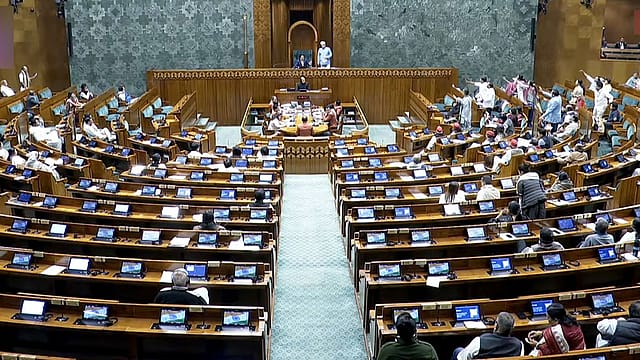
The move by opposition MPs to initiate impeachment proceedings against Madras High Court judge GR Swaminathan marks one of the rare occasions in recent years when a single judicial order has translated directly into a parliamentary confrontation. The trigger was the judge’s December 1 ruling on the lighting of the Karthigai Deepam at Thiruparankundram in Madurai, in which he permitted the ceremonial lamp to be lit at the ancient Deepathoon pillar on the hill on December 4 and directed the police to ensure protection for the ritual. What had until then remained a narrowly framed court dispute over the location of the Deepam ritual escalated, within days, into a wider legal, administrative and political confrontation involving the Tamil Nadu government and the Supreme Court, culminating in the INDIA bloc moving an impeachment notice against the judge signed by over 100 MPs. Under the Constitution, impeaching a High Court judge requires a notice signed by at least 100 Lok Sabha MPs or 50 Rajya Sabha MPs and a subsequent inquiry by a three-member committee, with removal possible only if “proved misbehaviour or incapacity” is established and both Houses vote by special majority.
For decades, the annual Deepam associated with the Arulmigu Subramaniya Swamy Temple had been lit at the Deepa Mandapam near the Uchipillaiyar temple on the hill, a practice that evolved as a matter of custom even as the larger sacred hill of Thiruparankundram retained layered religious claims. The place is not only one of the six abodes of Lord Murugan but also the site of the Sikandar Badusha dargah, making it a space where Hindu and Muslim worship have coexisted within a tightly negotiated geography of access. Disputes over pathways, rituals and claims have reached courts intermittently over the years, and earlier judicial interventions, including an oft-cited 2017 division bench ruling, had generally emphasised preservation of the existing arrangement in the interest of communal stability.

Assembly Elections 2026: Race of the Warhorses
20 Mar 2026 - Vol 04 | Issue 63
The making of a summer thriller
In 2025, a group of devotees filed fresh writ petitions contending that the Deepathoon, a stone lamp pillar located higher up the hill, formed part of temple property and that restricting the Deepam to the Deepa Mandapam stemmed from executive decisions rather than binding legal precedent. Justice Swaminathan’s single-judge order accepted this contention, holding that Deepathoon did not fall within the dargah campus and observing that lighting the lamp there would not affect the rights of the Muslim community. He quashed the executive officer’s order that confined the ritual to the lower mandapam and directed that the Deepam be permitted at the pillar. In subsequent proceedings, the court allowed the petitioner to go up the hill with ten other persons and ordered that police and CISF protection be provided to enable the ritual to be carried out.
The Tamil Nadu government resisted implementing the order, arguing before the High Court and later in its petition to the Supreme Court that shifting the site of the Deepam risked disturbing public peace given the sensitivity of the location. Police barricades were erected on the hill, devotees attempting to proceed uphill were detained, and Section 144 was imposed in parts of the area. The High Court initiated contempt proceedings over non-compliance and reiterated that the order was required to be enforced. The state then sought urgent relief from the Supreme Court, but the Chief Justice declined immediate special listing, directing that the matter be numbered and placed before the appropriate bench in the ordinary course. With no interim stay granted, the High Court order technically remained operative even as its enforcement on the ground remained contested.
As the dispute widened, lawyers’ associations staged protests outside the Madras High Court in Chennai, alleging impropriety and judicial overreach. Opposition MPs raised the issue in Parliament, accusing the order of unsettling a fragile communal balance and disregarding prior judicial precedent. In the notice submitted to the Lok Sabha Speaker, 107 MPs (from both Houses) invoked Articles 217 and 124 and listed as grounds for impeachment “serious questions regarding impartiality, transparency and the secular functioning of the judiciary,” as well as alleging undue favouritism toward certain advocates and ideological bias.
Supporters of Justice Swaminathan, meanwhile, have defended the ruling as an enforcement of earlier property decrees and long-standing religious entitlement rather than as a departure from custom. They point to the court’s insistence on tightly controlled access and limited participation, with the petitioner permitted to take only ten persons and security forces directed to prevent gathering of crowds, as evidence that the order attempted to balance religious practice with administrative caution.
The confrontation over the Deepam order is unfolding against the backdrop of Tamil Nadu’s approaching Assembly elections, a timing that has sharpened its political charge. With the state set to go to the polls in 2026, the ruling DMK has moved quickly to frame the episode as both a law-and-order issue and a test of secular governance, wary of allowing a sensitive religious dispute to harden into an electoral flashpoint. Opposition parties, in turn, have accused the government of defying a court order for political convenience, while the INDIA bloc’s decision to escalate the matter to an impeachment notice in Parliament has lent the controversy a national profile.
At the centre of the conflict remains the hill itself, where faith, administrative restraint and political power rarely align without friction. The Deepathoon, now the focal point of legal and political contestation, is both a devotional marker and, after the court’s ruling, a judicially affirmed boundary of temple rights. The distinction between what has come to be accepted as custom and what a court now sanctions as lawful practice has been drawn with clarity. As the Supreme Court prepares to hear the Tamil Nadu government’s challenge and Parliament weighs whether to advance the impeachment motion, the dispute over a single lamp has become a test of how India’s legal and political institutions respond when questions of faith, law and public order converge on the same shared terrain.