The alleged ‘lungi’ slur in Rajya Sabha smells like ’60s regional chauvinism
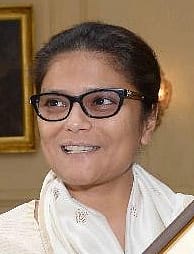
BJP lawmaker Sushmita Dev’s alleged “lungiwala” slur against Communist Party of India (Marxist) Rajya Sabha leader John Brittas has, along expected lines, led to an uproar and an adjournment after the Marxist MP moved a privilege notice against Dev in the House, but it has also brought back memories of Bombay in the 1960s and 1970s when the fledgling Shiv Sena used “lungi” as a pejorative to discredit and dehumanise south Indians.
In the 1960s, Sena chief Bal Thackeray and his cadre innovated ideologically, shifting from class confrontation to identity mobilisation to spread their wings. South Indians were identified as the first internal “other”. Linguistic chauvinism and cultural resentment became the organising principles of expansion. The slogan Bajao Pungi, Hatao Lungi captured this transition from economic conflict to cultural exclusion.

The Health and Wellness Issue
25 Sep 2026 - Vol 05 | Issue 39
Dev’s reported statement evoked memories of that controversial political slogan coined by Thackeray to establish his party’s credentials as a nativist political entity targeting South Indian migrants who were accused of snatching jobs away from Marathi speakers. Funnily enough, often, those South Indians targeted for attack by the Sena were those who sold coconut water on Marine Drive and electronic goods on DN Road, basically lower-rung working-class people in the informal sector.
Bal Thackeray’s politics rested on a majoritarian imagination that also framed minorities as demographic and cultural threats. In this sense, his rhetoric also bore a striking resemblance to contemporary global right-wing movements, including MAGA-style anti-immigration politics in the United States and Europe.

Speaking in Rajya Sabha, Brittas explained that he was proud of his identity as a south Indian and all that he had inherited as a Malayali, from his attire to food habits. “The other day, while I was speaking in the House, she made a derogatory remark, lungi wala, against me… I cherish every moment being Malayali,” he argued, emphasising that Dev had repeatedly interrupted him on Tuesday while he was speaking. Dev was previously with the Congress and then joined the Trinamool Congress before joining the Bharatiya Janata Party. She is the daughter of the late Congress veteran and union minister Santosh Mohan Dev. When the House resumed after 2pm, Dev said, "I am a Bengali from Assam. I have seen different states where we wear different attires and clothes. Neither I nor any members have cast aspersions on any state's attire. I wanted to put that on record."
Meanwhile, Leader of the House JP Nadda said: “We do not subscribe to such statements (slurs).”
What the Chair had to say was crucial indeed as he chose not to mince words just as he has done on a few occasions recently. “Hon’ble Members, certain instances have come to my notice regarding discourteous and undignified comments being made by Members interrupting the speech of other Members in the House. I would advise that Hon’ble Members should be careful not to hurt the sentiments and feelings of fellow Members,” the Chairman said. “Our culture is unique and inclusive of diverse regional cultures. There should be no disrespect to the cultural traditions and regional identities of our colleagues,” he stated.
In fact, Rajya Sabha Chairman and Vice-President CP Radhakrishnan’s statement was effectively a stern warning against attaching such labels to people, something some lawmakers have got away with in the past.