Parliament to likely reconvene on November 30: Why delimitation and women's quota are in focus
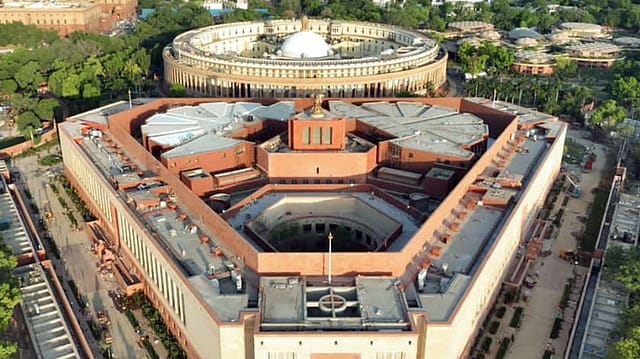
Parliament is set to return earlier than many expected, and the timing is raising questions about what the government plans to put before lawmakers. After more than 100 days without a fresh sitting, the Lok Sabha and Rajya Sabha are being asked to reconvene within days, with delimitation and women's reservation emerging as the issues drawing the most political attention.
Union Parliamentary Affairs Minister Kiren Rijiju said on November 26 that the government had requested the Lok Sabha Speaker and Rajya Sabha Chairman to reconvene the Houses on November 30 and December 2, respectively, to transact essential government business. The sittings could conclude on December 3, subject to the exigencies of business.

Anatomy Of A Stillborn Revolution
20 Nov 2026 - Vol 01 | Issue 01
Whatever Happened To The Cockroach Janta Party?
"The Government has requested Hon’ble Speaker, Lok Sabha and Hon’ble Chairman, Rajya Sabha to reconvene Lok Sabha on Monday, 30th November, 2026 and Rajya Sabha on Wednesday, 2nd December, 2026 respectively to transact essential Government Business," Rijiju posted on X.
"Subject to exigencies of the Business, the sitting of both Houses may conclude on 3rd December, 2026," he added.
The government has not publicly specified which bills or proposals will be taken up.
Why delimitation and women's reservation are back in the spotlight
The announcement has fuelled speculation that the government could use the sitting to advance legislation linked to delimitation and the implementation of the 33 per cent women's reservation law.
The proposed constitutional changes are expected to be linked to expanding the strength of the Lok Sabha, currently 543 seats, potentially to as many as 850. The exercise is politically sensitive, particularly because states have raised concerns about how a redistribution of parliamentary seats could affect their representation.
The women's reservation law provides for 33 per cent reservation for women in the Lok Sabha and state legislative assemblies, with its implementation linked to delimitation and the census process under the existing framework.
However, no official confirmation has emerged that either delimitation legislation or amendments related to women's reservation will be introduced during the upcoming sittings. The agenda remains undisclosed, making the short parliamentary schedule a subject of political speculation.
Why Parliament can reconvene without a fresh session summons
The unusual scheduling also has a procedural backstory. Parliament's Monsoon Session ended on August 13, when both Houses were adjourned sine die, meaning they were adjourned indefinitely without a date being fixed for the next sitting.
But the session was not formally prorogued by the President.
The distinction matters. Adjournment sine die ends the sitting, whereas prorogation formally terminates a session. Since the Monsoon Session remained technically open, the government can seek to resume it without going through the process of summoning a completely new session.
The extended unprorogued period has surpassed the previous record of 87 days set in 2008, making it the longest such gap in parliamentary history. Keeping a session unprorogued has also allowed Parliament to be reconvened at short notice, rather than requiring the customary lead time associated with summoning a new session.
Congress to discuss its parliamentary strategy
The announcement has also prompted political parties to prepare for the return of Parliament. The Congress Parliamentary Strategy Group is scheduled to meet in New Delhi on November 27 at 4.30 pm to discuss the party's approach to the upcoming proceedings.
The Opposition has previously raised questions about the government's plans on delimitation and women's reservation, seeking clarity on the proposed changes and their implications for states.
With the Houses expected to meet for only a few days, the undisclosed agenda will be closely watched. Whether the sitting turns into a legislative push on delimitation or remains focused on other essential business is likely to become clearer once the government formally outlines its plans.
(With inputs from ANI)