Kerala Assembly Election 2026: Perambra in Kozhikode a mirror to Kerala’s widening fault lines
Until about a decade ago in Kerala, there was a widely held belief that a stint in north India often made Malayalis more religiously rigid. In recent years, however, such polarisation has increasingly become part of the lived experience within the state itself. This is particularly evident in north Kerala, especially in and around the region once known as Kadathanadu, spread across Kannur and Kozhikode districts, largely around Vadakara. The area was once celebrated in folklore for its Chekavars, warriors who often fought to the death, and other exponents of the martial art kalaripayattu.
During a recent tour of Kozhikode, part of the erstwhile Malabar region in north Kerala, it became clear that religion had emerged as a central concern among voters, with religious fervour shaping and dominating political campaigns much more than ever before in the recent past.
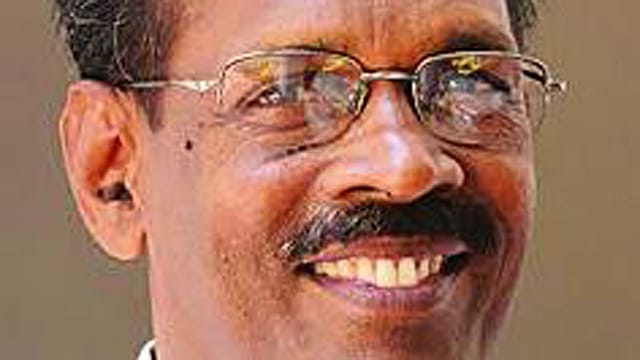
A case in point is the intense campaigning in the Perambra Assembly constituency, where the ruling Communist Party of India (Marxist), or CPM, has won 10 consecutive state elections and is hoping to secure an eleventh straight victory. Here, former minister and convenor of the CPM-led Left Democratic Front (LDF), 75-year-old TP Ramakrishnan, is pitted against 32-year-old Fathima Thahiliya of the India Union Muslim League (IUML) in what has become a battle of generations. The campaign in the constituency has also acquired a distinctly shrill communal tone.
Senior journalist PT Nasar, formerly executive editor of the MediaOne news channel, tells me that there is a history of communal politics in the region, with roots in its feudal past. It is much older here in Kadathanadu, comprising sensitive areas like Nadapuram, Kuttiady and others than in most parts of the rest of Kerala. While the Kuttiady seat is witnessing a tough fight between former IUML MLA Parakkal Abdulla and CPM’s KP Kunhammadkutty, the sitting legislator, in Nadapuram, CPI’s Vasantham and Congress’s KM Abhijith are locked in a fierce contest in this traditional seat of the Communists.

Open Minds 2026
26 Jun 2026 - Vol 05 | Issue 26
The power of ideas and arguments in 50 portraits
While the Left accuses IUML of communalising polls, the Left has been under attack from its rivals for allegedly running fake campaigns suggesting that their IUML or Congress opponents have deployed the Muslim communal card to pull in votes against Hindu candidates. This had come to the fore in 2024 when Shafi Parambil contested polls in the Vadakara Lok Sabha seat against CPM’s KK Shailaja, and now similar charges are being hurled at Thahiliya. In response, the UDF, of which IUML is a key constituent, has filed a complaint against the LDF alleging that the latter used a recorded announcement with communal messaging to seek votes for Thahiliya -- with the aim of creating a wedge between communities.

The state election commission is known to have written to LDF convener T P Ramakrishnan seeking an explanation about such a campaign from inside a vehicle used by LDF. Ramakrishnan told reporters that LDF had not authorised anyone to run such a campaign, nor does it agree with the content. Meanwhile, a controversy erupted over an invitation extended to Thahiliya for an event organised by the Welfare Party of India, which is affiliated with Jamaat-e-Islami. The Left states that Jamaat is playing mischief at the behest of the UDF to trash CPM.
In 2024, LDF was accused of fabricating a campaign in which UDF allegedly featured their Lok Sabha candidate Shailaja as a “kafir”, in a neat ruse to appeal to Hindu voters. This time around, Thahiliya was projected in the announcement in question as “Kauminte Kutti”-- kutti stands for girl in this case while kaum stands for tribe in Arabic; the phrase can therefore be translated as “daughter of the tribe”, reinforcing her Muslim identity.
Nasar notes that there is an underlying Hindu–Muslim tension in such campaigns, especially at a time when religious polarisation in the state is deeper than it has ever been. “It is essentially between the Hindu Thiyya community and a section of Muslims who were landed,” he adds.
There have been academic studies on the subject. True, the social divide is mirrored in political affiliations: while CPM has a strong support base among the Thiyyas, formerly tenants, IUML draws its strength from Mappilas who were historically landlords. However, the CPM–IUML political clashes have for decades given rise to communal tensions and riots in the region. In his paper titled The Nadapuram Enigma: A History of Violence and Communalism in North Malabar (1957–2015), P K Yasser Arafath discusses how Thiyyas came to be seen by a section of Muslims as “kafir”, and about the “assertion of new religiosity amongst the Thiyya community” modelled on North Indian processional rituals.
It is ironic that Nadapuram and nearby areas were once known for the custom of Thiyya and Muslim mothers breastfeeding each other’s children in what was known as paal-bantham, or milk kinship.