How analysts view Mamata’s gambit of making peace with sworn enemy CPM amidst EC row
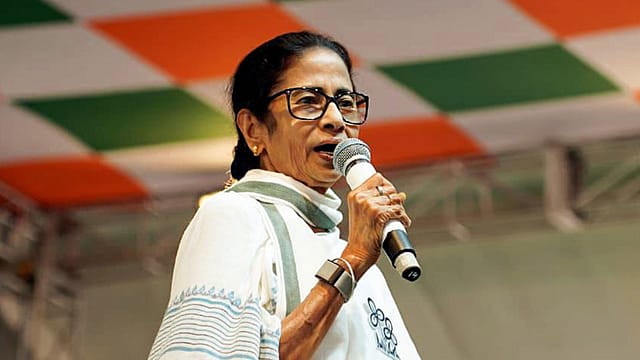
Responding to news reports that mortal enemies, the Communist Party of India (Marxist), or CPM, and the Mamata Banerjee-led Trinamool Congress (TMC), have initiated plans to mend fences in the wake of an existential crisis and citing allegations of irregularities in the Special Intensive Revision (SIR) of electoral rolls conducted by the Election Commission of India (ECI), political analysts say that it is a last-ditch battle by anti-BJP forces in the state to reverse their sagging electoral and organisational fortunes.
While a section of CPM activists is not thrilled with the idea of their party opening channels of communication with their arch rivals who have tried to physically eliminate them since TMC came to power in 2011 and until its fall from power in 2026, noted political theorist and academic Sumantra Bose tells Open that these are two distinct issues, the one related to SIR which calls for a joint front between TMC and CPM and the entire opposition to protest reported excesses by ECI which they claim has become a tool of the Central government.

Zeroing In on ECI
09 Oct 2026 - Vol 05 | Issue 41
Constitutional legitimacy versus political opportunism
According to reports in The Indian Express and elsewhere, Banerjee and CPM General Secretary MA Baby spoke on the phone on Friday to discuss finding common ground in the political battles ahead, following fresh disclosures about the SIR process and reports of division within the ECI.
“The gravity of the EC revelations is something the entire spectrum of opposition parties can agree on,” says Bose, author of several books and formerly a professor at the London School of Economics. The noted scholar, who has watched the state politics for long and is the grandnephew of Netaji Subhas Chandra Bose, goes on, “State-level politics in West Bengal is another matter. West Bengal politics is in an extraordinary state of flux. Mamata Banerjee is currently reduced to a smallish rump of her imploded party. At least four-fifths of the 80 MLAs elected on TMC tickets are presently in the anti-Banerjee camp, but their credibility is questionable as they are at least indirectly in cahoots with the BJP. Then there's the sorry bunch of twenty-odd Lok Sabha MPs elected on TMC tickets who are openly with the BJP.”
According to Bose, who has authored many books on conflict areas, including Kashmir, Sri Lanka, Bosnia, and about nationalism, “In this situation, both CPM and Congress (INC) sense an opportunity. Both have been marginalised in state politics — CPM since 2011 and Congress since it lost the bulk of its voters and cadres to Trinamool in the late 1990s.”
Both the Mamata rump and the TMC dissidents have been conspicuous by their near-total absence from the streets since May, he says, emphasising that it is almost as if the party that ruled West Bengal from 2011 to 2026 has evaporated from the public arena. “This is especially striking because Mamata and Trinamool's strength was always street protest and agitation. Banerjee's public activity consists mainly of periodic Facebook Live rants from the confines of her home.”
By comparison, Bose notes, both CPM and INC have been trying to show street-level presence and activity. The Congress has been organising sporadic michhils (demonstrations), and the arrest of its candidate in the imminent Nandigram by-election — a serious blunder by the BJP government — has generated some sympathy for the party. The CPM is sporadically trying to reactivate party offices in the districts with a view to reviving some of its comatose cadre networks, he states, adding that SFI has a presence on many college and university campuses across the state, including at Jadavpur University.
Notwithstanding all this, says Bose, "The Congress and CPM efforts are as yet feeble. But they still compare favourably with the shattered TMC and its splinters."
Bose offers his forecasts for near-term political developments: "By-elections will be held on October 6th in two assembly constituencies: Nandigram in East Medinipur, vacated by Suvendu Adhikari who has chosen to represent Bhabanipur in south Kolkata, and Rejinagar in Murshidabad district. Both are rural constituencies, but with different social configurations. Rejinagar is a Muslim-majority constituency and Nandigram a Hindu-majority constituency with a sizeable Muslim electorate (25 percent). The results in these two constituencies will give a preliminary indication of political trends in the Bengal countryside in the post-Trinamool era, and specifically the leanings of anti-BJP voters, Muslim and Hindu. Elections to some municipal corporations, including Kolkata, will probably be held in late November and that will give an indication of emerging trends in the metropolis and mofussil towns. The BJP will be hoping that anti-BJP votes get split among multiple contenders."
Whether or not that happens remains to be seen, sums up Bose.