EXPLAINED | Congress-SP Rift, Owaisi-Azad Entry, BJP’s Allies’ Ambitions: Inside UP’s Seat-Sharing Saga
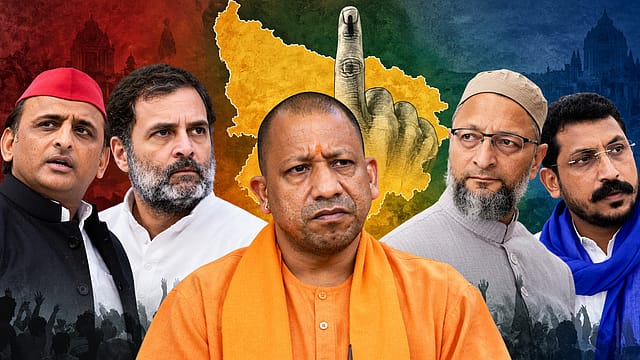
The battle for Uttar Pradesh’s 403 Assembly seats has begun well before the election campaign. The Samajwadi Party (SP) and Congress, which fought the 2024 Lok Sabha election together as part of the INDIA bloc, are struggling to agree on how many constituencies each should contest. The SP has already announced its first list of candidates, adding to the tension.
The BJP, meanwhile, is negotiating with four regional allies as they seek a larger share of seats in the National Democratic Alliance (NDA). A new political front formed by Asaduddin Owaisi’s AIMIM and Chandrashekhar Azad’s Azad Samaj Party (Kanshi Ram) is also preparing to enter the contest.
The challenge for all three political formations is to accommodate their partners without weakening their electoral prospects. Here is how the seat-sharing negotiations are unfolding and what makes the 2027 contest complicated.

The Wealth Issue 2026
06 Nov 2026 - Vol 05 | Issue 45
Portraits of Dreamers and Doers under 35
WHY ARE PARTIES NEGOTIATING SEAT-SHARING SO EARLY?
Uttar Pradesh has 403 Assembly constituencies, and a party or alliance needs at least 202 seats to form the government. With the election due in 2027, parties are beginning negotiations well in advance to avoid last-minute disputes over constituencies and candidates.
Seat-sharing is not merely about dividing the number of seats. It involves assessing a party's local organisation, caste equations, the popularity of candidates and the ability of alliance partners to transfer their votes.
The 2024 Lok Sabha election has also changed the bargaining positions of several parties. The Samajwadi Party won 37 of Uttar Pradesh's 80 parliamentary seats, while the Congress won six. The BJP, which had won 62 seats in the state in 2019, was reduced to 33.
These results have given the SP greater confidence in its ability to lead the Opposition in the state. The Congress, however, believes its improved performance justifies a larger share of Assembly constituencies.
WHAT IS CONGRESS DEMANDING FROM SP?
The Congress has sought 120 seats in the upcoming Assembly election and is reportedly unwilling to accept fewer, according to party sources cited by ANI.
During a meeting between leaders of the two parties in Delhi, the Congress submitted a list of 120 constituencies it wants to contest. The list reportedly includes seats in Rae Bareli and Amethi, as well as two constituencies in Saharanpur.
The demand has created differences because the SP has sitting MLAs in some of the constituencies sought by the Congress. The party has also announced candidates in Saharanpur, where the Congress wants to contest.
The Congress is bargaining on the strength of its performance in the 2024 Lok Sabha election and its desire to rebuild its organisation in Uttar Pradesh. It wants a seat-sharing arrangement that reflects its position as a national party and a partner in the INDIA bloc.
However, reports have put the Congress's demand at different numbers, with some suggesting it had earlier sought around 130 seats. The latest ANI report puts its demand at 120.
WHY IS AKHILESH YADAV NOT AGREEING TO THE CONGRESS DEMAND?
The SP is reportedly offering the Congress 26 seats, considerably fewer than the 120 it has demanded. Party general secretary Ram Gopal Yadav has explained the offer by referring to the Congress's electoral performance in those constituencies.
According to reports, the offer includes two seats won by the Congress, four where it finished second, and 20 where the SP secured between 60,000 and 70,000 votes while the Congress received around 2,000.
SP chief Akhilesh Yadav has maintained that candidate selection should be guided by electoral winnability and the ability to defeat the ruling BJP. In a post on X, he stressed the need for mutual understanding between alliance partners and called for consensus candidates under the party's PDA framework — Pichhda, Dalit, Alpsankhyak, referring to backward classes, Dalits and minorities.
The SP believes it has a stronger Assembly-level organisation and should retain a larger share of constituencies. The Congress, on the other hand, does not want to settle for a small number of seats after its improved performance in the Lok Sabha election.
The difference between the two positions remains substantial, and further negotiations will be needed to prevent the disagreement from damaging the alliance.
WHY HAS THE SP'S FIRST CANDIDATE LIST CREATED FRICTION?
The SP announced its first list of five candidates on November 24, even as seat-sharing talks with the Congress were continuing.
The party named Umar Ali Khan from Behat, Ashu Malik from Saharanpur, Nahid Hasan from Kairana, Mehboob Ali from Amroha and Jyoti Lodhi from Lalitpur.
The announcement is significant because the Congress has reportedly sought two constituencies in Saharanpur. The SP's decision to name candidates before reaching a final agreement has raised questions about how the two parties will resolve their competing claims.
The list also indicates that the SP is keen to retain constituencies where it has sitting legislators and established local networks. For the Congress, accepting candidates already announced by the SP could mean giving up seats it had included in its own demand.
The timing has therefore added pressure to negotiations that were already complicated by the wide gap between the two parties' respective seat-sharing positions.
WHO ARE THE FOUR BJP ALLIES SEEKING A LARGER SHARE?
The BJP is negotiating with four major regional partners in Uttar Pradesh: the Rashtriya Lok Dal (RLD), Apna Dal (Sonelal), the Suheldev Bharatiya Samaj Party (SBSP) and the Nishad Party.
The RLD is led by Jayant Chaudhary, Apna Dal (S) by Anupriya Patel, the SBSP by Om Prakash Rajbhar and the Nishad Party by Sanjay Nishad.
The BJP has reportedly assigned senior leaders to handle negotiations with each partner. Chief Minister Yogi Adityanath is handling discussions with the RLD, Deputy Chief Minister Brajesh Pathak with Apna Dal (S), BJP state president Pankaj Chaudhary with the Nishad Party and Deputy Chief Minister Keshav Prasad Maurya with the SBSP.
The allies have made substantial demands. Apna Dal (S) has reportedly sought 52 seats, compared with the 17 it contested in 2022. The SBSP has submitted a list of 42 constituencies, while the RLD is seeking between 25 and 35 seats. The Nishad Party, too, wants more than the 15 seats it contested in 2022.
The BJP is reportedly considering allotting between 60 and 80 seats to its allies. The difference between what the partners are demanding and what the BJP may be willing to offer could make negotiations difficult.
WHY DO BJP'S ALLIES BELIEVE THEY DESERVE MORE SEATS?
Each of the four parties has a distinct support base that the BJP wants to retain within the NDA.
The RLD has influence among Jat voters, particularly in western Uttar Pradesh. It contested 33 seats in the 2022 Assembly election as part of the SP-led alliance and won eight.
Apna Dal (S) draws support largely from Kurmi and other OBC communities, with an organisational presence in parts of eastern Uttar Pradesh and the Vindhya region. It contested 17 seats in 2022 and won 12.
The Nishad Party seeks to mobilise riverine communities, including Nishads, Kewats, Binds, Mallahs and Kashyaps. It contested 10 seats in 2022 and won six, while six additional candidates contested on the BJP symbol.
The SBSP has influence among Rajbhar voters, particularly in eastern Uttar Pradesh. It contested 19 seats with the SP alliance in 2022 and won six before returning to the NDA.
These parties believe their support bases can help the BJP in constituencies where it may not be as strong on its own. However, their demands can also overlap. The SBSP and Nishad Party, for instance, have both laid claim to Atrauli in Azamgarh.
The BJP's task is to accommodate these partners without creating resentment among its own leaders and workers who may also be seeking tickets from the same constituencies.
WHAT IS THE OWAISI-CHANDRASHEKHAR AZAD ALLIANCE?
A new political combination has added another dimension to the Uttar Pradesh election. Asaduddin Owaisi's All India Majlis-e-Ittehadul Muslimeen (AIMIM) and Chandrashekhar Azad's Azad Samaj Party (Kanshi Ram) have joined hands under the banner of the Samajik Parivartan Morcha.
The alliance was announced in Lucknow on November 12, with Chandrashekhar Azad, the Nagina MP, projected as its chief ministerial candidate. The front has positioned itself as a platform for Dalits, Muslims, backward classes and other marginalised communities.
Owaisi has called for a political alternative to the BJP, while Azad has invited other Opposition parties, including the SP and Congress, to join the alliance.
The two parties are expected to hold a rally in Lucknow on November 26, Constitution Day. Reports suggest that the seat-sharing arrangement between them could be announced after the event.
The alliance has spoken about contesting all 403 Assembly seats, although the exact division of constituencies between AIMIM and the Azad Samaj Party has not yet been made public.
WILL THE NEW FRONT AFFECT THE SP AND CONGRESS?
This is one of the central questions for the Opposition. The SP's PDA strategy seeks to bring together backward classes, Dalits and minorities, while the Owaisi-Azad alliance is also looking to mobilise some of these communities.
The overlap could create competition in constituencies where the SP relies on Muslim voters or where Chandrashekhar Azad's party hopes to consolidate Dalit support.
If the new alliance contests independently in such seats, it could divide votes that might otherwise go to the SP-Congress combine. The impact, however, will depend on the candidates fielded, their local support and the strength of the alliance's organisation.
The new front's ability to expand beyond its existing pockets of influence will also determine whether it emerges as a significant electoral force or primarily affects the calculations of other parties.
WHAT ARE THE BIGGEST CHALLENGES BEFORE THE ALLIANCES?
For the SP and Congress, the immediate challenge is to settle their differences without allowing the negotiations to turn into a public confrontation. The SP's early announcement of candidates has already complicated matters. Both parties will also have to manage local leaders who may rebel if they are denied tickets.
For the BJP, the task is to keep four allies satisfied while ensuring that the party retains enough constituencies to protect its own electoral interests. The regional partners are bargaining hard because of their caste and regional influence, but giving them too many seats could create discontent within the BJP.
The Owaisi-Azad alliance faces a different challenge. It must convert its appeal among Dalits, Muslims and backward communities into electoral support, decide how to divide constituencies between its partners and establish a presence across the state.
With 403 seats and several parties competing for political space, the seat-sharing negotiations are likely to remain a major story in the run-up to the election. The alliances may agree on whom they want to defeat, but deciding who gets to contest each constituency is proving to be a battle of its own.
With inputs from ANI