A “buffer zone” in Lok Sabha marks a new line of control
Battles in Parliament are as much about optics and making a point – much like scoring by the deft touch of a sabre in fencing jousts. The sharp verbal thrust or a smart pirouette are par for the course. On Tuesday Congress chief whip K Suresh’s expression of “regret” for the “inadvertent indiscretion” of seven party MPs – and one from the CPM -- suspended on February 3 for unruly behaviour was part of a carefully scripted compromise to end the strictures that might have continued till the end of the Budget session on April 2.
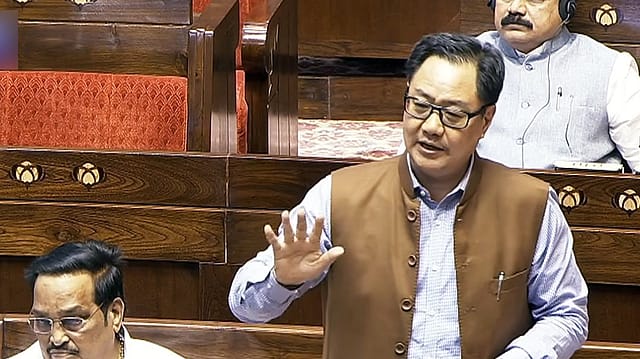
When parliamentary affairs minister Kiren Rijiju rose to move the motion for withdrawal of suspensions, he drove the point home, saying though he did not hear the word “apology,” an expression of regret would do as long as Suresh “clarified” Congress is fully on board with an understanding reached in Speaker Om Birla’s office over how the House would run. Suresh’s mumble in response was barely audible but Rijiju took that as a “yes” and the motion was approved by all sides.
Later an INDIA bloc MP said the expression of “regret” was a come down and a collective loss of face. Though he might have been a little harsh in his verdict, the suspensions had taken place after some MPs stood on the table of the Lok Sabha staff and threw papers at the Speaker’s chair. While prolonging suspensions was not something the government was keen on, it did want to extract a commitment from the Congress. The dynamics of the meeting in Birla’s office on Monday were such that Congress did not find much support from other Opposition parties.

Open Minds 2026
26 Jun 2026 - Vol 05 | Issue 26
The power of ideas and arguments in 50 portraits
The short but interesting interlude in Lok Sabha on Tuesday was revealing. The meeting of party leaders had agreed that MPs will not clamber onto tables or bring placards into the House. Importantly, neither the Opposition nor the ruling National Democratic Alliance (NDA) MPs would cross over in front of the benches were they are respectively seated. This was an important point of agreement as Opposition MPs holding placards often try and obscure ministers and MPs from the treasury benches during disruptions in the well of the House.
Birla said there is a need to ensure that no placards, posters, photos or AI-generated images are displayed in the House or inside the Parliament complex.
More importantly, the agreement not to intrude into one another’s space – effectively observing a “buffer zone” – has a bearing on events that prevented Prime Minister Narendra Modi from replying in Lok Sabha to the discussion on the President’s address to Parliament on February 4. On that day not only did some Congress MPs, including women members, occupy the area before the PM’s seat in the front row, they blocked the passage that led to it. Apprehending a physical showdown, government managers advised Modi not to attend the House.
Though Congress vehemently denied any such move and its no-confidence motion against Birla accused him of levelling unfounded allegations, the proposal for each side to stick to their turf rose from the tumult in the House on February 3 and 4. Congress leader Rahul Gandhi – had been prevented from reading out alleged references to India-China border tensions in former Army chief Manoj Naravane’s book – and that appeared to be the proximate cause of the aggressive behaviour in the House. The leader was not present when Rijiju moved the motion.