A City’s Food, a Chain’s Ambition: Can Banaraswala Build Beyond Banaras?
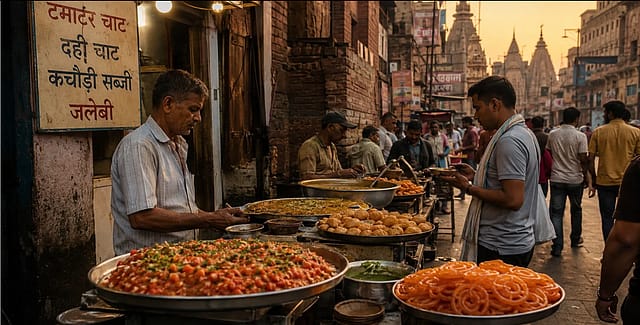
Bikanervala’s name identifies a place. Its menu extends well beyond it.
Alongside sweets and snacks, the restaurant business offers South Indian dishes, Chinese food, pizza and pasta. Regional origins provide recognition, while a broader menu accommodates different customers and eating occasions.
Banaraswala, a young food brand serving Banarasi sweets, chaats and meals, faces a similar strategic choice much earlier in its development. It has raised $2 million from Prax Impex and announced a target of 50 outlets by March 2027, compared with three Delhi outlets cited in its funding announcement. The expansion will combine company-owned and franchise locations.
The immediate question is whether that network can be established and operated effectively. The more fundamental one concerns what it will sell: a specialist interpretation of Banarasi food, a few distinctive products, or a broad vegetarian menu carrying a regional identity.
Successful precedents exist for each approach. They require different businesses.

Zeroing In on ECI
09 Oct 2026 - Vol 05 | Issue 41
Constitutional legitimacy versus political opportunism
REGIONAL ORIGINS, BROADER MARKETS
Bikanervala demonstrates how provenance can remain commercially useful even as the offering expands. A customer need not want a specifically Bikaneri meal to choose the restaurant. Its range accommodates breakfast, snacks, family meals and sweets purchases.
Haldiram’s represents an even broader development from regional origins into packaged snacks, sweets and restaurants. Its export business reports distribution across more than 80 countries. That establishes considerable reach, although packaged-food distribution should not be confused with the economics of restaurant expansion.
For Banaraswala, menu breadth could increase purchase frequency and make outlets suitable for groups with different preferences. It would also introduce more ingredients, preparation methods and inventory requirements.
There is a positioning risk as well. A menu that becomes indistinguishable from neighbouring vegetarian restaurants leaves the Banarasi identity doing more promotional than culinary work.
The company would then need to compete principally on convenience, consistency and price.
THE SPECIALIST ALTERNATIVE
Other operators have built their proposition around a narrower culinary identity.
Dindigul Thalappakatti reports more than 100 outlets in India and overseas, with its regional biryani acting as a recognisable anchor. The broader menu supports a product for which customers can specifically seek out the brand.
Oh! Calcutta takes a different route, presenting Bengali culinary traditions in a full-service dining setting. Burma Burma similarly combines a defined cuisine with service, interiors and discovery. The latter operated 22 restaurants across nine cities by July 2026.
These businesses illustrate how regional specificity can support a differentiated restaurant experience. They do not establish that every regional cuisine can sustain the same prices, locations or expansion pace.
Banaraswala’s use of kulhads, pattal and clay-based serving traditions reinforces its identity. Those details can make the proposition recognisable, but repeat demand must depend on food quality and value. Customers can encounter similar cultural cues elsewhere.
Its strongest products, therefore, need to be identifiable independently of the décor.
BIHAR OFFERS A USEFUL COMPARISON
Bihari-food operators demonstrate the distinction between recognition of a dish and demand for a complete restaurant offering.
Litti chokha provides an accessible entry point. Building a restaurant around Bihari cuisine requires customers to explore—and return for—a wider range.
The Potbelly Bihari Kitchen has pursued that opportunity since opening in Delhi in 2011. Its menu extends beyond litti chokha into other regional preparations. Its expansion has also included setbacks: a Bengaluru outlet closed during the pandemic, with reopening plans subsequently reported.
Litti Chokha.com, meanwhile, describes a network of five Bengaluru branches built around Bihari comfort food. This is evidence of a local multi-outlet proposition, rather than proof of nationwide scalability or profitability.
For Banaraswala, the lesson is to establish why customers would return regularly. A regional meal can appeal through nostalgia, discovery or ordinary convenience. Each motivation produces different expectations about price, frequency and location.
GLOBAL SUCCESS DOES NOT REQUIRE ONE MODEL
Din Tai Fung has taken its Taiwanese restaurant proposition into markets across Asia, North America, Europe and the Middle East. Its signature xiao long bao gives customers a clear product through which to approach a wider menu. Its geographic reach demonstrates that culinary specificity need not prevent international expansion.
Xi’an Famous Foods provides a contrasting model. The US-based specialist reports 20 company-owned locations after more than twenty years, without franchisees or outside investors. It has retained a focused identity around food associated with Xi’an while choosing a more controlled ownership structure.
The comparison is useful precisely because the networks differ in size. A business can establish a durable regional-food proposition without pursuing the fastest possible outlet rollout. Conversely, a large network does not by itself establish attractive returns.
For Banaraswala, “made it big” should eventually mean more than openings. It should include productive outlets, repeat customers and viable returns for both the company and franchisees.
THE FRANCHISE TEST
Moving from three reported outlets to 50 would multiply Banaraswala’s network approximately seventeenfold within months.
Franchising can distribute the capital required for that expansion. It also creates a need for clear sourcing standards, training, kitchen processes and supervision across independently financed outlets.
The tension is particularly important for regional food. Preparation that depends heavily on an individual cook becomes difficult to reproduce. Excessive simplification can remove the qualities customers associate with authenticity.
Expansion locations including Banswara, Sarangpur, Farrukhabad and Fatehpur introduce another commercial test: competition with established local food businesses. Familiar cuisine may reduce the need for explanation, but customers will have existing expectations about taste, portions and price.
A branded outlet must offer enough improvement in reliability, convenience or experience to justify its economics.
THE EVIDENCE STILL REQUIRED
The funding announcement does not disclose revenue, profitability, outlet investment costs or payback periods. Without those measures, the expansion plan remains an ambition rather than a demonstrated operating model.
The precedents suggest a practical sequence: identify the products that generate repeat demand, reproduce them consistently, establish outlet returns and expand at a pace the operating system can support.
Banaraswala has secured capital and a recognisable culinary proposition. Its next task is to demonstrate which parts of that proposition customers value enough to purchase repeatedly.
Regional identity can help establish a restaurant brand. Whether it supports fifty outlets depends on the business built around it.