Zomato bans analogue dairy: What’s behind the big crackdown on ‘fake’ paneer and cheese?
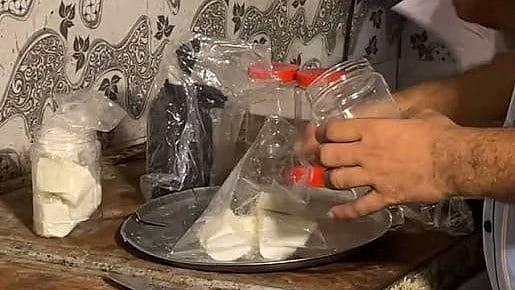
Imagine ordering a paneer tikka online.
You expect paneer.
That sounds obvious. But what if the white cubes on your plate were made using something other than the milk-based product you thought you were ordering?
That question is at the heart of Zomato’s latest food-safety move.
The food-delivery platform has introduced a zero-tolerance policy on dishes containing analogue dairy, immediately delisting dishes that restaurant partners have declared as containing such products. Restaurants have been asked to switch to natural dairy or remove the affected dishes from their menus. Those that remain non-compliant could eventually be delisted from Zomato altogether.
The move comes amid heightened scrutiny of analogue dairy products across India, particularly products being passed off as conventional dairy foods such as paneer or cheese.
So, what exactly is analogue dairy — and why has it suddenly become such a big food-safety issue?
What has Zomato banned from its platform?
Zomato has not banned every dairy substitute or plant-based food.
Zeroing In on ECI
09 Oct 2026 - Vol 05 | Issue 41
Constitutional legitimacy versus political opportunism
Its new policy specifically targets dishes containing analogue dairy products that restaurants have declared on the platform. Those dishes have been delisted with immediate effect, the company said.
Zomato has also reserved the right to remove listings that violate its policy. Restaurants have been told to take corrective action, including replacing analogue dairy with natural dairy or removing affected dishes where an immediate switch is not possible.
That distinction matters because “analogue dairy” is a regulatory and food-technology category, rather than simply another name for every plant-based food.
What exactly is analogue dairy?
Here is where the story gets interesting.
An analogue dairy product is designed to resemble a conventional dairy product but uses ingredients that replace some or all of the milk components.
For example, in cheese analogues, milk fat can be partly or completely replaced with other edible fats. FSSAI's own food-safety material describes cheese analogues in these terms.
Analogue products can therefore be engineered to reproduce characteristics such as texture, appearance or functionality of their dairy counterparts.
The problem arises when the substitute is presented as the real dairy product.
That is why a product made with non-dairy ingredients cannot simply be sold to a customer as paneer without proper identification.
Why is analogue paneer at the centre of the controversy?
Paneer is perhaps the easiest example to understand.
Traditional paneer is a milk-based dairy product. Analogue paneer, by contrast, can use ingredients such as vegetable fats, starches, proteins and emulsifiers to mimic some of the characteristics of conventional paneer.
India Today reported that Maharashtra's recent crackdown specifically targeted analogue paneer, with authorities examining products made to resemble paneer while using non-milk ingredients.
The distinction is not merely about what is inside the cube. It is about what the customer has been told they are buying.
If you order paneer, the natural assumption is that the food contains paneer. If a restaurant is using an analogue instead, that difference needs to be made clear.
What has FSSAI said about analogue dairy products?
This is not a concern that appeared overnight.
In April, FSSAI's Western Region issued a public notice specifically addressing cheese analogues. It said that selling cheese analogue as “paneer” was a violation of food-safety law and directed manufacturers and food-service establishments to use proper product names.
The notice also directed centrally licensed food-service establishments using cheese analogues to display that information on menus or boards and to maintain records relating to the raw materials they procure.
FSSAI's food-category database itself recognises dairy analogues as a category, showing that the existence of an analogue does not automatically mean it is an illegal product. The regulatory concern is how such products are formulated, represented and sold.
Why has Zomato acted now?
Zomato says the immediate reason is straightforward: transparency and food quality.
The company has asked restaurant partners to check the labels and ingredient declarations supplied by their vendors and verify what is actually being used in their kitchens.
That puts the responsibility not only on the restaurant menu but further upstream — on the ingredients being procured from suppliers.
Aditya Mangla, CEO of Zomato, said: “At Zomato, our core mission is better food for more people, and that means safeguarding customer health and upholding clear standards for what's listed and served by our restaurant partners. This policy reflects that commitment, one we're taking together with partners who share it.”
What are restaurants being asked to do?
Restaurants now have two broad choices.
They can switch from analogue dairy to natural dairy products. Or, if that cannot happen immediately, they have been asked to remove dishes containing analogue dairy from their menus.
They have also been instructed to examine supplier labels and ingredient declarations and make sure what appears on Zomato accurately reflects what is actually being served.
Restaurants that fail to comply could be delisted from the platform.
Is analogue dairy itself illegal?
Not necessarily — and this is an important distinction.
The existence of dairy analogues as a food category is recognised in India's food-safety framework. The bigger regulatory problem is misrepresentation, particularly when an analogue is sold as a conventional dairy product such as paneer or cheese.
FSSAI's April notice specifically described cheese analogue being sold as paneer as a violation.
So the issue is not simply “natural dairy good, analogue bad”. It is also about whether consumers are being accurately told what they are eating.
Is this part of a bigger food-safety crackdown in India?
Yes.
Zomato's announcement comes as state authorities and food-safety regulators have stepped up scrutiny of dairy analogues and suspected adulteration.
The Times of India reported that food-safety authorities in states including Maharashtra and Karnataka have intensified inspections of restaurants, eateries and other food businesses. Maharashtra has separately taken action against analogue paneer, while other states have also moved against such products.
FSSAI's Western Region has also conducted targeted surveillance of cheese and dairy analogues, specifically looking at whether imitation products are being misbranded as conventional cheese.
In other words, Zomato's move is arriving at a moment when the question of what exactly is on the plate — and what exactly the menu says is on the plate — is receiving far more attention.
What does the Zomato ban mean for customers?
For customers, the immediate effect should be fairly simple.
Dishes that restaurants have declared contain analogue dairy are being removed from Zomato. Restaurants are being pushed towards natural dairy products or asked to take affected dishes off their menus.
But the larger change could be less visible.
Zomato is asking restaurants to scrutinise supplier declarations and ingredient labels before putting food on the platform. That means the crackdown is moving beyond the restaurant menu and into the chain of information behind it.
And perhaps that is the real story here.
For years, ordering food online has largely involved trusting the photograph, the description and the restaurant's word.
Now, Zomato is telling its restaurant partners that when the menu says paneer, cheese or another dairy product, the ingredients behind that name need to stand up to scrutiny too.
(With inputs from yMedia and agencies)