Delhi-NCR Invokes GRAP Stage III Ahead of Diwali as Pollution Worsens
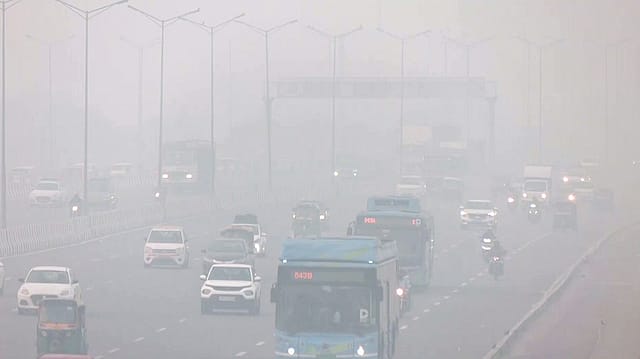
Delhi-NCR moved to Stage III of the Graded Response Action Plan (GRAP) on Friday after the Commission for Air Quality Management (CAQM) invoked stricter pollution-control measures across the region as a precautionary measure. The decision came as Delhi's average Air Quality Index (AQI) touched 382, placing it in the ‘very poor’ category.
The move comes ahead of Diwali, when firecracker emissions can add to the region's existing pollution load. The invocation of Stage III brings additional restrictions on construction and demolition activities and the movement of certain older vehicles, while measures under the earlier stages remain in force.
WHY GRAP STAGE III HAS BEEN INVOKED
Under the conventional AQI classification, Stage III of GRAP corresponds to the ‘severe’ category, with readings between 401 and 450.

The Era of Forever Wars
30 Oct 2026 - Vol 05 | Issue 44
Coping with an explosive Middle East
Under the revised framework approved by CAQM in September 2026, restrictions can be introduced in anticipation of worsening air quality, using forecasts and projections rather than waiting for the AQI to cross the threshold.
The revised schedule allows authorities to act before pollution reaches the projected levels of a particular stage, provided forecasts indicate that the higher levels are likely to persist. This is intended to prevent air quality from deteriorating further instead of responding only after it has crossed into the next category.
WHAT CHANGES UNDER STAGE III
Stage III adds restrictions to those already operating under Stages I and II. Among the key measures are curbs on non-essential construction and demolition activities, aimed at reducing dust emissions from building sites and infrastructure projects.
The revised GRAP framework also restricts the movement of certain older vehicles. These include BS-III petrol and BS-IV diesel light motor vehicles in Delhi and specified high-vehicle-density districts of the NCR: Gurugram, Faridabad, Ghaziabad, Gautam Buddha Nagar and, following the September revision, Sonipat.
The revised schedule also explicitly restricts the entry into Delhi of diesel-operated BS-IV and below-standard light and medium goods vehicles registered outside the capital. The earlier exemption for certain goods vehicles carrying essential commodities under Stage III and Stage IV has also been removed.
The restrictions are cumulative. This means measures under Stages I and II continue alongside the new Stage III directions. The exact implementation and exemptions are governed by the CAQM schedule and orders issued by the relevant authorities.
UNDERSTANDING THE 4 STAGES OF GRAP
GRAP is an emergency framework designed to coordinate pollution-control action across Delhi and the National Capital Region. It was first notified in 2017 following directions from the Supreme Court. The CAQM, established under the Commission for Air Quality Management in National Capital Region and Adjoining Areas Act, 2021, is responsible for coordinating its implementation.
The plan has four stages based on AQI levels:
Stage I – Poor: AQI between 201 and 300.
Stage II – Very Poor: AQI between 301 and 400.
Stage III – Severe: AQI between 401 and 450.
Stage IV – Severe Plus: AQI above 450.
The measures become progressively stricter, covering sources such as road dust, construction, vehicles, industries and waste burning.
WHY DELHI'S AIR WORSENS IN WINTER
Delhi's winter pollution is not the result of a single source. Vehicular emissions, construction and road dust, industrial activity, waste burning and crop-residue burning in neighbouring states all contribute to the pollution load.
Weather conditions make the problem more acute. Falling temperatures, low wind speeds and a shallow atmospheric boundary layer can limit the dispersal of pollutants, allowing emissions to accumulate closer to the ground. Stubble burning in Punjab and Haryana can add to the seasonal burden, although its contribution varies with weather conditions and the number of fires recorded.
Diwali presents an additional challenge because firecrackers release particulate matter and gases into an already polluted atmosphere. The timing of the Stage III decision places the region under tighter restrictions just before the festival.
A RECURRING EMERGENCY, NOT A LONG-TERM FIX
GRAP is designed to respond to episodes of deteriorating air quality. Its restrictions can help limit emissions during high-pollution periods, but they do not by themselves address the structural sources of Delhi-NCR's air pollution.
The region's dependence on road transport, dust-generating construction, fossil-fuel use and seasonal agricultural burning requires sustained action beyond emergency restrictions. Coordination between Delhi and neighbouring states is also necessary because pollution does not stop at administrative borders.
The CAQM's decision to invoke Stage III before Delhi's AQI enters the ‘severe’ category underlines the preventive approach in the revised framework. Whether the restrictions can prevent a further deterioration will depend on their enforcement, emissions levels and the weather conditions over the coming days.