Why Is India Launching a Special Plan to Save the Clouded Leopard?
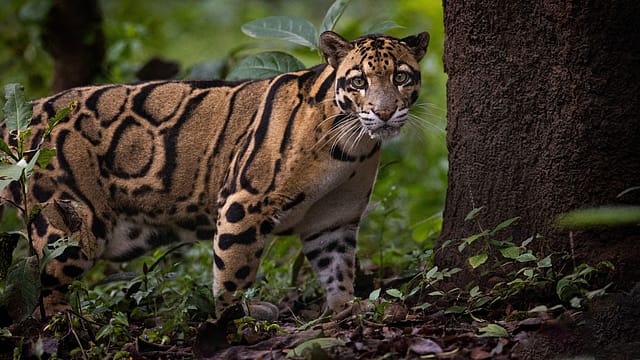
You may have heard of tigers, leopards and snow leopards. But there's another wild cat that even seasoned wildlife enthusiasts rarely get to see. The clouded leopard—a secretive predator that spends much of its life hidden in dense forests—is among India's most elusive and least-studied big cats. Now, the government has launched a dedicated Clouded Leopard Conservation Action Plan, signalling a renewed push to protect the species and its fragile habitat.
Here's everything you need to know.
What is a clouded leopard?
The clouded leopard is a medium-sized wild cat named after the large, cloud-shaped markings on its coat. Known for its exceptional climbing ability, it spends much of its time in trees and inhabits dense tropical forests across Northeast India and parts of Southeast Asia. Its secretive nature means it is rarely seen in the wild, making it one of Asia's most mysterious predators.

Rise of the Pivotal Power
18 Sep 2026 - Vol 05 | Issue 38
The BRICS declaration is a strategic victory for Modi
Why has India launched a special conservation plan?
The government says the species faces increasing pressure from habitat loss, forest fragmentation and wildlife crime. To address these threats, the Ministry of Environment, Forest and Climate Change has launched the Clouded Leopard Conservation Action Plan, providing a long-term roadmap to protect the species through habitat conservation, scientific monitoring and community participation.
What does the new plan include?
A major focus is protecting the forests the clouded leopard depends on. The plan identifies 14 priority conservation landscapes across Northeast India and proposes restoring forest corridors to improve connectivity between habitats. It also strengthens anti-poaching measures, expands wildlife crime prevention and introduces standardised monitoring using camera traps, genetic studies and environmental DNA (eDNA).
Why is Northeast India so important?
Northeast India is one of the clouded leopard's most important remaining strongholds. Protecting these forests not only safeguards the species but also helps conserve one of the country's richest biodiversity hotspots, supporting countless other plants and animals that share the same ecosystem.
What role will local communities play?
The plan recognises that conservation cannot succeed without people. It promotes community-based conservation, sustainable livelihood programmes and greater involvement of local communities in protecting forests and wildlife. It also encourages cooperation with neighbouring countries, as clouded leopards move across international borders.
Why does this matter?
Saving the clouded leopard is about far more than protecting a single species. As an apex forest predator, its survival reflects the health of entire ecosystems. Conserving its habitat also protects water sources, biodiversity and some of India's most ecologically sensitive forests. For a species that is rarely seen but plays a vital role in nature, the new conservation plan is an attempt to ensure that India's most elusive wild cat does not quietly disappear from its forests.
(With inputs from ANI)