‘We Are From the CBI’: How a Rohini Woman’s One Question May Have Foiled a Special 26-Style Raid
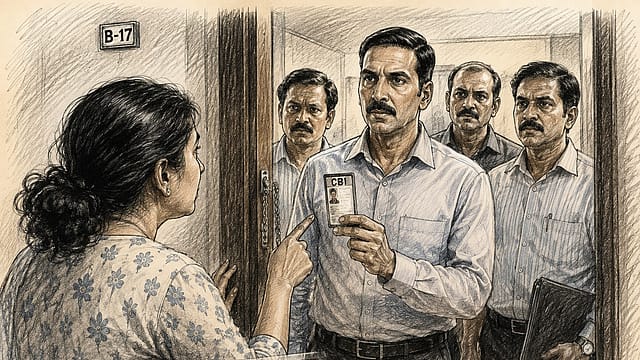
Imagine someone rings your doorbell and introduces themselves as a CBI officer.
They have identity cards. They have official-looking insignia. They speak with authority. They say they have come to search your house.
Do you open the gate?
That question appears to have made all the difference at a businessman's residence in Delhi's Rohini, where a suspected fake CBI raid was allegedly foiled after the homeowner's wife refused to let a group of men inside.
The incident has drawn comparisons to Special 26, the 2013 Bollywood thriller based on real-life cases in which impostors posed as government investigators to carry out fake raids. Similar crimes have surfaced repeatedly over the years, including recent cases involving fake ED and CBI operations in Delhi and elsewhere.
Then the neighbours got involved
What happens when a supposed CBI raid drags on outside a house?

Rise of the Pivotal Power
18 Sep 2026 - Vol 05 | Issue 38
The BRICS declaration is a strategic victory for Modi
People notice.
Neighbours began gathering outside the residence and started asking questions of their own.
Where was the search warrant? What was the authorisation for the operation? Could the team show the documents?
According to the complaint, when the group was asked to provide a copy of the notice authorising the search, they allegedly claimed that the paperwork was inside their vehicle and left on the pretext of retrieving it.
They never returned.
A WhatsApp notice raised even more questions
The episode did not end there.
The family later received what appeared to be an official notice through WhatsApp bearing the name and signature of the CBI Director, according to the complaint.
The message was subsequently deleted.
But by then, the family had already taken a screenshot.
The complainant alleges the document was fabricated and intended to make the purported operation appear legitimate. The screenshot has been handed over to investigators along with the complaint.
The family also claims the suspected impostors were carrying identity cards and wearing clothing displaying the CBI insignia.
The cameras may have seen everything
If investigators are able to identify the people involved, the breakthrough may come not from a warrant or a WhatsApp message but from the home's CCTV system.
According to the complaint, cameras installed around the property captured the incident and could provide crucial evidence about the visitors and their movements.
The family contacted the police helpline 112, following which police personnel reached the residence.
Delhi Police are now investigating the matter. No arrests had been reported at the time of writing.
The bigger lesson
The most striking part of the story is not the alleged impersonation.
It is how ordinary the warning signs were.
A demand for entry. Questions about documents. A notice sent over WhatsApp. Pressure to act quickly.
Investigators will determine whether the group was indeed posing as CBI officials. But the episode is a reminder that criminals have increasingly borrowed the language, appearance and authority of government agencies to gain trust. Recent cases involving fake enforcement and investigative agency raids show that the tactic is far from new.
(With inputs from ANI)