THIS DAY THAT YEAR | The Day Abhinav Bindra Changed Indian Sport Forever
There are sporting victories. And then there are moments that permanently alter the way a country sees itself.
August 11, 2008 was one of those days.
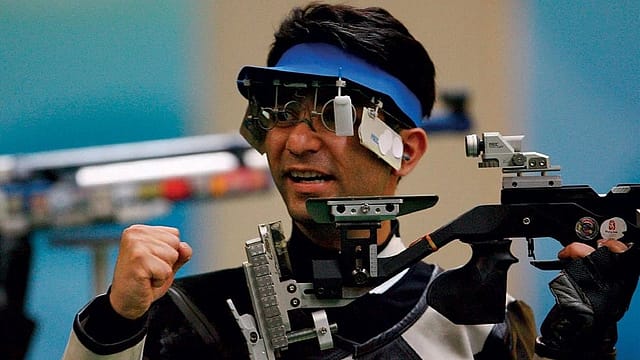
Inside the Beijing Shooting Range Hall, Abhinav Bindra raised his rifle, steadied himself and took aim at something Indian sport had been chasing for more than a century.
An individual Olympic gold. When the final shot was over, the scoreboard told the story.
700.5. Gold. India's first individual Olympic gold medal.
Eighteen years later, Bindra remembers the moment. But interestingly, he does not describe it simply as the greatest moment of his life.
He calls it “the biggest peak of my sporting life.” And then comes the line that makes the memory bigger than the medal.
Rise of the Pivotal Power
18 Sep 2026 - Vol 05 | Issue 38
The BRICS declaration is a strategic victory for Modi
“Life since has taught me that the spaces between the peaks matter just as much.”
The peak that changed everything
Before Beijing, Indian athletes had won Olympic medals. But an individual gold remained elusive.
Bindra changed that in one morning. At 25, the shooter became the first Indian to win an individual Olympic title, creating a sporting milestone that had seemed almost impossibly distant. The gold transformed him into a national icon.
But the Olympics did not end there. They came back four years later in London. Bindra finished 16th. Then came Rio in 2016. He finished fourth, agonisingly close to another podium. The man who had once stood at the absolute summit of his sport now knew something every champion eventually discovers: You cannot live permanently at the peak.
The career after the gold
Bindra's Beijing triumph became the defining image, but his career was far larger than one medal. He became a seven-time Commonwealth Games medallist, including four golds, and won three Asian Games medals.
In 2006, he became a world champion. At the 2010 Commonwealth Games in Delhi, he added another gold in the 10m air rifle pairs event and a silver in the individual competition. Across a career spanning two decades, he accumulated more than 150 individual medals.
But the real test came after the shooting stopped. What happens when the shooting ends? Bindra did not simply walk away from sport. He founded the Abhinav Bindra Foundation Trust, focusing on grassroots athletes, sports science, high-performance training and education. He moved from trying to become the athlete on the podium to helping build the ecosystem around the athletes who would come next. He also served as vice-chair of the IOC Athletes Commission and became the first Indian to receive the Olympic Order for his contribution to the Olympic movement.The peak had become a platform.
Eighteen years later
That is perhaps what makes Bindra's reflection on Beijing so powerful. The photograph from August 11, 2008 captures the peak. The gold medal captures the achievement. But his latest words point towards everything that photographs cannot show: the years of training, the disappointments, the fourth-place finish, the reinvention, the work after retirement and the life that continues when the applause fades.
Eighteen years ago, Abhinav Bindra reached the summit. Today, he is reminding us that a sporting life is not defined only by how high you climb. Sometimes, the most important part is what you do when you come back down.
(With inputs from ANI)