The Organisation That Put India on the Moon Is Now Struggling to Keep Its Scientists
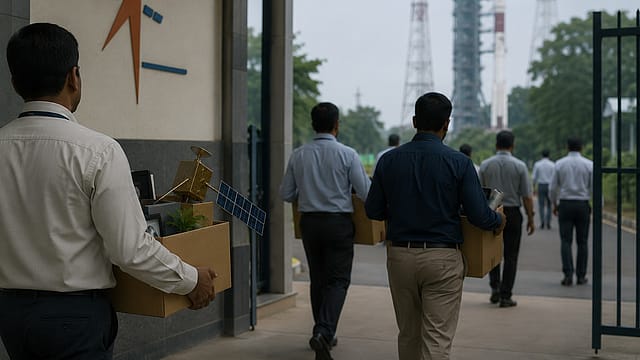
India's space programme has delivered some of the country's most defining moments. Yet behind the achievements, ISRO is quietly confronting a crisis it did not anticipate: its own scientists are walking out the door, fast enough to alarm the government and expose deep structural tensions within the agency.
How Many Scientists Have Left ISRO?
According to NDTV, more than 100 scientists have resigned or taken voluntary retirement from ISRO in recent months. Many carry years of specialised expertise built through missions such as Chandrayaan-3 and Gaganyaan, knowledge that cannot be replaced by recruiting fresh graduates.
Why Is the Private Space Industry So Attractive?
As per India Today, companies such as Skyroot Aerospace, Agnikul Cosmos, Pixxel, and Bellatrix Aerospace now offer higher salaries, stock options, faster career progression, and greater operational flexibility. Scientists can take on leadership roles earlier and work in environments where projects move quickly from concept to execution.

Losing Memory
16 Oct 2026 - Vol 05 | Issue 42
The making of a medical and social emergency
Are Mission Delays Pushing Scientists Out?
Several major ISRO missions have experienced significant delays, including the Gaganyaan G1 test flight, SSLV-L1, GSLV-F17, and the industry-built PSLV-N1. Twin PSLV setbacks, in May 2025 and January 2026, further slowed launch activity, eroding motivation for scientists accustomed to high-stakes work.
Is Centralised Decision-Making Part of the Problem?
According to India Today, multiple current and former officials, speaking privately, said decision-making has become increasingly centralised within the Chairman's Office, leading to slower approvals and reduced operational flexibility for teams on the ground.
What Has the Government Done to Stop the Exits?
The Department of Space issued a memorandum on July 14 restricting resignations for scientists on flagship programmes. Scientists associated with Gaganyaan now require explicit clearance from the Department of Space before they can leave.
Could a New Employment Model Fix This?
As per India Today, senior officials have suggested ISRO adopt a hybrid workforce model similar to NASA and the European Space Agency, combining permanent staff with contractors and project-based hires to preserve institutional knowledge while offering greater flexibility.
What Does This Mean for India's Space Ambitions?
The same private sector revolution that ISRO helped inspire is now competing directly with it for talent. Without structural reform, the agency risks losing the very people needed to deliver the missions it has promised.
(With inputs from yMedia)