The H1N1 mistakes Indians make every monsoon — and how to avoid them as swine flu cases rise
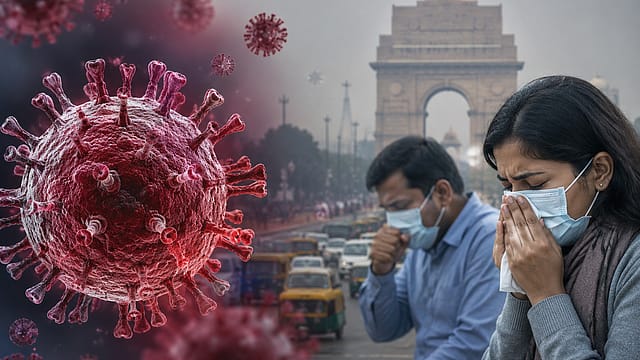
It usually starts with a sentence every Indian has heard before.
"It's just viral."
A little fever. A sore throat. Body ache. Maybe a cough.
You take a paracetamol, skip the doctor and hope it disappears in a day or two.
Most of the time, it does.
But this monsoon, doctors across Delhi and Bengaluru are warning that a growing number of people may be mistaking H1N1, commonly known as swine flu, for an ordinary seasonal infection. Delhi has reported a sharp increase in H1N1 cases this year, while hospitals in Bengaluru have also flagged a rise in flu-related consultations, particularly among children, according to reports from Hindustan Times. Recent statements from the Indian Council of Medical Research (ICMR) stress that there is no new H1N1 variant in circulation and no cause for panic, but they also underline the importance of timely treatment and basic precautions.
The good news? Most people recover fully.
The bad news? Many don't help themselves.
Mistake No. 1: Assuming every fever is "just viral"
This is perhaps the most common mistake.
H1N1 symptoms often look remarkably similar to those of seasonal flu. Fever, cough, fatigue, headaches and body aches can all feel routine, especially during the monsoon.
The problem is that H1N1 can sometimes worsen quickly in vulnerable individuals.

Rise of the Pivotal Power
18 Sep 2026 - Vol 05 | Issue 38
The BRICS declaration is a strategic victory for Modi
Doctors say many patients arrive for treatment only after symptoms have persisted for several days. By then, dehydration, breathing difficulties or secondary infections may have developed.
The lesson is simple: if a high fever persists, breathing becomes difficult or symptoms worsen instead of improving, it is time to see a doctor rather than waiting it out.
Mistake No. 2: Going to work, college or school anyway
We've all seen it.
Someone turns up coughing through an entire office meeting while proudly announcing that they're "not taking leave for a little flu."
Unfortunately, viruses do not reward commitment.
H1N1 spreads through respiratory droplets, meaning infected people can easily pass it on in classrooms, offices, metros and crowded indoor spaces.
Doctors in Bengaluru have reportedly specifically urged parents not to send symptomatic children to school.
The heroic decision is not showing up sick.
It's staying home and preventing others from getting infected.
Mistake No. 3: Taking antibiotics without medical advice
This one refuses to die.
Many Indians still reach for antibiotics at the first sign of a respiratory infection.
But H1N1 is caused by a virus, not bacteria.
Antibiotics do not treat viral infections.
Doctors repeatedly warn that unnecessary antibiotic use contributes to antibiotic resistance, one of the biggest public health challenges globally.
If medication is required, it should come after medical consultation, not from an old strip found in the kitchen drawer.
Mistake No. 4: Ignoring who is actually at risk
For most healthy adults, H1N1 is unpleasant but manageable.
The real concern lies elsewhere.
Health experts consistently identify elderly people, pregnant women, young children and individuals with conditions such as diabetes, heart disease, lung disease or weakened immunity as higher-risk groups.
For them, what begins as a routine flu can sometimes become much more serious.
That means families should pay particular attention if symptoms develop in elderly parents, grandparents or young children.
Mistake No. 5: Thinking masks disappeared with Covid
Masks have become politically charged and culturally debated.
Viruses do not care.
If you are coughing, sneezing or spending time in crowded healthcare settings, wearing a mask remains one of the simplest ways to reduce transmission.
Doctors are not calling for lockdowns or extraordinary measures.
They are simply recommending common-sense precautions that many people abandoned after Covid faded from daily life.
So should you be worried?
Not really.
But you should be alert.
ICMR has made it clear that India is not dealing with a new strain or a new pandemic. What the country is seeing is a seasonal rise in influenza activity, something that happens periodically.
The difference is that many people now treat every respiratory illness as either Covid or "nothing serious."
H1N1 sits somewhere in between.
It is not a reason to panic.
It is also not something to dismiss.
The real lesson from this year's H1N1 surge
Every monsoon brings a familiar ritual.
The rains arrive. The viruses return. The warnings are issued.
What changes is whether people listen.
The story of H1N1 in Delhi and Bengaluru is not really about case numbers. It is about habits.
The habit of working through illness.
The habit of self-medicating.
The habit of assuming a persistent fever is no big deal.
Most people who catch H1N1 this season will recover completely.
The question is whether they will learn from the same mistakes that doctors say they see, year after year, every monsoon.