The Goddess’ Own City: When a bruised and brilliant Kolkata remembers how to be joyful
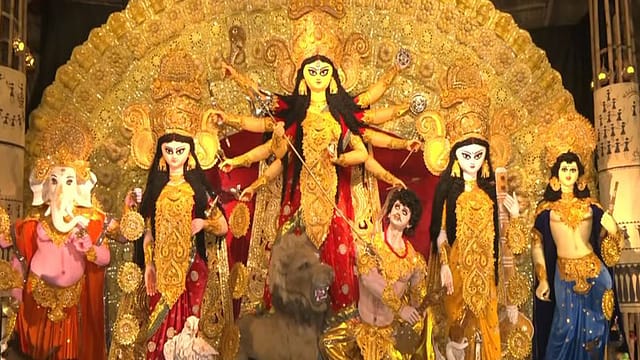
There are cities that celebrate, and then there is Kolkata, which surrenders. Every October, a city that spends the rest of the year arguing about everything from Marx to mishti doi, simply puts down its arguments, picks up a dhunuchi, and lets a 10-armed woman take charge. It is the only time I have seen Kolkata take orders, and she gives them rather well.
This year, the magic felt different. Perhaps because the world outside has become so loud, so brittle, so relentlessly online, that the Pujas feel like a rebuke. Here is a city that still believes in the unhurried, the handmade, the communal. The idol is not a product. She is a guest, and Kolkata, for all its faded grandeur, has never forgotten how to host.
Begin at Kumartuli, where the artisans shape clay with a tenderness that no algorithm will ever replicate. The Ganga mud, the straw, the patient hands: this is not manufacturing, it is midwifery. When the eyes are painted on Mahalaya, the Goddess is born, and you can feel the lane exhale.
And then the pandals. Let us be honest: some years, the themes try too hard. A pandal shaped like a spaceship, another like a shipwreck, a third like a lecture on climate change. But this year there was a quiet confidence in the best of them. Less spectacle, more soul. Artists who understood that the Goddess does not need gimmick; she needs a stage.
The dhaak is the real prophet of the season. That sound, thunderous and slightly absurd, enters your bloodstream somewhere around Shashthi and refuses to leave until Dashami. You may be a cynic, a sceptic, a Delhi transplant with a spreadsheet for a heart. Doesn’t matter. By Saptami, you will find yourself swaying, and by Ashtami, you will be defending the honour of your para’s pandal against all comers.
Then there is the food, because no honest account of Kolkata can omit it. The bhog on Ashtami, that khichuri with its labra and chutney, eaten off a leaf plate, sitting cross-legged beside strangers, is democracy in its purest form. The industrialist and the rickshaw-puller eat the same meal. Try finding that in Davos. Add the phuchka, the kathi rolls, the mutton cutlets, the ilish if you are lucky and the cardiologist is not looking, and you have a city conducting a seven-day seminar on pleasure.
What moves me most, however, is the adda. In an age when we message instead of meet, Kolkata spends the Pujas on pavements, in clubs, on balconies, talking. Nothing in particular. Everything in general. Politics, cinema, who was seen with whom, who has aged badly, who has not aged at all.
And the women of the Pujos! The Bengali woman in a red-bordered white sari on Ashtami morning, offering anjali with a grace that makes every fashion week look like a rehearsal. She is the Goddess’ mortal understudy, and she knows it. When sindoor khela arrives on Dashami, the laughter and the tears, the red smeared across faces and the farewell caught in the throat, you understand that this is not merely a festival. It is a family reunion in which the whole city is family.
Then comes the visarjan, the cruellest and most beautiful part. Why must we say goodbye to the thing we love most? Because that is the bargain. The Goddess comes, she stays five days, she leaves. And in her leaving, she leaves us a little less cynical and a little more human.
I have been to many celebrations in many capitals, and I have attended my share of grand parties thrown by the very rich. None of them has what Kolkata has in these five days: a city, in its entirety, believing in something larger than itself.
That is the magic. Not the lights, not the crowds, not even the Goddess herself, but the fact that for five days, a restless, argumentative, bruised and brilliant city remembers how to be joyful.
Kolkata, you magnificent wreck. Never change. Or rather, change nothing except the year.