TB in India: Can JOSH Teams Help Turn the Tide?
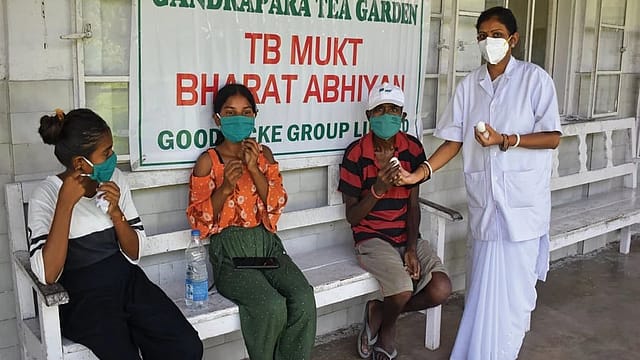
India’s campaign against tuberculosis is getting a fresh contingent: young volunteers, NCC cadets and government officers organised into JOSH Teams.
Union Health Minister JP Nadda is scheduled to launch the initiative in New Delhi on October 8, according to the government announcement reported by ANI. Its first phase will cover 55 districts in 11 states.
The mission enters a difficult phase. India’s self-imposed 2025 deadline for ending TB has passed. The country has made measurable progress, yet accounted for approximately one in four people who developed TB worldwide in 2024, according to the World Health Organization.
What can another community campaign achieve? Understanding the challenge begins with the distance between finding someone with TB and helping them recover.
The Modi Years
02 Oct 2026 - Vol 05 | Issue 40
A Nation Rebuilt
WHAT ARE JOSH TEAMS SUPPOSED TO DO?
JOSH stands for Joint Squad for Health. According to the launch announcement, the teams will bring together Class-I officers, MY Bharat volunteers and NCC cadets for outreach at block, ward and community levels.
Their brief covers recognising symptoms, encouraging timely diagnosis, supporting treatment completion and challenging the stigma surrounding TB. The initiative involves the health, youth affairs and defence ministries. An AI-powered awareness chatbot, Khushi Avatar, is also scheduled for launch.
The practical test will be whether these conversations help people reach care. A volunteer who persuades someone to seek testing needs a health service ready to receive them.
HOW BIG IS INDIA’S TB BURDEN?
The WHO’s Global Tuberculosis Report 2025, reporting estimates for 2024, puts India’s share of global TB cases at approximately 25 per cent, the largest of any country. These are estimates for 2024, rather than a live count for 2026.
The health ministry’s summary of that report puts the estimated number of people developing TB in India in 2024 at about 27 lakh. The incidence rate stood at 187 cases per lakh population, down from 237 in 2015, a decline of approximately 21 per cent over nine years.
The ministry also reported more than 26.18 lakh diagnoses in 2024. Diagnosed or notified cases and estimated incidence measure different things: one records people identified by the system; the other estimates the disease’s annual burden.
WASN’T INDIA SUPPOSED TO END TB BY 2025?
Yes. India brought forward its “End TB” ambition by five years from the global 2030 timeline. The government defined the ambition through an 80 per cent reduction in incidence, a 90 per cent reduction in the mortality rate, compared with 2015, and zero TB-affected households facing catastrophic disease-related expenses.
Those targets describe a dramatic reduction in the epidemic; they do not mean every last bacterium disappears.
The verified 2024 incidence figures remained far short of that ambition as the deadline approached. They establish substantial unfinished work, although they cannot serve as a final statistical assessment of 2025.
WHY DOES A CURABLE DISEASE REMAIN SO HARD TO BEAT?
Because the conditions that help TB thrive extend beyond the clinic.
Undernutrition, diabetes, HIV, tobacco use and harmful alcohol consumption increase the risk of developing TB disease. Delayed diagnosis gives the infection more opportunities to spread. Treatment then requires sustained access to medicines and support over months.
For a household, the burden can include travel, repeated appointments and lost earnings. WHO’s assessment of TB-related costs explicitly includes these expenses alongside medical bills. Free medicines therefore address only part of the financial pressure.
That is why a credible elimination campaign must connect clinical care with food, income protection and accessible local services.
HOW DOES TB SPREAD? DOES EVERY INFECTION CAUSE ILLNESS?
TB is caused by Mycobacterium tuberculosis. It most commonly affects the lungs and spreads through the air when someone with infectious pulmonary TB releases bacteria while breathing, speaking or coughing.
Infection and disease are different. People with TB infection who have not developed disease generally feel well and are not contagious. WHO estimates that roughly 5–10 per cent of infected people eventually develop TB disease, with greater risk among people whose immune defences are weakened.
This distinction matters for both treatment and stigma: carrying the infection does not automatically make someone an infectious patient.
WHAT SYMPTOMS SHOULD PEOPLE WATCH FOR?
A persistent cough, fever, night sweats, unexplained weight loss, fatigue or chest pain should prompt medical assessment. Coughing up blood needs urgent attention.
But symptom-based campaigns have a limitation: some people with TB disease have mild symptoms or none at all. An absence of obvious illness cannot reliably rule it out.
Screening people at higher risk, including household contacts, can help identify disease earlier. WHO recommends rapid diagnostic tests for people with signs or symptoms; chest X-rays also help identify people who need further investigation.
DO MORE REPORTED CASES MEAN THE CAMPAIGN IS FAILING?
Not necessarily. More intensive screening and better reporting can uncover disease that previously went undiagnosed or unrecorded.
India’s campaign has increasingly used targeted screening, portable chest X-rays and molecular testing. The health ministry has reported substantial detection of asymptomatic cases through this approach.
The interpretation needs care. An increase in notifications may reflect better detection. A fall may reflect reduced disease, weaker testing or incomplete reporting. Case counts need to be read alongside testing activity, estimated incidence, deaths and treatment outcomes.
CAN TB STILL BE CURED WHEN DRUGS STOP WORKING?
Yes, although drug-resistant TB requires different treatment and specialist assessment.
Resistance can develop through inadequate treatment, incorrect prescribing, poor-quality medicines or treatment interruptions. People can also acquire resistant bacteria directly from someone else. A diagnosis of drug-resistant TB is therefore no basis for blaming a patient.
India has introduced BPaLM, a six-month regimen containing bedaquiline, pretomanid, linezolid and moxifloxacin, for eligible patients with drug-resistant TB. Eligibility depends on clinical assessment and resistance patterns; some patients need other regimens.
Shorter treatment can ease the burden. Reliable medicine supplies, monitoring and help with side effects remain essential.
WHY IS FOOD SUCH A BIG PART OF THE TB STORY?
There is strong Indian evidence that nutritional support can help prevent disease among vulnerable household contacts.
The RATIONS trial, conducted in Jharkhand and published in The Lancet in 2023, followed more than 10,000 household contacts of people with pulmonary TB.
Providing food and micronutrient supplementation to contacts was associated with a 39 per cent reduction in TB incidence overall, rising to 48 per cent for microbiologically confirmed pulmonary TB, over two years.
Patients with TB in both trial groups received nutritional support; the comparison examined the additional benefit of supporting their household contacts.
The finding gives food assistance a clear public-health rationale. Nutrition supports prevention and recovery alongside appropriate medical care.
WHAT SUPPORT CAN PATIENTS GET?
Under Ni-kshay Poshan Yojana, notified TB patients are eligible for ₹1,000 a month in nutritional assistance during treatment. The government announced the increase from ₹500 in October 2024.
The Ni-kshay Mitra initiative enables individuals and organisations to provide additional support, including food baskets. Its scope was expanded to include household contacts.
For evaluating these schemes, the useful questions are practical: did the patient receive the money, did it arrive on time, and did support continue throughout treatment?
CAN TB BE PREVENTED BEFORE SOMEONE BECOMES ILL?
Yes. After assessment to exclude active disease, eligible people at increased risk can receive TB preventive treatment, which reduces the chance of infection progressing to disease. Household contacts and people living with HIV are important groups for assessment.
BCG vaccination protects young children against severe forms of TB and TB deaths. Prevention also includes early diagnosis, effective treatment and measures that reduce airborne exposure, including ventilation.
DOES “TB MUKT PANCHAYAT” MEAN THERE IS NO TB THERE?
The government announcement says 67,933 panchayats across 697 districts were recognised as TB Mukt for 2025. This is programme certification against specified indicators.
The government’s handbook assesses measures such as testing, case notification, treatment adherence and nutritional support. Its framework allows certification at a defined low notification rate, rather than requiring zero reported cases. The award therefore recognises achievement against programme criteria; it cannot establish that every resident is free of TB.
WHAT WOULD SUCCESS FOR JOSH LOOK LIKE?
A useful scorecard would follow patients through the system: how many people referred by volunteers receive testing, how quickly those diagnosed begin appropriate treatment, whether household contacts receive assessment, and how many patients complete care.
It should also track timely nutritional support and whether patients feel safe seeking help without unwanted disclosure or humiliation.
JOSH offers a new route into communities. Its lasting value will depend on what happens after the first conversation: a completed test, an available medicine, a meal, a follow-up visit and a patient able to return to everyday life.
With inputs from ANI