Supreme Court Clarifies 'Criminal Antecedents' in Student Protest Cases; States Can Withdraw FIRs
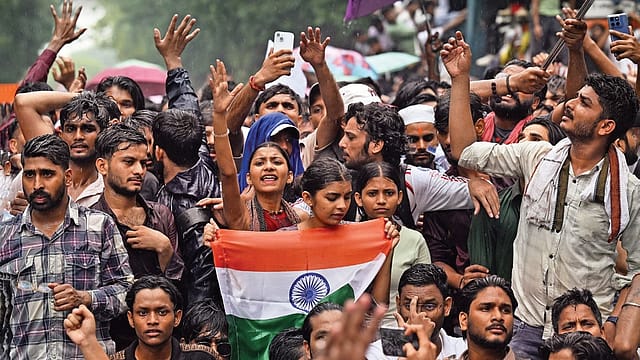
The Supreme Court on Monday clarified key aspects of its July 28 interim order on the student protest violence cases, narrowing the scope of who can be denied relief and giving state governments the freedom to withdraw criminal cases in accordance with the law.
A Bench led by Chief Justice of India Surya Kant said the term "criminal antecedents" in its earlier order should be understood to mean only those accused of grave and heinous offences, addressing concerns that the phrase was being interpreted too broadly.
The Court also made it clear that the Delhi government and other state governments are free to close or withdraw criminal cases wherever legally permissible.
The clarification comes after lawyers representing protesters argued that the earlier wording was resulting in unnecessary arrests and the denial of relief even in relatively minor cases.

Rise of the Pivotal Power
18 Sep 2026 - Vol 05 | Issue 38
The BRICS declaration is a strategic victory for Modi
The Bench also indicated that it is considering setting up an independent, judge-led mechanism to examine allegations of police excesses during the protests. While the Court said it is exploring options similar to a Special Investigation Team, it clarified that the proposed body may not formally be called an SIT.
The proposed panel, the Court said, would examine allegations against both law enforcement authorities and protesters to ensure a balanced inquiry.
Solicitor General Tushar Mehta, appearing for the Centre and the Delhi government, told the Court that peaceful protesters should not be equated with hardened criminals and assured the Bench that those without serious criminal backgrounds would be treated differently.
The Court suggested that governments first compile details of all FIRs, segregate cases involving hardened offenders from those involving people without serious criminal records, and then adopt an appropriate legal route, including filing closure reports, seeking quashing of proceedings or withdrawing cases through public prosecutors.
During the hearing, one of the petitioners also raised concerns over the alleged use of pellet guns and lathis fitted with nails during the protests. Taking note of the submissions, the Supreme Court sought the Centre's response and said it intends to lay down guidelines on when pellet guns may or may not be used.
The Centre has been directed to file affidavits on both the FIRs registered during the protests and the use of pellet guns. The matter will now be heard on August 18, when the Court is expected to consider the composition of the proposed judge-led panel and review the Centre's response.
(With inputs from ANI)