Remember Swine Flu? The Virus That Once Shut Schools Is Back. Doctors Have a New Warning
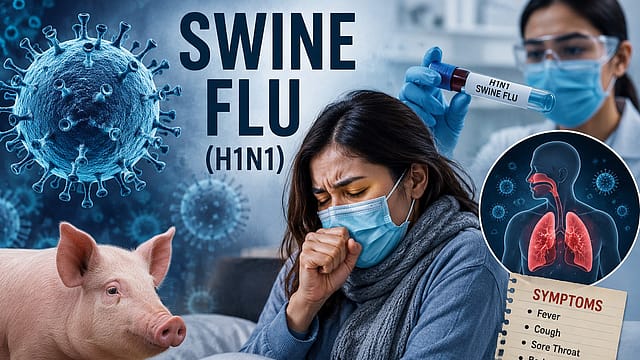
If you were in school in 2009, you probably remember it.
Masks in classrooms.
Thermal screening.
Parents worrying over every cough.
Headlines about a virus called swine flu.
For years, H1N1 largely faded from public conversation, overshadowed first by other seasonal illnesses and then by Covid-19. But in recent weeks, the virus has quietly returned to India's health headlines.
Delhi has reported a sharp increase in H1N1 infections this year, while cases have also been recorded in states including Maharashtra, Karnataka and West Bengal. Uttar Pradesh has now placed its health machinery on alert as fever cases rise across parts of the state.
The good news? Doctors and health authorities say there is no reason for panic.

Zeroing In on ECI
09 Oct 2026 - Vol 05 | Issue 41
Constitutional legitimacy versus political opportunism
The bad news? Many people may be making their illness worse by treating themselves before seeking proper medical advice.
Why Is H1N1 Suddenly Back in the News?
Because cases are rising.
According to the Indian Medical Association (IMA), India is witnessing a seasonal increase in Influenza A (H1N1), commonly known as swine flu. Delhi alone has recorded thousands of influenza cases this year, with H1N1 accounting for a significant share. Hospitals and clinics across the National Capital Region have reported a noticeable increase in patients arriving with fever, cough and flu-like symptoms.
The rise has prompted governments to strengthen surveillance, review hospital preparedness and issue public advisories.
In Uttar Pradesh, Deputy Chief Minister and Health Minister Brajesh Pathak chaired a high-level review meeting on Saturday, directing officials to closely monitor fever patients, ensure medicine availability and prepare tertiary-care facilities if required.
Is This Another Pandemic? Here's What Scientists Are Saying
No.
And that distinction is important.
The Indian Council of Medical Research (ICMR) has clarified that the current rise is linked to seasonal influenza activity, not the emergence of a new H1N1 variant. Scientists say the strains currently circulating have been present since 2025 and are similar to those already covered by existing vaccine recommendations.
In other words, health authorities are watching the situation carefully, but there is no indication of a new pandemic-style threat.
That is why officials across states have struck a similar tone:
Stay alert, not alarmed.
If It's Seasonal, Why Are Governments Going on High Alert?
Because seasonal does not mean harmless.
Most H1N1 infections cause symptoms similar to ordinary flu: fever, cough, sore throat, body aches, chills and fatigue.
But for certain groups—including older adults, young children, pregnant women and people with underlying medical conditions—the virus can lead to serious complications, including pneumonia and respiratory distress.
The goal of governments is not to respond to a crisis.
It is to prevent one.
That's why Uttar Pradesh has strengthened surveillance systems, asked hospitals to review preparedness and instructed district officials to monitor cases closely.
Why Are Doctors So Worried About Self-Medication?
Because many people treat flu symptoms before they know what they actually have.
The Indian Medical Association recently issued a public advisory specifically urging people not to self-medicate with antibiotics or antiviral drugs when they develop flu-like symptoms.
Doctors say this happens every year.
A fever begins.
Someone takes antibiotics from a previous prescription.
A neighbour recommends a medicine.
A pharmacy suggests another.
The problem?
Antibiotics do not work against viruses like H1N1.
Taking the wrong medicines can delay proper treatment, contribute to antibiotic resistance and sometimes mask symptoms that doctors need to assess accurately.
The Delhi Medical Association has also advised people to avoid self-medication and seek professional medical guidance instead.
How Can You Tell If It's H1N1 or Just a Common Viral Fever?
That's the tricky part.
Many symptoms overlap.
A person with H1N1 may initially experience what feels like a routine seasonal flu: fever, cough, sore throat, headache, body aches and fatigue.
This is one reason health experts discourage self-diagnosis.
Not every fever is swine flu.
But not every fever is harmless either.
Doctors say persistent symptoms, breathing difficulties, chest discomfort, worsening illness or symptoms in vulnerable individuals should not be ignored.
What Is Uttar Pradesh Doing to Prepare?
The state government says hospitals have been instructed to remain vigilant and ensure adequate supplies of medicines and treatment facilities.
Brajesh Pathak said officials have been asked to track fever patients, review hospital readiness and facilitate admission to higher-level medical institutions whenever required. He also assured residents that medicine stocks are sufficient and urged people not to panic.
Chief Minister Yogi Adityanath has similarly directed district administrations and health authorities to maintain continuous surveillance and ensure preparedness across healthcare facilities.
Why Does H1N1 Often Return During the Monsoon?
Because respiratory viruses love seasonal transitions.
Doctors say changing weather patterns, increased humidity, crowded indoor environments and fluctuating temperatures during the monsoon can contribute to the spread of influenza viruses.
That is why health advisories often become more frequent during this period.
In Delhi, medical associations have recommended respiratory hygiene, mask use in crowded settings and prompt medical consultation for people developing symptoms.
The Bigger Story: H1N1 Never Really Went Away
One reason the recent surge feels surprising is because many people assume swine flu disappeared after the panic of 2009.
It didn't.
H1N1 eventually became part of the seasonal influenza viruses that circulate globally every year.
Most years, it receives little attention.
Then cases rise, hospitals begin reporting more patients, and the virus briefly returns to the spotlight.
That is exactly what is happening now.
The lesson from doctors and health authorities is remarkably simple:
Don't panic.
Don't ignore symptoms.
And don't turn your medicine cabinet into your first doctor.
Because while H1N1 may no longer be the virus that shuts schools and dominates headlines, it remains a virus that deserves respect—and timely medical attention.
(With inputs from ANI)