‘Refrain From Operating…’: DGCA Advises Indian Airlines to Avoid Nine West Asian Airspaces
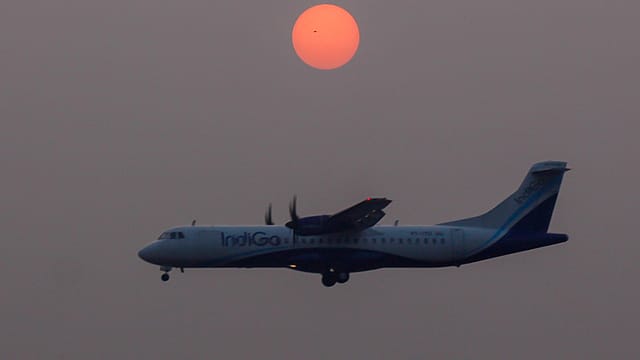
India’s aviation regulator has directed airlines to steer clear of nine regional airspaces and enhance contingency planning, citing significant risks to civil flight operations amid escalating tensions and recent military strikes in West Asia.
The Directorate General of Civil Aviation (DGCA) on Thursday advised airlines to avoid the airspaces of Bahrain, Iran, Iraq, Israel, Jordan, Kuwait, Lebanon, Qatar and the United Arab Emirates, according to an official advisory.
The regulator added that Indian airlines can operate flights over Oman and Saudi Arabia airspaces subject to certain conditions.
Airlines were instructed not to operate below FL 320 or 32,000 feet within the airspace of Saudi Arabia and Oman located south of segments defined by compulsory reporting points.
About the nine restricted zones, the DGCA asked airlines to "refrain from operating within the affected airspace at all flight levels and altitudes".
What Are the DGCA Guidelines for Airlines Amid West Asia Airspace Risks?
It added that any decision to continue operations would rest with the airlines, based on their internal safety risk assessments.
The advisory is effective immediately and will remain valid until March 28 unless reviewed or superseded by further developments.

Open Minds 2026
26 Jun 2026 - Vol 05 | Issue 26
The power of ideas and arguments in 50 portraits
"Operators are advised to provide their flight crew with information regarding latest NOTAMs, airspace restrictions affecting flight that are already airborne," it added.
NOTAM, or Notice to Airmen, provides real-time updates on airspace and airport conditions to pilots and crew.
How Are Recent Military Strikes Affecting Civil Aviation Safety?
"Recent military strikes conducted by the United States and Israel against targets within Iranian territory have led to a high-risk environment for civil aviation. In response to these strikes, Iran has announced retaliatory measures," the DGCA said, emphasizing that the evolving situation poses critical hazards to flight operations.
Separately, the civil aviation ministry on Wednesday asked airlines not to levy additional charges on a majority of seats in domestic flights.
“Minimum 60 per cent of seats on any flight to be allocated free of charge to ensure fair access,” the government directed.
Airlines have also been instructed to seat passengers booked under the same passenger name record together.
The move follows growing concerns over high ancillary charges, including fees for preferred seating, and is aimed at improving passenger convenience, transparency and uniformity across carriers.
(With inputs from ANI)