QUICK TAKE | Punjab’s Stubble Burning Tally Hits 2,787. Seven Things to Know
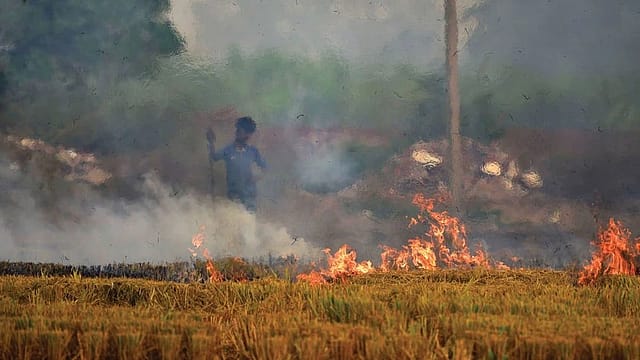
1. How sharply did the tally rise?
The Punjab Pollution Control Board’s cumulative count rose from 2,347 on November 4 to 2,787 on November 5. That is 440 additional reports, a 19% increase in the season tally in one day.
2. How many fires did inspectors confirm?
Field teams visited 2,194 locations and confirmed stubble burning at 994 of them. That is about 45% of the sites inspected. The board’s update gives two separate measures: the number of incidents recorded statewide and the number confirmed during field visits.
3. Which districts recorded the most incidents?
Tarn Taran led with 586 reports, followed by Ferozepur with 361, Sangrur with 240, Amritsar with 221 and Bathinda with 216. Together, those five districts accounted for 1,624 reports, or roughly 58% of Punjab’s total. In Tarn Taran, inspectors confirmed burning at 294 of the 553 sites they visited.

The Era of Forever Wars
30 Oct 2026 - Vol 05 | Issue 44
Coping with an explosive Middle East
4. How much of the penalty money has Punjab collected?
Authorities imposed ₹46.10 lakh in environmental compensation across 914 cases. By November 5, they had collected ₹24.85 lakh, about 54% of the amount levied. That left ₹21.25 lakh to be collected at the time of the update.
5. What is a ‘red entry’?
It is a mark in the land revenue record identifying a plot where crop residue burning was found or established. Punjab recorded 829 such entries. Police also registered 710 FIRs under Section 223 of the Bharatiya Nyaya Sanhita, which deals with disobedience of an order issued by a public servant.
6. How much paddy is still to be harvested?
Punjab had harvested 87.6% of its roughly 32.87 lakh hectares under paddy by November 5. That left about 4.08 lakh hectares still to harvest. The remaining area gives a sense of how much crop residue farmers will still need to manage.
7. What can farmers do with the straw instead?
Punjab’s action plan includes machinery that can manage residue in the field and arrangements to collect straw for use elsewhere. The Commission for Air Quality Management has been reviewing both how much of that machinery is being used and how the collection network is working.