PM Modi Urges States to Focus on Youth, AI and Investment at NITI Aayog Meet
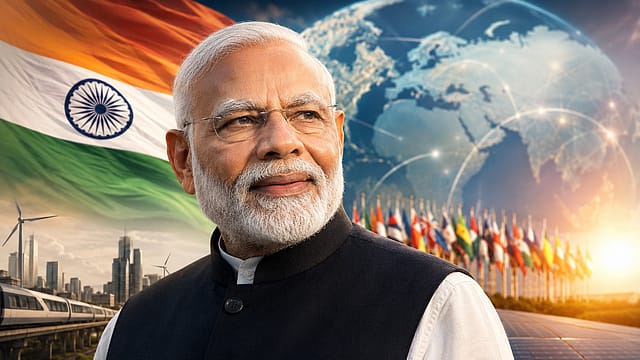
Prime Minister Narendra Modi on Thursday chaired the 11th Governing Council meeting of NITI Aayog, bringing together Chief Ministers, Lieutenant Governors and Administrators from across the country to discuss the roadmap for achieving Viksit Bharat@2047.
Held at the Rashtrapati Bhavan Cultural Centre in New Delhi, the meeting focused on the theme “Inclusive Human Development for Viksit Bharat@2047.” According to NITI Aayog, it marked the first time that Chief Ministers from all 28 states participated in a Governing Council meeting.
In a post on X after the meeting, the Prime Minister highlighted the broad agenda discussed during the deliberations.
“Chaired the 11th NITI Aayog Governing Council meeting on the theme of 'Inclusive Human Development for Viksit Bharat@2047.' Talked about a wide range of issues, including emphasising on self-reliance, adopting global best practices and strengthening the journey of reforms. Reiterated our commitment towards cooperative federalism, in line with our Government's belief that the states play a vital role in furthering national progress,” the post read.

Zeroing In on ECI
09 Oct 2026 - Vol 05 | Issue 41
Constitutional legitimacy versus political opportunism
Why was cooperative federalism a central theme?
A key message from the Prime Minister was that India’s development goals can only be achieved through close cooperation between the Centre and the states.
He stressed that the vision of Viksit Bharat should not remain limited to the national level but should become a collective mission embraced by every state, district, block and village. The Prime Minister said the Centre and states must work together to accelerate economic growth and social development.
How does the government plan to harness India’s demographic dividend?
Highlighting India’s young population as one of its greatest strengths, the Prime Minister noted that nearly 70 crore Indians are below the age of 25.
Describing this as a demographic dividend, he urged states to invest heavily in education, skill development and capacity-building so that young people are equipped to meet future economic opportunities and challenges.
The Prime Minister also linked youth development to India’s recent trade agreements with several countries. He encouraged states to create opportunities for young people and MSMEs and help them benefit from new trade openings. States were also urged to actively attract investment from partner nations.
What role do women play in the Viksit Bharat vision?
The Prime Minister reiterated the government's emphasis on women-led development.
He called on states to increase the number of Lakhpati Didis from three crore to six crore and underlined the importance of creating a safe and secure environment for women across the country.
The push is aimed at expanding women's participation in economic activity and strengthening grassroots entrepreneurship.
Why did PM Modi highlight ODOP and defence manufacturing?
The Prime Minister urged states to strengthen their One District One Product (ODOP) initiatives and build export-oriented strategies around locally produced goods.
He also pointed to defence manufacturing as a rapidly growing sector where India is developing a distinct global identity. States were encouraged to formulate policies that can help attract investments and generate employment through the expansion of the defence industry.
How can states address emerging social and governance challenges?
The Prime Minister highlighted growing concerns around drug abuse and cyber fraud, calling for coordinated action through preventive measures, awareness campaigns and effective governance mechanisms.
He suggested that states take proactive steps to address these issues before they become larger social challenges.
What was the message on climate resilience and agriculture?
Referring to concerns linked to El Niño conditions, the Prime Minister appealed to states to prioritise water conservation and encourage natural and organic farming practices.
He noted that farmers purchased 11 lakh tonnes of organic manure during the current Kharif season, describing it as a sign of increasing confidence in sustainable agricultural methods.
The Prime Minister also advocated for greater monitoring of district-level progress. Drawing on the success of the Aspirational Districts Programme, he suggested identifying 100 districts in the agricultural sector to drive focused improvements and measurable outcomes.
Why are AI and data centres emerging priorities?
The Prime Minister emphasised that attracting investment requires strong governance, transparency and quality infrastructure.
He encouraged states to focus on branding, ease of doing business and emerging sectors such as data centres and artificial intelligence. According to him, AI should be viewed as an opportunity rather than a challenge, and states should invest in preparing their workforce for the future economy.
He also stressed the importance of setting measurable goals through a monitoring framework that includes both 100-day targets and long-term five-year milestones aligned with the vision of Viksit Bharat@2047.
What was the response from the states?
Chief Ministers, Lieutenant Governors and Administrators congratulated Prime Minister Modi on completing 12 years in office.
They also expressed solidarity with the Centre in dealing with global geopolitical uncertainties, particularly challenges related to energy security and sustaining India's economic growth trajectory.
Concluding the meeting, the Prime Minister described the discussions as constructive and reflective of the aspirations, experiences, best practices and challenges faced by different states.
He thanked all participants for their contributions and expressed confidence that cooperation, innovation and a shared commitment to development would help India accelerate its journey towards becoming a developed nation by 2047.
(With inputs from ANI)