Passport and Citizenship: Wrong question, right answer
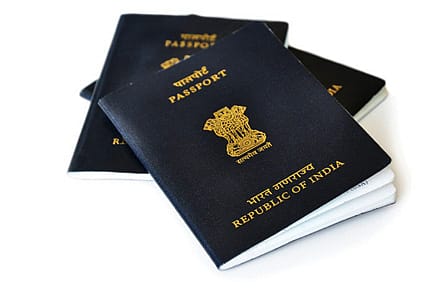
Some years ago, a young man born to parents of Indian origin who held American citizenship suddenly found himself declared “stateless” as the authorities in the United States concluded that he had been granted citizen status incorrectly. Despite both parents being American citizens and having grown up in the US and for all practical purposes being one himself, it was a sudden and very disorienting development.
For years now, Gorkha soldiers from Nepal serving in the Indian army have been given passports (apart from other documents like Aadhar and PAN) their nationality remains unchanged. Many of them seek Indian citizenship post retiring from the Indian Army and while a case has been made to offer them a less cumbersome path this process is as per the provisions of the Citizenship Act.

Greening the Future
23 Jul 2026 - Vol 05 | Issue 30
Securing a sustainable India
Passport for Non-Citizens
The fact that an India passport can be – and is – issued to non-citizens makes it evident that it is not a proof of citizenship. It is a document that facilitates international travel by Indian citizens and is accepted as such at foreign ports of entry unless it is disputed. The law governing passports allows the issuing authority to make the distinction in case, as might be necessary, to issue the document to non-citizens.
Decades of slack monitoring of borders and ineffective efforts to detect and deport illegals has led to a situation where documents such as Aadhar, voting identity, PAN cards, cooking gas connections, electricity bills and even property papers cannot be considered an iron cast proof of legal residence leave alone citizenship. The problem is particularly acute in states like West Bengal, Assam and other states of the north east. In such a situation a passport cannot be different.
Clause 20 of the Passport Act states “Notwithstanding anything contained in the foregoing provisions relating to issue of a passport or travel document, the Central Government may issue, or cause to be issued, a passport or travel document to a person who is not a citizen of lndia if that Government is of the opinion that it is necessary so to do in the public interest.” Though this is not common, the nationality column in the passport exists because this has to be stated explicitly.
No Connection with Voting
A partial interpretation of a background briefing on occasion of “Passport Divas” validity of the Indian passport will not alter the document’s validity at an immigration and customs counter in a foreign land. The query was specifically in the context whether a passport can be used to challenge exclusion from the electoral roll due to the ongoing special intensive revision (SIR) conducted by the Election Commission. The answer to that is “no” as the passport will not – in this context – be considered as proof of citizenship. A passport is a “travel document” to allow travel from and to India. While the Supreme Court has permitted use of Aadhar to establish identity in the SIR process, it is also not a proof of citizenship. At the time of Aadhar rollout a carefully considered decision was taken to sidestep the citizenship issue by recording the biometrics of all who are “ordinarily residents” of India. It was a wise decision as it created a data base that covers almost the entire population.
The seeming contradiction between passport being a document commonly issued to “Indian citizens” and yet not being an unchallengeable proof of citizenship is explained by the detailed and sometimes complex provisions of the Citizenship Act of 1955. The complexity is not deliberate. It is born of the necessity of define citizenship criteria for the years soon after Independence when there was a large and unregulated exchange of population, for persons of Indian descent living aboard as part of a numerous and geographically spread out diaspora and for residents of Assam where the provisions of a political accord signed in xx apply.
The Assam accord provisions reflected in the Citizenship Act state that any person “…(who) came to Assam on or after the 1st day of January, 1966 but before the 25th day of March, 1971 from the specified territory; and (b) has, since the date of his entry into Assam, been ordinarily resident in Assam; and (c) has been detected to be a foreigner, shall register himself in accordance with the rules made by the Central Government.” Further, the Act says “A person registered under sub-section (3) shall have, as from the date on which he has been detected to be a foreigner and till the expiry of a period of ten years from that date, the same rights and obligations as a citizen of India (including the right to obtain a passport under the Passports Act, 1967 (15 of 1967) and the obligations connected therewith), but shall not be entitled to have his name included in any electoral roll for any Assembly or Parliamentary constituency at any time before the expiry of the said period of ten years.” A passport does not make the holder eligible to vote.
The citizenship law also sets out eligibility for becoming an Overseas Citizen of India (OCI) and the relevant condition for gaining citizenship by naturalisation and registration. The conditions for Indian citizenship are therefore stated in some detail in the Citizenship Act and this – not any one document – defines eligibility.