‘Painful Time’: Jamshedpur Family Relieved After Son’s Safe Return on Shivalik
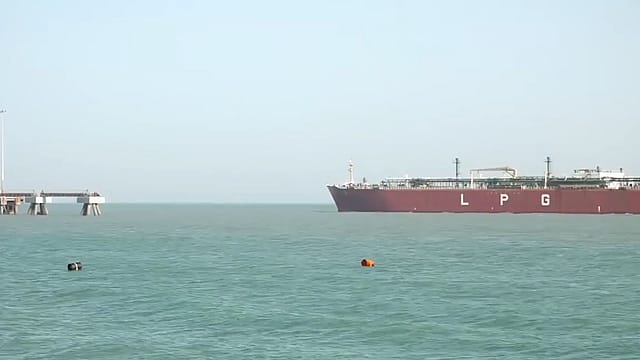
A former flight engineer from Jamshedpur heaved a sigh of relief after learning that his son, a crew member aboard the Indian-flagged LPG vessel Shivalik, had safely reached Mundra Port after navigating the tense waters of the Strait of Hormuz amid the ongoing conflict in West Asia.
Mithilesh Tripathy, whose son Ansh Tripathy serves as the second engineer on the vessel, said the family endured days of anxiety as the ship crossed one of the world’s most strategically sensitive maritime routes.
In a conversation with PTI, Tripathy said his only son was responsible for monitoring the ship’s technical operations during the journey.
He added that he last spoke to Ansh over a WhatsApp call four to five days ago when the vessel was departing from Qatar.
"They were instructed to maintain a safe distance from the Strait of Hormuz until they received the green signal from headquarters. The Indian government was negotiating with Iranian authorities to ensure safe passage," Tripathy told PTI.
What did the Shivalik crew member tell his family before leaving Qatar for the Strait of Hormuz?
A former flight engineer with the Indian Air Force, Tripathy later worked at the Uranium Corporation of India in Jadugora near Jamshedpur and now resides in a residential society near Pardih in the city.

Youth Issue 2026
24 Apr 2026 - Vol 04 | Issue 68
50 Portraits of Icons and Achievers
Recalling his son’s journey, he said Ansh completed his schooling in Jamshedpur and Jadugora, pursued mechanical engineering at BIT, and later graduated as a marine engineer from Kochi before joining the Shipping Corporation of India around 2014-15.
"Before leaving Qatar, Ansh told me they were heading towards the Indian Ocean. That was all he said," he added, noting that he did not discuss the number of crew members on board.
Tripathy said the family remained deeply worried after the conflict escalated in West Asia.
Tripathy added that while opinions may differ on the tensions in West Asia, his experience in the Air Force helped him understand the realities of operating in a conflict zone.
How did the Shivalik and Nanda Devi vessels cross the Strait of Hormuz safely?
The Shivalik was among two Indian-flagged LPG carriers that successfully crossed the Strait of Hormuz early on Saturday following negotiations between India and Iran. The other vessel, Nanda Devi, also completed the passage.
Shivalik arrived at Mundra Port on Monday carrying 46,000 metric tonnes of LPG ordered by Indian Oil Corp Ltd.
Of this, 20,000 metric tonnes will be unloaded at Mundra, while the remaining 26,000 metric tonnes is scheduled for discharge at Mangaluru.
The Nanda Devi reached Vadinar port in Gujarat’s Jamnagar on Tuesday with 46,500 metric tonnes of LPG for ship-to-ship transfer at anchorage.
The transfer from the mother vessel MT Nanda Devi to the daughter vessel MT BW Birch is set to commence.
What role did authorities play after Shivalik’s safe arrival in India?
Sushil Kumar Singh, Chairman of the Deendayal Port Authority, boarded the vessel to facilitate operations and interacted with the captain and crew.
Another Indian-flagged vessel, Jag Laadki, carrying about 81,000 tonnes of Murban crude oil from the UAE, is also safely en route to India, according to Shipping Ministry Special Secretary Rajesh Kumar Sinha.
Officials said all Indian seafarers in the Persian Gulf region are safe, with no incidents reported in the last 24 hours. A total of 22 Indian-flagged vessels remain in the region, carrying 611 seafarers.
The Shivalik and Nanda Devi were among 24 ships stranded on the western side of the Strait of Hormuz following the outbreak of conflict. Four additional vessels were stranded on the eastern side.
India’s energy dependence on the region remains significant. The country imports about 88 per cent of its crude oil, 50 per cent of its natural gas and 60 per cent of its LPG requirements.
Prior to the escalation on February 28, more than half of India’s crude imports, about 30 per cent of gas and 85 to 90 per cent of LPG supplies came from West Asian nations such as Saudi Arabia and the UAE.
The ongoing conflict led to a blockade of the Strait of Hormuz, a critical transit route for global energy supplies, intensifying concerns over fuel security before the safe passage of the vessels.
(With inputs from ANI)