Operation VISTA 1.0 Explained: Why Delhi Police Are Checking Foreigners’ Visas and Who Faces Deportation
A visa can expire quietly. The consequences do not.
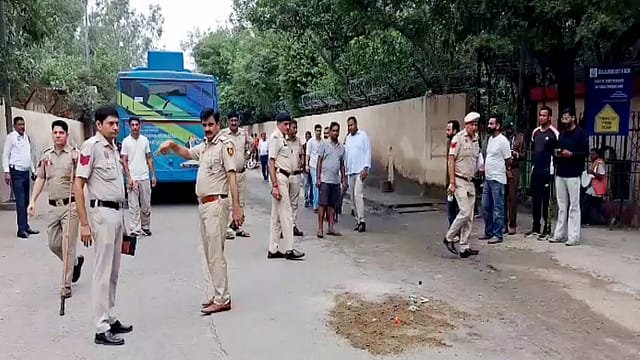
Two Nigerian nationals found living in Delhi after their visas allegedly lapsed now face repatriation under Operation VISTA 1.0, a Delhi Police campaign that checks the immigration status of foreign residents across the capital.
The action is the latest in a series of document-verification drives involving hotels, guest houses, rented accommodation and neighbourhoods with sizeable foreign populations. Nigerian, Ghanaian, Ivorian and Bangladeshi nationals have figured in recent cases.
However, an expired visa does not establish illegal entry, drug trafficking or any other unrelated crime. Operation VISTA is principally an immigration-compliance drive, and every case must move through verification and administrative proceedings before deportation can occur. Here is what the operation does, why local police are involved and what happens after someone is apprehended.

Rise of the Pivotal Power
18 Sep 2026 - Vol 05 | Issue 38
The BRICS declaration is a strategic victory for Modi
What is Operation VISTA 1.0?
Delhi Police describes VISTA 1.0 as “Visa Status Verification”, a special drive to identify foreign nationals who have overstayed or breached the conditions attached to their visas. Police units inspect passports, visas, entry stamps, duration-of-stay permissions, residential records and other immigration documents. Hotels and guest houses can also be checked to establish whether foreign guests are staying within the period permitted by their visas. The operation is not confined to people who entered India without documents. It also covers people who entered legally but remained after their authorised stay ended or violated a specific visa condition. Operation VISTA has been undertaken by foreigner cells, special staff, anti-auto theft squads and other district-level units. The name “1.0” suggests an organised first phase, although Delhi Police has not publicly released a consolidated document explaining its duration, citywide targets or the number of people checked and deported.
What happened in Dwarka?
Dwarka District Police apprehended Nigerian nationals Nwakor Paul Chukwuebuka and Aminat Aminu in separate operations after allegedly finding that their visas had expired. Chukwuebuka, who police say also uses the names Cypril Odigbo and Paul Chukwuebuka Okeke, was located on August 7. Officers examined his identity and travel records before presenting him to the designated authority for deportation proceedings. Aminu was apprehended on August 10 after another document check allegedly established that she had remained in Dwarka beyond her permitted stay. The competent authority subsequently issued orders for her repatriation. Delhi Police described both actions as part of Operation VISTA 1.0. The allegations concern their immigration status. The police statement cited in the ANI report does not accuse either person of narcotics trafficking, violence or another substantive criminal offence. Immigration drives involving African nationals are often reported alongside unrelated crime operations, which can wrongly imply criminality even when the stated violation concerns only visa status.
Is the operation confined to Dwarka or Nigerian nationals?
No. Recent actions have been reported in Central Delhi, Dwarka, Uttam Nagar, Paharganj, Malviya Nagar and other parts of the capital. The people apprehended have included nationals of Nigeria, Ghana, Ivory Coast and Bangladesh. Central District Police previously found six Bangladeshi nationals staying in an Arakashan Road hotel beyond the 15 days permitted on each visit under their double-entry visas. They were reportedly shifted to a detention centre after the Foreigners Regional Registration Office issued restriction orders. In another case, a Ghanaian and a Nigerian national apprehended under VISTA were produced before the FRRO and sent to the Lampur detention centre. The operation is formally nationality-neutral. Its fairness will depend on whether police rely on credible information and systematic records or disproportionately stop people because of appearance, race, neighbourhood or nationality.
Is overstaying the same as entering India illegally?
No. Illegal entry generally means crossing the border without permission, using fraudulent documents or entering through an unauthorised route. An overstayer may have arrived with a valid passport and visa but failed to leave before the permitted period ended. A visa can also remain valid for several months while limiting the duration of each individual visit. Staying beyond that shorter limit still amounts to a violation. The distinction can affect how authorities handle a case, but both situations can trigger immigration proceedings. There may also be cases in which a person applied for an extension, suffered a medical emergency, lost travel documents or could not leave because of conflict or the absence of flights. Those circumstances do not automatically regularise the stay, but they may be relevant when the FRRO assesses the violation.
Why does Delhi Police conduct checks if visas are handled by immigration authorities?
Local police find and identify the person. Immigration authorities determine the next administrative step. Delhi Police can inspect documents, verify addresses, question individuals and produce suspected overstayers before the designated civil authority or FRRO. The Home Ministry has formally authorised district superintendents of police and deputy commissioners of police to perform certain functions as civil authorities and registration officers. The relevant notifications, along with the Immigration and Foreigners Act, 2025, its rules and the Immigration and Foreigners Order, are published by the Ministry of Home Affairs. The FRRO examines immigration records, determines whether the stay is authorised and can issue orders restricting a person’s movement or initiating deportation. Police involvement therefore does not end with a street-level decision to put someone on a flight. Several administrative and diplomatic steps remain.
Why is an anti-narcotics unit involved in a visa operation?
Delhi Police frequently assigns district special units to verification drives because they possess field intelligence, surveillance capability and experience locating individuals. The involvement of an anti-narcotics cell does not establish that an overstayer possesses or sells drugs. The Delhi Police press-release register lists a Dwarka anti-narcotics unit’s action against an overstaying foreign national under the separate category “deported”. On the same page, narcotics cases are listed independently and include details of the alleged substance recovered. If no contraband or drugs case is disclosed, the person should not be portrayed as a narcotics accused simply because the apprehending team came from an anti-narcotics unit.
Does “apprehended” mean the person has been arrested for a crime?
Not necessarily. Police communications commonly use “apprehended” when a foreign national is taken into custody for verification and produced before the FRRO or another competent authority. A criminal arrest may lead to an FIR, charges, prosecution and a court proceeding. An immigration apprehension can instead move through an administrative process involving a restriction order, detention and deportation. The distinction does not make the loss of liberty insignificant. A person placed in a detention centre cannot simply leave. But the legal basis and objective differ from punishment following a criminal conviction. In the two Dwarka cases, the information released says the authorities ordered deportation or repatriation after finding expired visas. It does not specify any independent criminal prosecution.
What does India’s law say about visa overstays?
The Immigration and Foreigners Act, 2025 now provides the central legal framework governing entry, stay, registration and departure of foreign nationals. Its supporting rules and orders empower authorities to examine travel documents, regulate movement, prosecute certain immigration violations and remove people who no longer possess permission to remain in India. Not every overstay necessarily produces the same outcome. Authorities can consider its duration, the visa category, any pending extension request, the person’s documents and whether another criminal case exists. Some offences may be compounded through payment of a prescribed financial penalty. More serious or prolonged violations can produce prosecution, detention, deportation and future restrictions on entry. A person intending to remain longer is expected to approach the FRRO before the authorised period expires. The e-FRRO portal handles registration, visa extensions, exit permits and related immigration services.
What happens after police find an expired visa?
The first step is document and database verification. Police establish the person’s claimed identity, nationality, visa category, entry date and permitted duration of stay. The person is then produced before the FRRO or another competent authority. If the authority concludes that the individual has overstayed, it can issue a restriction or detention order while deportation formalities proceed. Authorities must next confirm nationality and obtain a valid passport or one-time travel document. They also check whether any criminal proceeding is pending. A person generally cannot be removed while required to face a case or serve a sentence in India. The home country’s embassy or high commission may have to verify identity and confirm that it will receive the individual. The Centre recently told the Supreme Court that a person cannot be deported until the claimed home country verifies the nationality, provides or accepts the travel documentation and agrees to receive the person, The Economic Times reported. That is why a deportation order does not always produce immediate departure.
Why can deportation take so long?
A person may have an expired passport, conflicting names, incomplete records or no document accepted by the claimed country of origin. Embassies must compare information and sometimes interview the person before issuing an emergency travel certificate. If nationality is disputed or the home country refuses recognition, deportation can stall. Pending criminal cases create another delay. India generally completes prosecution and any sentence before removing the foreign national. Flights, transit permissions and the cost of travel must also be arranged. During that period, the person may remain in a detention centre under a movement-restriction order. The aliases attributed to Chukwuebuka could make identity verification particularly important. They do not independently prove criminal wrongdoing, but authorities must establish which identity and travel documents are genuine before repatriation.
Can police deport someone directly?
No. Police can locate, apprehend and present a suspected overstayer. The immigration and civil authorities must complete the formal process. A deportation requires a legally valid order, confirmation of nationality, acceptable travel documentation and coordination with the receiving country. If a criminal case is pending, the relevant court and investigating authority also become involved. The police statement that “deportation proceedings” have begun should therefore not be confused with confirmation that the individual has already left India.
What rights does an apprehended foreign national have?
Foreign nationals do not possess an unrestricted right to remain in India after their visas expire. They nevertheless retain basic legal protections. Authorities must act under law, establish identity accurately and follow the prescribed procedure. The person should be informed of the reason for detention and given access to consular communication and legal remedies where available. A deportation drive must also guard against racial profiling. Checking someone merely because the person appears African or speaks with a foreign accent would raise serious fairness concerns. The stated objective of VISTA is document verification, which should rest on immigration records and specific information rather than ethnicity. Reporting must maintain the same distinction. Visa overstay is an immigration violation. It should not be casually fused with narcotics, fraud or organised crime unless police disclose evidence and register a separate case.
Why has Delhi launched a dedicated operation?
Delhi attracts international students, business visitors, medical travellers, diplomats, refugees and migrant workers. Its large and mobile foreign population makes systematic immigration monitoring difficult. A dedicated operation allows district teams to coordinate hotel inspections, residential verification and FRRO records instead of acting only after an overstayer reaches an airport or becomes involved in another case. The government has also tightened the broader immigration framework through the 2025 Act and associated rules. Operation VISTA appears to translate that enforcement push into neighbourhood-level checks. However, Delhi Police has not published a central VISTA dashboard showing how many people were checked, how many were found compliant, how many faced overstay proceedings and how many were deported. Without that denominator, repeated announcements about apprehended foreign nationals reveal enforcement outcomes but say little about the operation’s overall scale or accuracy.
What is the larger significance of the two Dwarka cases?
The detention of two people is the immediate news. Operation VISTA is the larger story. Delhi Police is moving from isolated overstay cases towards a named and coordinated verification campaign across districts. That can help identify genuine visa violations and bring consistency to enforcement. It also increases the need for transparency. The police should explain whom they check, what triggers verification, how errors are corrected and how long people remain detained before repatriation. An immigration system has the authority to enforce its deadlines. It also carries the responsibility to distinguish an overstayer from a criminal, a suspicion from a verified fact and a deportation order from an immediate flight home. For Chukwuebuka and Aminu, the visas have allegedly expired. The legal process has only begun.
(With inputs from ANI)