One Year After Operation Sindoor: The Strike That Changed India-Pakistan Dynamics
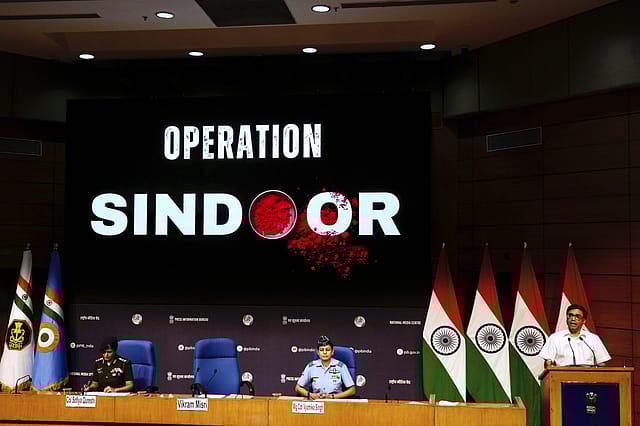
On May 7, 2025, India's military executed one of its most consequential operations in over five decades. Operation Sindoor, a direct response to the Pahalgam terror attack of April 22, 2025 in which 26 tourists were killed, destroyed nine terrorist launchpads across Pakistan and Pakistan-occupied Jammu and Kashmir in under 23 minutes.
A year on, the operation's reverberations continue to reshape the region.
The Strike That Broke a 54-Year Silence
For the first time since 1971, India targeted Pakistan's Punjab province, a demographic and economic heartland. The Indian military struck camps run by Lashkar-e-Taiba, Jaish-e-Muhammad, and Hizbul Mujahideen across Muridke, Bahawalpur, Sialkot, Muzaffarabad, Kotli, and Bhimber, using Rafale jets, SCALP missiles, and HAMMER bombs, according to Indian government briefings.

The Health and Wellness Issue
25 Sep 2026 - Vol 05 | Issue 39
Pakistan's Air Defense Grid, Exposed
India's electronic warfare systems reportedly jammed Pakistan's Chinese-supplied air defense network. Indigenous platforms including the Akash missile system intercepted retaliatory drones and projectiles. Subsequent exchanges damaged roughly 20% of Pakistan's air force infrastructure.
The Doctrine India Has Never Stated This Clearly
Operation Sindoor established what analysts now call India's "new red line": state-backed terrorism will be met with punitive military force. Indian Foreign Secretary Vikram Misri, according to a government briefing, stated the operation aimed at "dismantling terrorist infrastructure and disabling terrorists likely to be sent across to India." It is the most explicit articulation of Indian deterrence in decades.
Tri-Service Coordination at an Unprecedented Scale
The Air Force led precision strikes, the Navy reportedly restricted Pakistani naval movement, and the Army maintained readiness along the Line of Control. This level of integrated tri-service execution had not been publicly demonstrated at this scale before.
The Diplomatic Fallout Still Unfolding
India suspended participation in the Indus Waters Treaty. Pakistan threatened to exit the Simla Agreement. Both nations expelled each other's citizens and sharply reduced diplomatic ties, producing a structural break whose long-term consequences remain uncertain.
Two Narratives, One Unresolved Conflict
Pakistan's military spokesperson Lieutenant Ahmed Sharif Chaudhry reportedly claimed 31 civilian deaths, alleging residential areas were struck. India maintained that only terrorist infrastructure was targeted. Neither account has been independently verified.
(With inputs from yMedia)