No FIR in Sex Determination Cases? Supreme Court’s Big Ruling Explained
Imagine a clinic is suspected of illegally revealing the sex of an unborn child.
Who steps in first? The police? Or a specialised authority created under a law designed specifically to stop sex selection and female foeticide?
That question has travelled through courts for years. Different High Courts have taken different views. Some allowed police investigations. Others said the law created its own enforcement system.
Supreme Court has answered a crucial question: can police register FIRs under the PCPNDT Act?
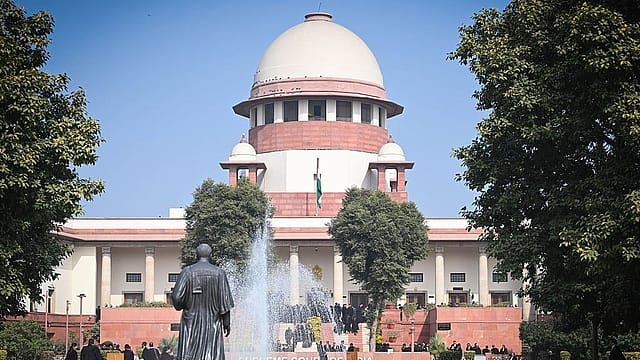
In a judgment authored by a Bench of Justice Sanjay Karol and Justice Nongmeikapam Kotiswar Singh, the court has ruled that offences under the Pre-Conception and Pre-Natal Diagnostic Techniques (Prohibition of Sex Selection) Act, 1994, commonly known as the PCPNDT Act, cannot ordinarily be dealt with through the usual route of FIRs, police investigations and charge sheets. Instead, the specialised mechanism created under the Act must take precedence.

Rise of the Pivotal Power
18 Sep 2026 - Vol 05 | Issue 38
The BRICS declaration is a strategic victory for Modi
The ruling came in an appeal filed by the Uttar Pradesh government against a 2024 Allahabad High Court judgment that had raised questions about the role of police in PCPNDT cases.
What is the PCPNDT Act and why was it enacted?
To understand the judgment, it helps to understand the law.
The PCPNDT Act was enacted to prevent the misuse of prenatal diagnostic technologies for sex determination and sex-selective abortions. It is one of India's most important laws aimed at tackling female foeticide and addressing the country's historically skewed sex ratio.
The law regulates ultrasound clinics, genetic counselling centres and diagnostic facilities. It also creates a system of designated officials known as Appropriate Authorities, who are empowered to inspect facilities, conduct searches, seize records and initiate legal action against violators.
In short, Parliament did not leave enforcement entirely to the ordinary criminal justice system. It built a specialised enforcement structure.
And that became the heart of the dispute.
If offences under the Act are cognizable, why can't police register an FIR?
That was exactly the argument advanced by Uttar Pradesh and supported by the Union government.
Section 27 of the Act states that offences under the PCPNDT Act are cognizable, non-bailable and non-compoundable. Traditionally, when an offence is cognizable, police can register an FIR and begin an investigation.
The state argued that this should naturally trigger the normal criminal procedure.
The Supreme Court disagreed.
The judges held that simply because Parliament used the words "cognizable" and "non-bailable" does not automatically mean the police can take over the entire process when the same law creates a separate and specialised enforcement mechanism.
The court said the special statutory scheme must prevail over the ordinary procedure.
In legal terms, the PCPNDT Act is a special law, and where a special law lays down a specific process, that process cannot be bypassed through the general provisions of criminal procedure.
So who investigates these cases now?
The answer is: the Appropriate Authority.
The Supreme Court held that investigation of violations under the PCPNDT Act lies with the authority designated under the statute and not with the police acting independently.
This is not entirely new.
Several courts had previously pointed to Rule 18A(3)(iv) of the PCPNDT Rules, which says police involvement in investigations should be avoided "as far as possible". The Allahabad High Court had relied heavily on that provision while holding that police investigations were impermissible.
The Supreme Court has now largely endorsed that approach.
Does this mean the police have no role at all?
Not quite. This is one of the most important clarifications in the judgment.
The court drew a distinction between police assistance and police investigation.
Police may still be called upon in situations where specialised authorities need help maintaining law and order, conducting searches, securing premises or preventing the destruction of evidence.
But that assistance does not allow the police to take over the investigation itself.
Think of it this way. The police can help open the door. They cannot replace the authority that the law specifically appointed to walk through it.
What did the Supreme Court say about charge sheets?
The court's answer was equally clear.
A Magistrate cannot take cognisance of a PCPNDT offence merely on the basis of a police charge sheet.
Instead, prosecution must begin through the complaint mechanism laid down in Section 28 of the Act. That provision says courts can take cognisance only upon a complaint filed by the Appropriate Authority, an authorised government officer, or certain other persons specifically recognised by the law
In other words, a police report cannot substitute for the complaint required under the statute.
That finding effectively closes the door on attempts to prosecute PCPNDT offences through the ordinary FIR-charge sheet route.
Why is this judgment important?
Because it settles a legal conflict that had been growing across courts.
In recent years, different High Courts had reached different conclusions on whether police could register FIRs under the PCPNDT Act.
The Allahabad High Court had taken the view that FIRs and police investigations were barred because of the specialised structure of the Act. Meanwhile, a Delhi High Court ruling in 2025 had suggested that registration of FIRs was not necessarily prohibited, even though cognisance still required a complaint under Section 28.
The Supreme Court's judgment now provides a definitive interpretation.
The specialised enforcement mechanism comes first.
What happens next?
The Supreme Court has not decided the underlying dispute itself.
Instead, after laying down the legal principles, it has sent the matter back to the Allahabad High Court for further consideration in light of the law it has now clarified.
But the larger message of the ruling is already clear.
For more than three decades, the PCPNDT Act has been one of India's key legal tools against sex selection.
Now the Supreme Court has said that if the country wants to enforce that law, it must do so through the mechanism Parliament carefully created for it.
Not through a parallel process.
Not through procedural shortcuts.
And not by allowing the specialised authority at the centre of the law to be pushed aside.
In cases involving illegal sex determination, the court has effectively said, the law already chose who should lead the investigation. Everyone else, including the police, can only assist.
(With inputs from ANI)