Netaji and the Grammar of Power in India’s Foreign Policy
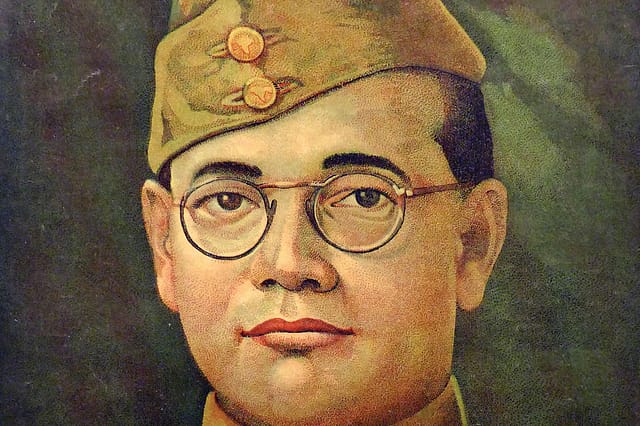
During times of global turmoil, nations frequently rediscover their forgotten philosophers. As India's current foreign policy—confident, multi-aligned, and overtly strategic- has generated many references to civilizational wisdom, realism, and strategic autonomy. However, one of its most radical and underappreciated influencers is Subhas Chandra Bose, a man whose thoughts about international politics were decades ahead of the state he never lived to govern.
Netaji is typically remembered for his defiance—against colonialism, Gandhian orthodoxy, and the moral certainty of his time. But what is less studied is Bose's cohesive, if unsettling, outlook on global power. He realized earlier than other Indian leaders that the world was dominated not by moral argument, but by force, alliances, and the unrelenting pursuit of national interests.

Losing Memory
16 Oct 2026 - Vol 05 | Issue 42
The making of a medical and social emergency
This is precisely where Netaji's significance in modern Indian foreign policy lies—not in nostalgia, but in the intellectual tension he represents.
Power Before Idealism
Bose was skeptical of the notion that a morally righteous cause would inevitably elicit universal sympathy. In the 1930s, he contended that international politics was inherently amoral and hierarchical. He argued that colonized states could not afford to wait for ethical acceptance; instead, they must push their way into the global order.
This realism distinguishes Bose from the post-independence foreign policy approach that India nominally accepted. India's early diplomatic stance was heavily influenced by Jawaharlal Nehru's idealism, which included non-alignment, moral leadership, and faith in international institutions. Bose, on the other hand, thought that institutions were tools for the powerful and that neutrality was only a temporary state, not a moral standard.
. It's interesting to see how modern India is getting closer to Bose's vision. It has finally adopted strategic realism because it hasn't been able to make strong alliances, only talks to hostile countries, and is willing to put national interests ahead of ideological coherence.
Bose's main point is that freedom is useless without force. India's balancing act between the US and Russia, its involvement in West Asia while keeping old ties, and its focus on strategic autonomy in defense procurement all show this.
The Alliance Controversy
There is no way to talk about Bose's foreign policy ideas without feeling bad. His decision to seek cooperation from Axis forces during World War II remains a source of moral concern. Critics often say that this is because of a big mistake in judgment. Bose, on the other hand, said it was a structural compulsion, not ideological conformity.
He said that world crises gave colonized countries chances, and that not taking advantage of them for moral reasons only kept them under control. Bose thought of partnerships as short-term, transactional relationships instead of long-term commitments to society. This argument is uncomfortably true in today's divided world. As competition between great powers grows, multilateral institutions weaken, and transactional diplomacy spreads, moral absolutism is losing ground.
States now regularly engage with regimes they oppose, trade with rivals they indirectly endorse, and segregate principles from interests.
People often criticize India's foreign policy for being "ambiguous," but it's better to think of it as an attempt to find its way through this rough terrain. Bose would have understood this right away.
National Interest as an Acceptable Language
One of Bose's most important contributions was his insistence that national interests be made clear instead of hiding them behind universalist language. He said that pretending otherwise hurt both the clarity of politics at home and the credibility of the US abroad.
This trend can be seen in Indian diplomacy today. India now talks about its interests—energy security, defense self-reliance, regional stability, and supply-chain resilience—without using a lot of moral language. People who want a more moral foreign policy have criticized this, but it has also made India's bargaining position stronger.
Most likely, Netaji would have agreed. He understood that moral posturing without leverage leads to marginalization instead of respect.
Militarization and Government Power
Bose's focus on militarization came from his understanding of what it means to be a state, not from militarism itself. He said that a country that can't protect itself will eventually have trouble with diplomacy. The Indian National Army made a political and military statement by showing that Indians were willing to pay the price for freedom.
This lens can help us understand how modern India is focusing on defense indigenization, having more naval ships in the Indian Ocean, and forming strategic partnerships in the Indo-Pacific. People no longer see military strength as just a way to scare people, but as a way to get what you want. Bose seems to be prophetic again, not strange.
The limits of Bose
But it would be wrong to use Netaji without thinking. Bose misjudged how authoritarian A would affect things in the long run because he thought that postcolonial governments could rule without any checks or balances. His vision put freedom and unity ahead of variety.
India is now bound by constitutionalism and democratic responsibility, so it can't and shouldn't fully follow Bose's methods. But his questions can still lead to a meaningful conversation. How much morality can foreign policy sustain? When does strategic patience turn into strategic inaction? How does a rising power avoid becoming a moral beggar?
An Unfinished Conversation
Netaji Subhas Chandra Bose remains upsetting because he compels India to face its paradoxes. He reminds us that freedom was not won through consensus alone, and that sovereignty is not perpetuated by virtue alone.
Bose's view of the world is more of a challenge than a plan or a slogan for India as it deals with a world full of uncertainty, competition, and fading norms. It asks if India is willing to think about power in a way that is honest and without shame or illusion.
That long-awaited talk might now be unavoidable.