Mohan Bhagwat in New York: Why Mamdani Opposes the RSS Event but May Be Unable to Stop It
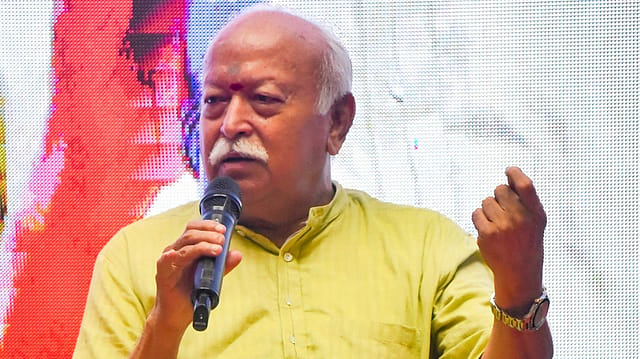
RSS chief Mohan Bhagwat’s appearance in New York has opened a fierce argument over Hindutva, religious freedom, the politics of the Indian diaspora and the limits of municipal power in the United States.
New York City Mayor Zohran Mamdani says he opposes the gathering and what he describes as the RSS’s “exclusionary vision”. The US Commission on International Religious Freedom wants the Trump administration to revoke Bhagwat’s visa and consider sanctions against RSS members. A coalition of rights and interfaith groups has demanded the event’s cancellation.
The organisers describe it as an inclusive cultural and interfaith gathering built around Vasudhaiva Kutumbakam, or “the world is one family”. The RSS says Bhagwat will address a multicultural and multi-faith audience in a spirit of dialogue. Meanwhile, the Hindu American Foundation has warned attendees to remain vigilant, alleging that activists have attempted to disrupt the programme.

Zeroing In on ECI
09 Oct 2026 - Vol 05 | Issue 41
Constitutional legitimacy versus political opportunism
Beneath the political noise lies a precise legal question: can a mayor who opposes a speaker prevent that person from addressing a privately organised gathering?
The short answer is that Mamdani can criticise it. He can ask law-enforcement agencies to prepare for protests. He can ensure that safety and civil-rights laws are followed. What he probably cannot do is cancel a lawful private event merely because he rejects its politics.
What is the Universal Oneness Celebration?
The gathering is scheduled for August 29 as part of the RSS’s centenary-year international outreach. AHEAD Forum, short for American Hindus for Engagement and Dialogue, is organising the event around Raksha Bandhan. Its official website says more than 200 Hindu-American organisations are supporting the programme.
The organisers expect around 6,000 attendees, according to their event fact sheet. Bhagwat is the principal speaker, with other religious and community representatives expected to participate. The programme presents three broad themes: unity across traditions, community service as a spiritual practice and humanity’s relationship with nature.
AHEAD describes the gathering as an attempt to extend the meaning of Raksha Bandhan beyond the bond between siblings towards a larger obligation to protect communities, societies and the natural world. The RSS has reinforced that description. Its publicity chief, Sunil Ambekar, said Bhagwat would interact with a “diverse, multicultural and multi-faith audience” in a spirit of open dialogue and mutual respect.
The event is also politically significant. Bhagwat is not merely another visiting religious or cultural speaker. He heads an organisation that has deeply influenced India’s contemporary political and cultural life and is widely described as the ideological parent of the Bharatiya Janata Party. Prime Minister Narendra Modi spent his formative political years as an RSS pracharak. The organisation describes itself as cultural and civilisational movement dedicated to national service and social organisation. Its critics view Hindutva as a majoritarian political project that threatens India’s secular and pluralist character. Those two descriptions sit at the heart of the New York dispute.
Why does Zohran Mamdani oppose it?
Mamdani has drawn a careful line between personal opposition and governmental authority. “I don’t support the rally, but I don’t know if the city has any jurisdiction on cancelling a private event,” he told reporters, according to Reuters. Mamdani invoked his Indian heritage while explaining his position. He described the India in which he was raised to believe as a pluralistic and secular republic that belonged equally to all its citizens. He said he found the rise of a movement built upon what he called an “exclusionary vision” deeply troubling, both as an Indian-American and as the mayor of one of the world’s most diverse cities.
His statement matters for two reasons. First, Mamdani is New York City’s first Indian-American and Muslim mayor. His opposition, therefore, enters an already intense argument within the Indian diaspora over Hindu nationalism, minority rights and the political direction of India. Second, he did not claim an authority he may not possess. He expressed a political and moral judgment while acknowledging that a privately organised gathering falls outside the mayor’s ordinary power to cancel events.
Can the New York mayor cancel a private gathering?
Ordinarily, not merely because he disagrees with its speaker. New York City regulates events conducted on streets, sidewalks, plazas, parks and other public spaces through permits. Its Street Activity Permit Office can impose safety conditions and revoke permits when organisers violate applicable rules.
Indoor gatherings may also have to comply with building, fire, occupancy and public-safety requirements. The city can act if a venue is unsafe, lacks required approvals or violates the law. That regulatory power does not create a general mayoral veto over speech delivered inside a privately operated venue. American constitutional law also bars government authorities from suppressing speech merely because they dislike its viewpoint. The government can impose neutral restrictions involving safety, time, place and manner, but political disagreement is not ordinarily sufficient.
The position of the private venue is different. The US Supreme Court has recognised that the First Amendment generally restrains government, not purely private property owners. A private venue may make its own decisions under its contracts and policies, subject to applicable anti-discrimination and other laws. Therefore, three separate powers must not be confused. The mayor can oppose the event. The city can enforce neutral laws and protect public safety. The organiser and private venue control whether their contractual gathering proceeds, unless a valid legal or safety ground requires intervention.
What has USCIRF demanded?
The US Commission on International Religious Freedom has asked the American government to consider targeted sanctions against RSS members and Indian officials it alleges are complicit in violations of religious freedom. It has also specifically recommended revoking Bhagwat’s visa and making him ineligible for future entry into the US. In its August 26 statement, USCIRF accused members of RSS-linked groups of attacks against Christians, Dalits, Muslims and Sikhs. It also alleged that policies associated with Hindutva discriminate against religious minorities.
These are serious allegations. They are also disputed by the RSS and the Indian government. USCIRF recommended in its 2026 annual report that the State Department designate India a “Country of Particular Concern” for what it called systematic and egregious violations of religious freedom.
But USCIRF does not control visas or impose sanctions. It is an independent, bipartisan federal commission created by the US Congress to monitor religious freedom and make foreign-policy recommendations to the President, the Secretary of State and lawmakers. Its statement creates political pressure. It does not itself revoke Bhagwat’s visa, cancel his appearance or bind the US administration.
How has India responded?
India has rejected USCIRF’s intervention and questioned the commission’s credibility. Ministry of External Affairs spokesperson Randhir Jaiswal called USCIRF a “biased institution” that had issued incorrect and provocative statements about India for years. “We should ignore such institutions, as they have their own agendas and lack credibility,” Jaiswal said. The Indian government has consistently rejected allegations that it discriminates against religious minorities. It argues that its welfare and development programmes benefit citizens across communities.
The RSS has similarly rejected descriptions of itself as intolerant or exclusionary. It says its work centres on cultural organisation, service and Hindu social unity. For the New York gathering, its public response has been to emphasise the event’s interfaith character rather than directly confront each allegation raised by its opponents.
Who wants the event cancelled?
Several civil-rights, faith and community organisations have opposed Bhagwat’s appearance and urged the venue to withdraw from the programme. The opposition reportedly includes Hindus for Human Rights, the Indian American Muslim Council and the Interfaith Center of New York. Their criticism focuses on the RSS’s record, the politics of Hindutva and allegations involving India’s religious minorities. Their most practical route is pressure on the organiser and venue. They can protest, petition, campaign publicly and ask a private venue to cancel its contract. They can also call upon elected officials to condemn the event.
But demands for cancellation are not the same as legal authority to achieve it. If the gathering remains lawful and complies with safety requirements, the government would require a valid, content-neutral reason to intervene.
Why has the Hindu American Foundation issued an alert?
The Hindu American Foundation has asked attendees to remain vigilant, maintain situational awareness and keep all interactions civil. It alleges that activists targeting Hindu Americans have attempted to disrupt or cancel the celebration and has asked Mamdani to protect attendees’ safety and civil rights. The advisory should be understood as HAF’s assessment. The material released so far does not identify a specific operational threat, and no public confirmation from the New York Police Department has been cited. That distinction matters.
Political protest is lawful. So is attending a controversial private event. Authorities must protect both rights while preventing intimidation, violence or unlawful disruption from either side. A security alert must not be used to portray all critics as threats. Equally, political opposition cannot justify harassment of attendees.
Why has Mary Millben entered the dispute?
American singer and actress Mary Millben has become one of the event’s most vocal defenders. She argues that Mamdani cannot cancel a private event because of political disagreement and says the programme should proceed. She has also attacked Mamdani and the event’s opponents in openly partisan language, linking their position to hostility towards Modi and the BJP. Her legal instinct may overlap with the limits Mamdani himself acknowledged. Her political rhetoric adds more heat than clarity. Whether Madison Square Garden “answers to capitalism”, as Millben put it, is not the constitutional question. The real question is whether a government authority possesses a lawful basis to stop the gathering. On the information currently available, no such basis has been publicly established.
Why does this controversy matter beyond one event?
The dispute reveals how India’s political battles now travel with its diaspora. The RSS sees Bhagwat’s tour as an opportunity to explain itself directly to overseas audiences during its centenary year. Supporters view the gathering as an assertion of Hindu cultural confidence and a celebration of community service. Opponents see the same visit as an attempt to normalise a movement they associate with majoritarian politics and declining minority rights in India.
Mamdani embodies that tension. His Indian ancestry gives his criticism personal resonance. His public office places legal limits on what he can do with that criticism. USCIRF adds another layer by converting a community dispute into a question of American foreign policy and sanctions. The Indian government’s response then turns it back into an argument over sovereignty, bias and who gets to judge India’s democratic record. The event may ultimately proceed. Protests may gather outside. Bhagwat may speak about unity while his opponents accuse the organisation he leads of exclusion.
That contradiction is the story. New York can dislike the speaker, protect the protesters, secure the attendees and still lack the power to silence the hall.
(With inputs from ANI)