Kolkata Residents Rush Outdoors After 5.3 Magnitude Earthquake
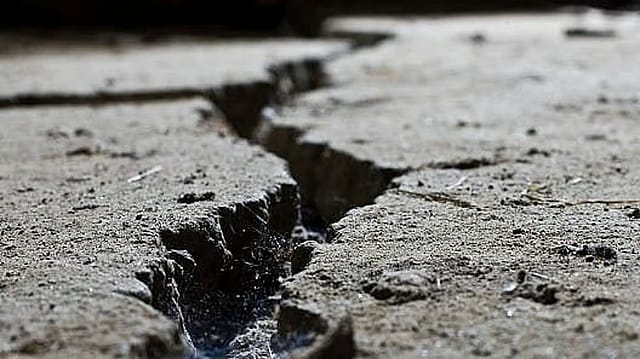
A moderate earthquake struck Bangladesh on Friday afternoon, sending tremors across eastern India, including Kolkata and parts of West Bengal. While no major damage has been reported so far, the shallow depth of the quake raised concerns about its potential impact.
What happened and where was the earthquake located?
An earthquake measuring 5.3 on the Richter Scale struck 188 kilometres from Dhaka on Friday afternoon, according to the United States Geological Survey (USGS). However, the Bangladesh Meteorological Department (BMD) reported the magnitude slightly higher at 5.4.
The tremor occurred around 1:30 PM IST and was recorded southwest of the BMD Seismic Centre in Dhaka’s Agargaon area. The USGS said the earthquake was located at latitude 22.451°N and longitude 89.139°E, at a depth of 9.8 kilometres.
Tremors were felt across several parts of Kolkata and adjoining districts of West Bengal, prompting residents to step out of homes and office buildings as a precautionary measure.
Why were tremors felt in Kolkata and surrounding areas?
Although the epicentre was in Bangladesh, seismic waves travelled across the border into eastern India due to geographical proximity. Kolkata, located relatively close to Dhaka, experienced noticeable shaking.
People were seen gathering in open spaces shortly after the tremors were felt. Swagata, a resident of Kolkata, described the moment vividly.
"We were sitting on our sofa when we suddenly felt the tremors. We rushed out of our house. The sofa and fan were shaking, and a bottle kept on a table fell down. All of us have rushed downstairs," she was quoted as saying by ANI.

Global By Design
29 May 2026 - Vol 04 | Issue 73
Is the future of fashion Indian?
Such reactions are common during moderate earthquakes, especially in urban areas where shaking inside buildings is more noticeable.
How significant was the earthquake’s depth?
The quake struck at a depth of 9.8 kilometres, categorising it as a shallow earthquake. According to USGS data, earthquakes are classified based on depth into three categories: shallow (0–70 km), intermediate (70–300 km), and deep (300–700 km).
Shallow earthquakes are generally considered more dangerous than deeper ones because seismic waves have less distance to travel before reaching the surface. This often results in stronger ground shaking and potentially greater structural damage.
For scientific classification, earthquakes can occur anywhere between the Earth’s surface and about 700 kilometres below it. The term “deep-focus earthquakes” typically applies to those deeper than 70 kilometres.
Were there other tremors in the region?
Earlier in the day, a separate earthquake of magnitude 2.7 struck Namchi in Sikkim, according to the National Center for Seismology (NCS).
In a post on X, the NCS said: "EQ of M: 2.7, On: 27/02/2026 12:02:43 IST, Lat: 27.36 N, Long: 88.37 E, Depth: 5 Km, Location: Namchi, Sikkim,"
The Sikkim tremor occurred at 12:02:43 IST at a depth of 5 kilometres, making it another shallow event. However, it was significantly weaker compared to the Bangladesh quake and did not trigger widespread concern.
Is there cause for concern?
As of now, there have been no immediate reports of major structural damage or casualties from either event. However, the shallow depth of the Bangladesh earthquake explains why tremors were strongly felt in parts of eastern India.
Authorities typically advise residents to move to open spaces during shaking, avoid elevators, and remain alert for possible aftershocks. Seismically active regions in South Asia periodically experience moderate tremors due to tectonic activity in the broader Himalayan and Indo-Burmese belt.
(With inputs from ANI)