Justice Yashwant Varma Cash Row: Parliament Panel Finds All Three Charges Proved
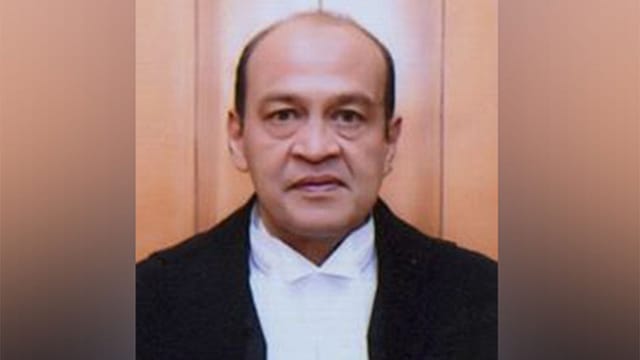
A parliamentary inquiry into former Allahabad High Court judge Yashwant Varma has found all three charges against him proved, concluding that he failed to satisfactorily explain the presence of a substantial quantity of ₹500 notes found in the storeroom of his official Delhi residence and did not adequately account for what happened to the material evidence afterwards.
The findings were made public today after the inquiry committee’s report was tabled in both Houses of Parliament. The report marks the latest institutional finding in a case that began with a fire at Justice Varma’s official residence in New Delhi in March 2025 and eventually led to an impeachment process, which continued even after he resigned from the judiciary in April 2026.
Rise of the Pivotal Power
18 Sep 2026 - Vol 05 | Issue 38
The BRICS declaration is a strategic victory for Modi
The committee’s conclusions are significant because they go beyond the original question of how the cash came to be in the storeroom. The panel examined three separate allegations: the presence and possession of unexplained currency at the official residence; the failure to preserve the storeroom and other material evidence after the discovery; and the explanations subsequently given by Justice Varma.
The committee found all three charges proved.
How the cash controversy began
The controversy dates back to March 14, 2025, when a fire broke out in a storeroom at Justice Varma’s official residence at 30 Tughlaq Crescent in New Delhi. Cash was subsequently discovered at the premises.
The Supreme Court made public the report of the then Delhi High Court Chief Justice and accompanying photographs and video after Chief Justice of India Sanjiv Khanna constituted a three-member in-house committee to examine the allegations. Justice Varma was removed from judicial work at the Delhi High Court while the inquiry was underway.
Justice Varma denied that the cash belonged to him or his family. As the controversy developed, his defence also raised the possibility that the currency could have been planted or that there could have been a conspiracy to implicate him.
The Supreme Court-appointed in-house committee eventually found adverse material against him. In August 2025, the Supreme Court dismissed Justice Varma’s challenge to the in-house inquiry and its findings, upholding the legality of the process.
From judicial inquiry to impeachment proceedings
The matter then moved into Parliament.
In July 2025, more than the required number of MPs backed motions seeking Justice Varma’s removal. A petition in the Lok Sabha was signed by 145 MPs, while 63 Rajya Sabha MPs separately submitted a motion. Under the Judges (Inquiry) Act, 1968, a removal motion requires the signatures of at least 100 Lok Sabha members or 50 Rajya Sabha members.
Lok Sabha Speaker Om Birla subsequently constituted a three-member Judges Inquiry Committee under the 1968 Act. The committee was headed by Supreme Court judge Justice Aravind Kumar, with Chief Justice of the Bombay High Court Justice Shree Chandrashekhar and senior advocate B.V. Acharya as its other members, according to reports on the committee’s proceedings.
Justice Varma challenged the parliamentary inquiry before the Supreme Court as well. The court ultimately allowed the committee’s proceedings to continue, removing a legal challenge that had threatened to delay the statutory inquiry.
The committee submitted its report to Speaker Om Birla in May 2026. The report was then scheduled to be laid before both Houses during the Monsoon Session.
What the three charges say
The first charge concerned the discovery of unexplained Indian currency notes in the storeroom located within the judge’s official residential premises.
The committee found that substantial ₹500 denomination notes were present and that Justice Varma failed to provide a satisfactory explanation about their presence, source or ownership.
The second charge dealt with the condition of the storeroom after the discovery.
According to the committee, the room was disturbed before it could be lawfully sealed and properly inspected. As a result, the evidentiary condition of the site was affected. The report also noted that the currency itself was subsequently unavailable and that its disappearance remained unexplained.
Importantly, the committee did not say it had established that Justice Varma personally removed the currency. Its finding instead rested on what it described as a failure to preserve the evidence, acquiescence in the disturbance of the premises by the establishment attached to the residence, and the resulting loss of material evidence.
The third charge concerned Justice Varma’s explanations.
The committee examined his response, including his March 22, 2025 reply, alongside statements from official witnesses and other documentary and electronic material. It concluded that his explanations were evasive and unsatisfactory when tested against the evidence before the panel.
Justice Varma had suggested, among other possibilities, that the cash could have been planted and that others could have been involved in a conspiracy against him. But the committee said no supporting evidence had been produced for those claims.
It also pointed out that relevant staff members were not examined as defence witnesses and that no FIR or formal complaint had been filed alleging that the cash had been planted or that evidence at the site had been deliberately tampered with.
Why the report matters after Varma’s resignation
The report comes even though Justice Varma is no longer a sitting judge.
He resigned from the Allahabad High Court in April 2026, after the parliamentary proceedings against him had begun. His resignation meant that the immediate question of removing him from judicial office became moot, but the inquiry committee continued its work and submitted its findings. The decision to complete and table the report was itself significant because it allowed the factual findings of the statutory inquiry to enter the parliamentary record.
The committee’s conclusion is therefore not a fresh allegation but the outcome of the statutory parliamentary inquiry that followed the earlier judicial in-house investigation.
The report also comes after the Supreme Court had already considered and rejected Justice Varma’s challenges to the inquiry mechanisms. In August 2025, the court upheld the in-house process; in January 2026, it also dismissed his challenge to the parliamentary committee.
The immediate significance of Wednesday’s development, therefore, lies less in a new procedural step against a serving judge and more in the formal recording of the committee’s findings: all three articles of charge have been held proved, including the failure to explain the cash, the failure to preserve evidence and the adequacy of the explanations offered by Justice Varma.
The report now becomes part of the parliamentary record, closing another chapter in one of the most closely watched judicial accountability cases in recent years.
(With inputs from ANI)