Jnanpith Award to Vairamuthu: A Prize and A Provocation
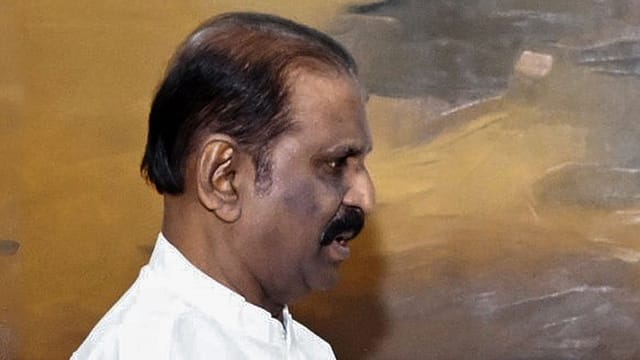
In India’s literary imagination, the Jnanpith Award has long carried the aura of final judgment. Instituted in 1961 by the Bharatiya Jnanpith foundation and first awarded in 1965, it is widely regarded as India’s highest literary honour, a prize meant to recognise outstanding writers working in the country’s many languages and to place them within a shared national canon. That is why the decision to honour Vairamuthu has provoked such intense debate. The controversy is not simply about the individual recipient. It touches deeper questions about how the Jnanpith has historically functioned, how it has treated Tamil literature, and what counts as literary achievement.
One of the world’s oldest classical literary cultures, with an early classical tradition stretching back roughly two millennia, Tamil has often felt under-represented in the Jnanpith’s pantheon. For decades the award went primarily to writers in languages such as Kannada, Malayalam, Hindi and Bengali. Tamil’s presence was sporadic at best. The novelist Akilan won the prize in 1975, and the writer Jayakanthan was honoured in 2002. After that, the award bypassed Tamil literature for more than two decades.
That gap fed a recurring Tamil grievance about under-recognition in national literary institutions. The argument was not merely linguistic pride. Tamil literature has produced major modernist and post-modernist writers whose influence within the language is widely acknowledged. Many readers would point to figures such as Ashokamitran, whose understated prose captured the anxieties of urban life with rare precision, or Sundara Ramaswamy, whose experimental fiction reshaped the possibilities of the Tamil novel, as writers who might plausibly have entered the Jnanpith canon but never did.
War on Iran: The War That No One Won
10 Apr 2026 - Vol 04 | Issue 66
And the price of surviving it
Seen against that background, the selection of Vairamuthu acquires a certain historical irony. At the moment when Tamil finally returns to the Jnanpith stage, the award has gone not to a central figure of its literary modernism but to a writer whose fame derives primarily from the world of cinema.
Vairamuthu emerged in the late 1970s as a poet but achieved cultural prominence as a lyricist in Tamil film, entering the industry in 1980 with the film Nizhalgal. Over four decades he wrote thousands of songs for the industry, collaborating with composers and directors across generations. His lyrics are known for their lush imagery, often drawing on classical Tamil metaphors of landscape, love and longing. Those songs circulated far more widely than most printed poetry could hope to, reaching audiences across South India and the Tamil diaspora.
Alongside this career he published poetry collections, essays and fiction. His novel Kallikattu Ithikasam, about displacement caused by the construction of the Vaigai dam, won the Sahitya Akademi Award in 2003. Supporters often cite that book and his poetry volumes as evidence that his work belongs within the literary sphere rather than merely the film industry.
Yet even sympathetic readers acknowledge that the scale of his reputation is inseparable from cinema. Tamil film music is indeed one of the language’s most influential poetic forms, but the relationship between lyric writing and literary canonisation remains complicated. Film songs are collaborative works shaped by melody, performance and cinematic context. Their emotional impact depends on a network of artistic elements beyond the words themselves. To elevate a lyricist to the country’s most prestigious literary honour therefore raises a question that goes to the heart of the award’s philosophy: whether the Jnanpith recognises sustained literary innovation within a language, or whether cultural visibility can also serve as a proxy for literary significance.
The controversy surrounding the award does not end with literary evaluation. Vairamuthu’s public reputation has also been shaped by allegations made during India’s #MeToo movement. In 2018, singer Chinmayi Sripada accused him of sexual harassment, and other women also came forward with allegations in the same period. The claims generated widespread debate within the Tamil film industry and cultural sphere. The allegations did not lead to any conviction, but they left a lasting shadow over his public image.
Cultural institutions across the world have been forced in recent years to confront the question of whether artistic recognition can be cleanly separated from the conduct of artists themselves. The dilemma is particularly acute for honours that claim to represent the moral prestige of a nation’s cultural life. By awarding the Jnanpith to a figure associated with unresolved #MeToo allegations, the institution has inevitably drawn itself into that ethical debate.
The difficulty lies in the symbolic nature of such honours. The Jnanpith is not simply a scholarly citation; it is a public affirmation of cultural authority. In that sense the decision inevitably reflects not only aesthetic judgment but also the values of the institution making the choice.
The Vairamuthu episode illuminates a broader tension within India’s literary landscape. The country’s languages possess vast and distinct traditions, each with its own canon, its own debates and its own hierarchies of influence. When a national prize attempts to translate those traditions into a single list of laureates, it compresses complex literary histories into a simplified narrative of greatness. For Tamil literature the moment is doubly complicated: a long-sought recognition has arrived, but in a form that is deeply contentious.