ISRO’s PSLV-C62 Mission Explained: What Caused the Mid-Flight Anomaly?
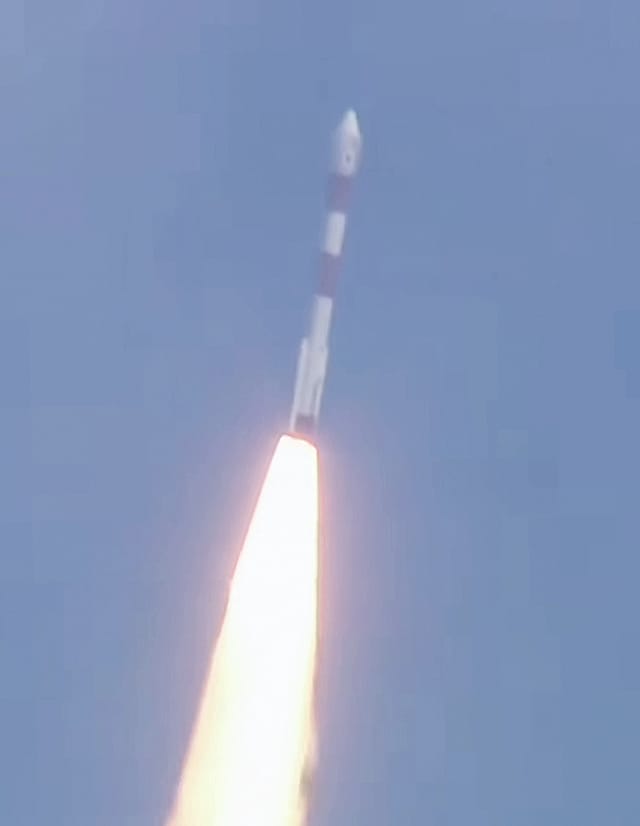
ISRO’s PSLV-C62 mission hit a third-stage anomaly mid-flight, prompting investigation into orbital impact, as the launch carried a key defence satellite and marked a milestone for private space players
What was the PSLV-C62 mission?
PSLV-C62 was ISRO’s first launch of 2026, carried out from the Satish Dhawan Space Centre in Sriharikota. The mission aimed to place the Anvesha (EOS-N1) defence satellite and 15 co-passenger satellites into a sun-synchronous polar orbit using the four-stage Polar Satellite Launch Vehicle.
What exactly went wrong during the launch?
According to ISRO Chairman V Narayanan, the mission progressed normally through the first two stages and most of the third stage (PS3). However, controllers detected increased disturbance near the end of the PS3 burn, followed by a deviation in the flight path—an unexpected anomaly that triggered immediate investigation.
Why is a third-stage anomaly significant?
The PS3 stage plays a critical role in shaping the vehicle’s trajectory before final orbital insertion. Any disturbance at this stage can alter velocity or direction, potentially preventing satellites from reaching their intended orbits even if earlier stages perform flawlessly.
What is the Anvesha satellite, and why does it matter?
Reportedly developed by the Defence Research and Development Organisation (DRDO), Anvesha is a strategic Earth-observation satellite with advanced imaging capabilities. It is designed to provide high-precision reconnaissance, making it a key national-security asset. This significantly raises the stakes of the anomaly.
Who observed the anomaly, and how did ISRO respond?

The BJP Nation
08 May 2026 - Vol 04 | Issue 70
Now all of India is in his thrall
ISRO officials closely monitoring telemetry data flagged abnormal behaviour as the PS3 stage neared completion. Chairman V Narayanan confirmed that the disturbance was identified in real time and that detailed data analysis was immediately initiated to assess its impact.
Why is this mission important commercially?
This was NewSpace India Limited’s ninth dedicated commercial Earth-observation mission, underscoring India’s growing role in the global launch market. The mission also marked a milestone for Dhruva Space, which reportedly became the first Indian private company to contribute seven satellites on a single launch.
What role did private companies play in this mission?
Dhruva Space built four satellites—three for customers and one in-house—and supported the integration of others. These satellites are designed to enable low-data-rate communication, particularly for amateur radio operators, highlighting the increasing depth of India’s private space ecosystem.
How reliable is the PSLV historically?
The PSLV is widely regarded as ISRO’s most reliable launch vehicle, with decades of successful commercial and scientific missions. This strong track record makes the PS3 anomaly notable—but not unprecedented—in the lifecycle of any mature launch system.
Has ISRO confirmed whether the mission succeeded?
As of now, ISRO has not confirmed whether all satellites achieved their intended orbits. The final outcome depends on whether the flight path deviation materially affected orbital parameters. The mission’s success will be determined after comprehensive analysis.
What happens next for ISRO?
ISRO is conducting an in-depth review of flight data to identify the root cause of the PS3 anomaly. The findings will be crucial not just for this mission, but for ensuring the reliability of future PSLV launches scheduled in 2026.
(yMedia is the content partner for this story)