Inside the Indian Air Force: Tejas, Rafale and the $40 Billion Upgrade Plan
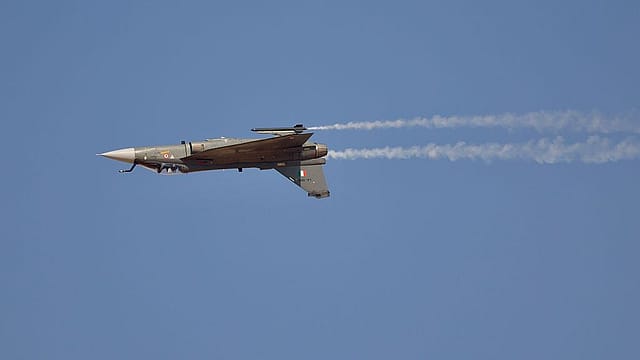
A Tejas fighter jet crashed during a training sortie recently --- the pilot ejected safely and operations continued. But the incident threw a spotlight on India's most talked-about indigenous combat aircraft, and the broader story of an air force in the middle of a generational overhaul.
Here’s some insight into the IAF.
Where does the Indian Air Force stand today?
Reportedly, the IAF currently operates around 520 aircraft, organised into approximately 29 active fighter squadrons against a sanctioned strength of 42 - a gap that has driven much of the urgency behind recent procurement decisions.
The fleet spans Russian, French, and Indian-origin platforms, reflecting both the breadth of India's defence partnerships and the scale of its modernisation challenge.
What is the Tejas, and why is it central to India's air power story?
The Tejas is India's indigenous light combat aircraft, developed by Hindustan Aeronautics Limited. It is the cornerstone of India's push for self-reliance in defence manufacturing and represents years of domestic aerospace development.
Currently, the IAF operates two squadrons of the Tejas, making it one of the few countries in the world to fly a fully homegrown combat jet at squadron strength.

Exclusive: To the Heavens and Back
19 Jun 2026 - Vol 04 | Issue 76
Shubhanshu Shukla relives the space odyssey that put India into orbit
How is the Tejas being scaled up?
According to reports, the IAF has placed orders for 83 LCA Tejas Mk-1A variants - an upgraded version with improved radar, avionics, and weapon systems. Beyond that, the more advanced Tejas Mk-2, featuring a more powerful engine and enhanced capabilities, is also under development.
Further down the road sits the fifth-generation Advanced Medium Combat Aircraft, or AMCA, which is also being developed indigenously. Together, these programmes form the spine of India's long-term air combat strategy.
Has the Tejas faced any setbacks recently?
A Tejas fighter jet crashed during a training sortie recently, though the pilot ejected safely. Incidents such as these are not uncommon during the operational induction and scaling of any new combat platform, and the IAF has continued its Tejas operations following the incident. The aircraft's development and induction trajectory remains on course.
What is the $40 billion Rafale deal about?
India's Defence Acquisition Council approved a proposal in February 2026 to procure 114 Rafale fighter jets from French manufacturer Dassault Aviation at an estimated cost of approximately Rs 3.25 lakh crore, or around $40 billion. The deal awaits final clearance from the Cabinet Committee on Security before formal negotiations begin.
Why is India adding more Rafales alongside the Tejas?
The IAF already operates two Rafale squadrons, meaning training, tooling, and maintenance ecosystems are already established, which is expected to reduce induction timelines and costs.
According to The Week, the acquisition also aims to address India's air-power asymmetry with China, which reportedly operates around 300 fifth-generation J-20 fighters and over 50 J-35 stealth aircraft. The Tejas and Rafale are seen as complementary - one advancing indigenous capability, the other plugging immediate operational gaps.
How many helicopters does the IAF have?
The Indian Air Force operates a diverse, modern fleet of roughly 900 helicopters for attack, transport, and utility roles, including 22 AH-64E Apache attack, 15 CH-47F(I) Chinook heavy-lift, Mi-17V-5 transport, and indigenous HAL Dhruv (including Sarang team) and HAL Prachand (LCH) gunships.
What about the Apache attack helicopter?
The IAF operates 22 AH-64E Apache attack helicopters, considered among the most advanced multi-role combat helicopters in the world. Equipped with Hellfire missiles, Stinger air-to-air missiles, and advanced avionics, the Apaches are stationed at key bases including Pathankot to bolster combat and high-altitude operational capabilities.
What role does the Chinook play?
The IAF also fields 15 CH-47F(I) Chinook heavy-lift helicopters, all delivered by Boeing by July 2020. Capable of lifting approximately 11.7 tonnes, the Chinook is used for troop transport, artillery placement, battlefield resupply, and disaster-relief missions - particularly across the high-altitude terrain of Ladakh and the Himalayas, where few other platforms can operate as effectively.
(With inputs from yMedia)