India’s UPI Boom: How 228 Billion Transactions Signal a Micro-Payments Economy
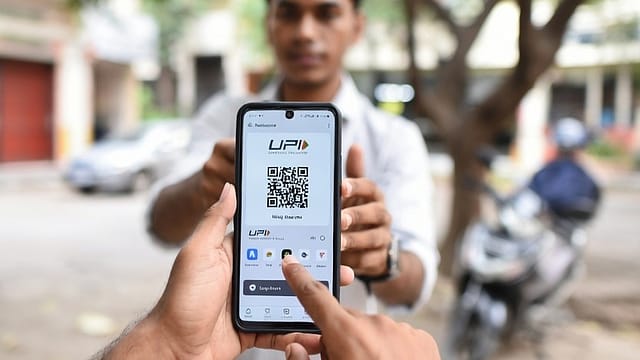
India’s digital payments ecosystem has expanded rapidly, with the Unified Payments Interface (UPI) processing 228.5 billion transactions in 2025, a 33% year-on-year rise. The total transaction value reached Rs 299.74 trillion, underlining how deeply digital payments are embedded in daily life.
According to Worldline’s annual report, this growth reflects a broader transformation in how Indians pay for goods and services, especially everyday purchases.
What does “micro-payments economy” mean?
The report highlights a clear shift toward a micro-transaction economy, where even small-value purchases—like groceries, transport, and local services—are increasingly paid digitally instead of in cash.
This trend is visible in the declining average ticket size of transactions. Overall UPI average ticket size (ATS) fell 9% to Rs 1,314, while merchant payment ATS dropped to Rs 592, showing that digital payments are now common for low-value, high-frequency transactions.
How dominant is UPI in India’s payments landscape?
UPI continues to dominate both person-to-person and person-to-merchant payments. Merchant transactions in particular are growing fast, with P2M payments rising 34% to 143.82 billion in 2025.
The expansion of infrastructure has played a key role in this growth. UPI QR codes increased to 731.38 million, while point-of-sale terminals rose to 11.48 million—both registering 15% annual growth.
Are cards losing relevance in India?
Despite UPI’s dominance in everyday payments, cards remain important—especially for high-value and online transactions.
Credit card usage grew strongly, with transactions rising 27% to 5.69 billion. Meanwhile, debit card volumes declined by 23%, suggesting that smaller payments are shifting toward UPI. Online credit card payments reached Rs 14.53 trillion, reinforcing their role in e-commerce and premium purchases.

Open Minds 2026
26 Jun 2026 - Vol 05 | Issue 26
The power of ideas and arguments in 50 portraits
What is happening with recurring digital payments?
Recurring payments are emerging as another major growth area. Transactions on Bharat BillPay reached 3.05 billion in 2025, up 40% year-on-year, while the total value surged 93% to Rs 14.84 trillion. These payments are increasingly used for education fees, insurance, EMIs, and subscriptions, signalling a shift toward a “set-and-forget” model of financial management.
What does this mean for the future of payments in India?
India’s payments ecosystem is no longer just about scale, it is becoming more structured, with different platforms serving distinct roles.
As Ramesh Narasimhan, Chief Executive Officer, Worldline India, told news agency ANI, “India's digital payments ecosystem is entering a new phase of maturity, where scale is being complemented by structure. As highlighted in our latest report, we are seeing distinct roles emerge across UPI, cards, and recurring payment platforms, supported by a rapidly expanding acceptance infrastructure.”
(With inputs from ANI)