Four Seconds, Three Hydraulic Failures, One Non-Negative Drug Test: Inside Air India AI-2379 Accident
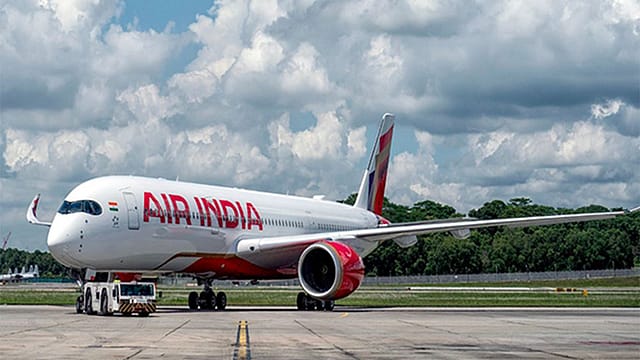
Four seconds. That was the gap between Air India flight AI-2379 losing pressure in its Green hydraulic system and warnings appearing for the Blue and Yellow systems as well.
The autopilot disengaged. A continuous repetitive chime filled the cockpit. A stall warning sounded for two seconds.
The Airbus A320neo climbed 372 feet above its cruising altitude before dropping 292 feet. Inside the cabin, passengers and crew members were thrown around because the seat-belt sign was off.
Then, almost as suddenly, hydraulic pressure returned.
The aircraft stabilised. The crew continued to Delhi. But the incident did not end after the flight landed safely.
Post-flight medical tests produced another alarming finding: the pilot-in-command tested non-negative for psychoactive substances in both the initial screening and a subsequent laboratory confirmatory test.

The Modi Years
02 Oct 2026 - Vol 05 | Issue 40
A Nation Rebuilt
The Aircraft Accident Investigation Bureau’s preliminary report has now transformed what was initially described as severe turbulence into an aviation accident involving two separate areas of concern: an unexplained triple-hydraulic pressure loss and the fitness of the pilot who eventually took control of the aircraft.
Air India responded on Friday by announcing voluntary testing covering 100 per cent of its pilots.
What Happened Aboard AI-2379?
Flight AI-2379 departed Phuket for Delhi on August 4 with 145 passengers, including three infants, six cabin crew members and two pilots.
At 9.32 am IST, while flying at 36,000 feet inside the Kolkata Flight Information Region, the aircraft’s flight-control system detected a loss of pressure in the Green hydraulic system.
Within four seconds, the Blue and Yellow systems also registered pressure loss.
These systems power critical flight-control and aircraft functions. Their near-simultaneous pressure drop triggered a cascade of cockpit alerts, disengaged the autopilot and briefly generated a stall warning.
The co-pilot, who was flying the aircraft at the time, responded first. The pilot-in-command subsequently took control.
The aircraft rose 372 feet and then fell 292 feet from its assigned altitude before pressure returned across the three hydraulic systems and normal control was restored.
The crew decided to continue to Delhi instead of diverting to a nearer airport. The aircraft landed safely on Runway 11L at 11 am IST.
Why Were 24 People Injured?
The seat-belt sign was switched off when the aircraft suddenly changed altitude.
Twenty passengers and four cabin crew members required medical attention after landing. Twenty were discharged following treatment for minor injuries, while four people were hospitalised with serious injuries.
The force of the movement damaged several parts of the cabin. Overhead storage bins cracked or came loose, ceiling panels were dislodged, handrails broke and passenger-service units were damaged.
A lavatory commode was uprooted. Crew seats were also damaged.
Investigators found no overall structural damage to the airframe. But the injuries and cabin damage were serious enough for the event to be formally classified as an accident rather than a turbulence incident.
The Aircraft Was Already Flying With an Inoperative Component
The preliminary report also records that the aircraft, registered as VT-EXO, was operating under Minimum Equipment List conditions.
Its Power Transfer Unit had been declared inoperative on July 28, a week before the accident.
The PTU allows hydraulic power to be transferred between the Green and Yellow systems under certain conditions. Operating under an approved Minimum Equipment List does not by itself establish that an aircraft is unsafe or that the inoperative component caused an incident.
The AAIB has not yet established what caused the three hydraulic systems to lose pressure or whether the inoperative PTU played any role.
Hydraulic components and fluid samples have been removed for laboratory examination. Airbus and France’s Bureau of Enquiry and Analysis for Civil Aviation Safety inspected the aircraft between August 13 and August 15.
Data from the flight-data recorder and cockpit-voice recorder have also been downloaded for analysis.
The Investigation Moves From Aircraft to Pilot
Because the flight originated outside India, both pilots underwent mandatory post-flight medical screening after arriving in Delhi.
Both cleared their breath-analyser examinations for alcohol.
Screening for psychoactive substances, however, returned a non-negative result for the pilot-in-command. The co-pilot tested negative.
A subsequent pathological examination of blood samples again produced a non-negative result for the pilot-in-command, according to the preliminary report.
The AAIB called the confirmation a “serious concern” and recommended that the Directorate General of Civil Aviation take appropriate action on priority.
The report has not established that the substance finding caused or contributed to the hydraulic failure, the altitude deviation or the crew’s decision-making. Its inclusion raises a separate and serious question concerning compliance with medical and flight-safety requirements.
Air India Orders Testing Across Pilot Pool
In its first response following the report, Air India said it would cooperate fully with the investigation and provide access to all operational, maintenance and technical records.
“Safety remains Air India’s highest priority. Our pilots undergo rigorous training, regular proficiency checks, medical examinations and other regulatory assessments in accordance with applicable national and international requirements,” an airline spokesperson said.
“Following the incident, Air India has started voluntary testing of 100% of its pilots as a further step to reinforce its safety-first approach.”
The airline said it had zero tolerance for breaches of safety, fitness or regulatory requirements and would take action wherever warranted.
That testing may address the immediate concern surrounding pilot fitness. It cannot answer the other question now confronting investigators: how an A320neo cruising at 36,000 feet briefly lost pressure across all three hydraulic systems.
The pilot test has created the headline. The hydraulic failure remains the mystery.
The AAIB report is preliminary. Its findings may change as recorder data, aircraft components, maintenance history, medical evidence and crew actions undergo further examination.
(With inputs from ANI & agencies)