Europe's First Total Solar Eclipse in 27 Years Is Coming. Why Won't India See It?
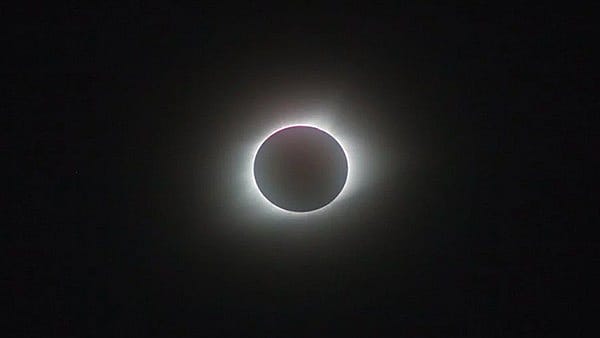
For a few extraordinary minutes on August 12, the middle of the day will look like dusk across parts of Europe.
The Moon will pass directly between Earth and the Sun, creating a total solar eclipse that will sweep across Greenland, Iceland and parts of Spain and Portugal. It will be Europe's first total solar eclipse since 1999, drawing skywatchers from around the world.
If you're in India, however, you won't see a thing. Here's everything you need to know.
What exactly is a total solar eclipse?
A total solar eclipse occurs when the Moon passes directly between Earth and the Sun, completely covering the Sun's disc for observers along a narrow path on Earth. During those brief moments of totality, daylight fades dramatically, temperatures dip, stars become visible and the Sun's glowing outer atmosphere, known as the corona, can be seen with the naked eye. It is one of the rarest and most dramatic astronomical events visible from Earth.

Rise of the Pivotal Power
18 Sep 2026 - Vol 05 | Issue 38
The BRICS declaration is a strategic victory for Modi
Where will the eclipse be visible?
According to Space.com, the path of totality will pass across Greenland, Iceland, northeastern Portugal and parts of Spain, including the Balearic Islands. Outside this narrow corridor, much of Europe, along with parts of northeastern United States and eastern Canada, will witness a partial solar eclipse, where the Moon appears to take a bite out of the Sun.
What will people inside the path of totality experience?
Those fortunate enough to stand within the path of totality will witness the Sun disappear completely behind the Moon. For a few minutes, the sky will darken, temperatures will fall, birds may fall silent and the Sun's delicate corona will become visible. Bright stars and planets could also briefly appear, creating an experience often described as one of nature's most unforgettable spectacles.
Why won't the eclipse be visible from India?
Simply because it will happen after sunset. The eclipse is expected to occur between around 9:45 pm on August 12 and 2:15 am on August 13 (IST). During those hours, the Sun will already be below the horizon across India, making the event impossible to observe from anywhere in the country.
Can people in India still watch it?
Yes. Although the eclipse won't be visible in Indian skies, organisations including NASA and the European Space Agency (ESA) are expected to livestream the event in high definition, allowing viewers to watch every stage online in real time.
Why is this eclipse so special?
Because opportunities like this are rare. This will be Europe's first total solar eclipse in 27 years, making it one of the continent's biggest astronomical events since 1999. For any single location on Earth, a total solar eclipse occurs only about once every 375 years on average, making the August 12 spectacle a once-in-a-generation experience for millions fortunate enough to be in its path.
(With inputs from yMedia)